LICHEN enables light-chain immunoglobulin sequence generation conditioned on the heavy chain and experimental needs
Henriette L. Capel, Isaac Ellmen, Chris J. Murray, Giulia Mignone, Megan Black, Brendan Clarke, Conor Breen, Sean Tierney, Patrick Dougan, Richard J. Buick, Alexander Greenshields-Watson, Charlotte M. Deane

TL;DR
LICHEN is a tool that generates antibody light chains based on a given heavy chain, improving antibody design by combining computation and experimental data.
Contribution
LICHEN introduces a novel method for generating valid and diverse antibody light chains conditioned on the heavy chain and additional constraints.
Findings
LICHEN generates antibody-like light sequences that are structurally and sequence diverse.
In vitro validation shows LICHEN-generated sequences have good expression yields and antigen-binding capability.
The method can be conditioned on germline and CDRs, and filter sequences for specific properties.
Abstract
In developing therapeutic antibodies, the heavy chain is often prioritised due to its higher variability and its central role in antigen binding. An appropriate pairing of the light sequence is however important for antibody function. Here we present LICHEN, a heavy chain conditioned light sequence generation tool that enables collaborative light sequence design by leveraging computational capabilities alongside experimental expertise. LICHEN generates light sequences which are valid (antibody-like), diverse in sequence and structure, and conditioned on a specific heavy chain. LICHEN can also condition on germline and CDRs and automatically filter generated sequences for required properties. We carry out experimental validation of the method conditioning only on the heavy sequence and on the heavy sequence and binding information. Our in vitro results show that sequences created by…
Genes, proteins, chemicals, diseases, species, mutations and cell lines named across the full text — each resolved to its canonical identifier and authoritative record.
Click any figure to enlarge with its caption.
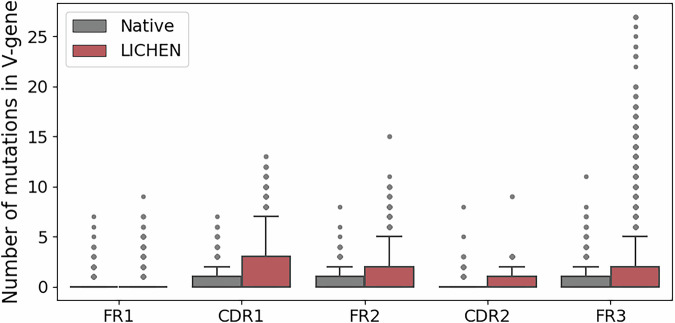 Figure 1
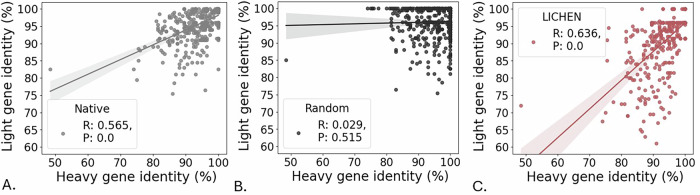 Figure 2
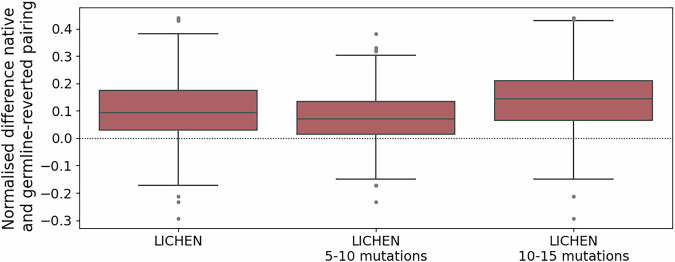 Figure 3
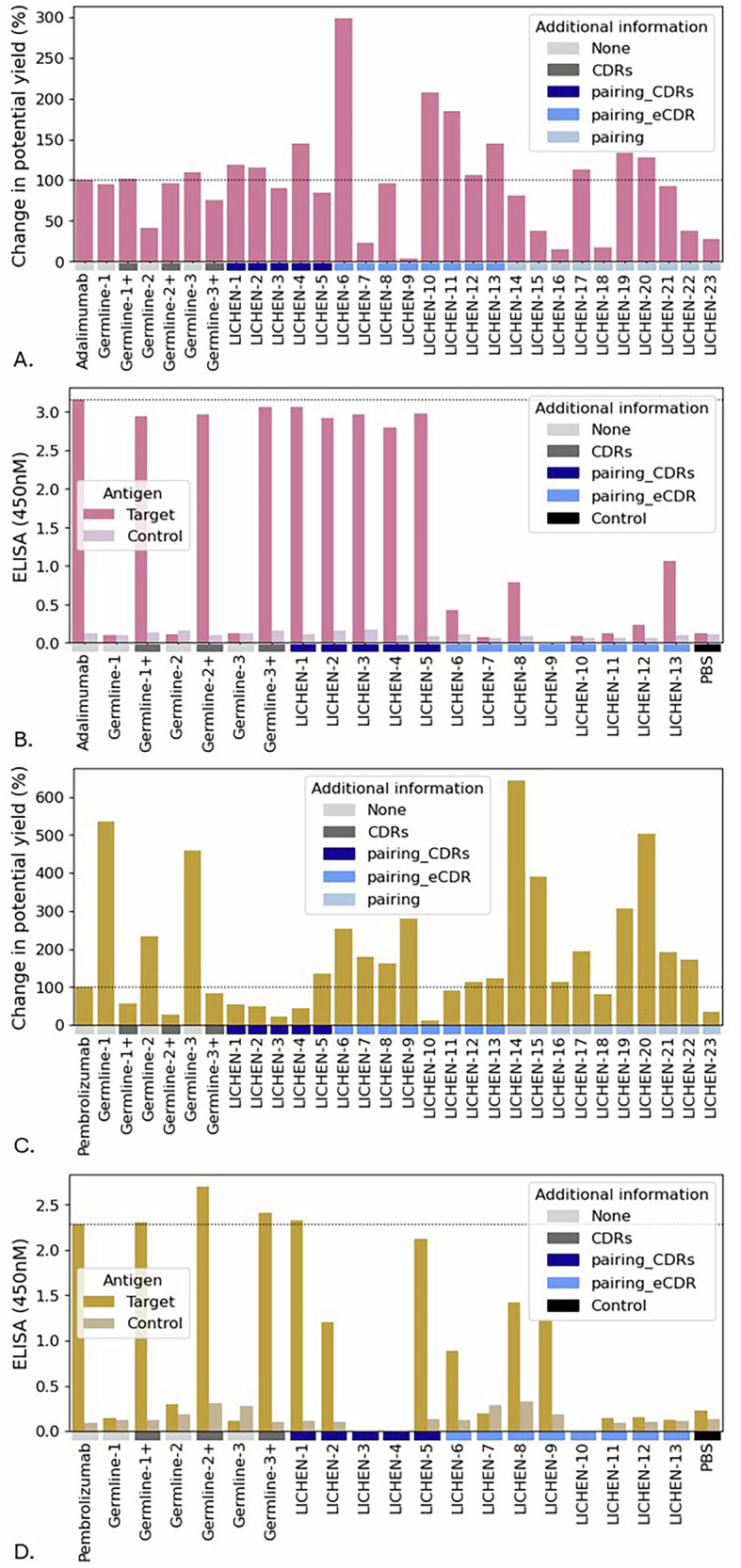 Figure 4
Peer Reviews
No public reviews on file for this paper yet. If you reviewed it on a platform where reviews are public (OpenReview, ICLR, NeurIPS, ICML), you can paste yours below so the community can read it here.
Videos
No videos yet. Explain this paper in a talk, walkthrough, or lecture? Add one.
Taxonomy
TopicsMonoclonal and Polyclonal Antibodies Research · Viral Infectious Diseases and Gene Expression in Insects · Advanced Biosensing Techniques and Applications