A Simulation Approach for the Spatial Testing of Migration Theories
Micol Matilde Morellini

TL;DR
This paper introduces a simulation method to test how well migration theories explain spatial patterns, using European migration data from 2002 to 2021.
Contribution
The novel contribution is a simulation-based procedure to evaluate the spatial accuracy of migration theories beyond traditional statistical measures.
Findings
Both the gravity model and migration systems theory fail to reproduce key spatial features of European migration.
High statistical fit does not guarantee accurate spatial representation in migration theories.
The simulation approach reveals limitations in existing theories' spatial predictions.
Abstract
Migration research has long been divided between studies of drivers, which focus on the factors shaping migration flows, and studies of patterns, which describe how these flows are organised across space. Theories of migration typically identify and operationalise drivers, but are often less explicit about patterns. As a result, migration theories are usually evaluated using goodness-of-fit measures that assess explanatory power but pay limited attention to spatial accuracy. This article addresses this limitation by introducing a simulation-based procedure to evaluate the spatial accuracy of migration theories. Starting from an observed system of origin–destination migration flows, the procedure generates synthetic systems that reflect the spatial outcomes implied by a given theory. These synthetic migration systems are then compared to the observed case to assess spatial accuracy. The…
Genes, proteins, chemicals, diseases, species, mutations and cell lines named across the full text — each resolved to its canonical identifier and authoritative record.
Click any figure to enlarge with its caption.
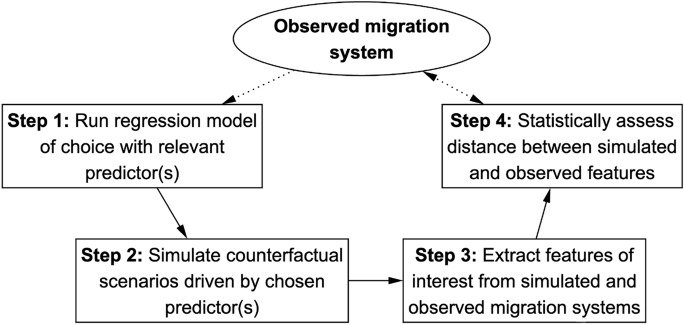 Figure 1
 Figure 2
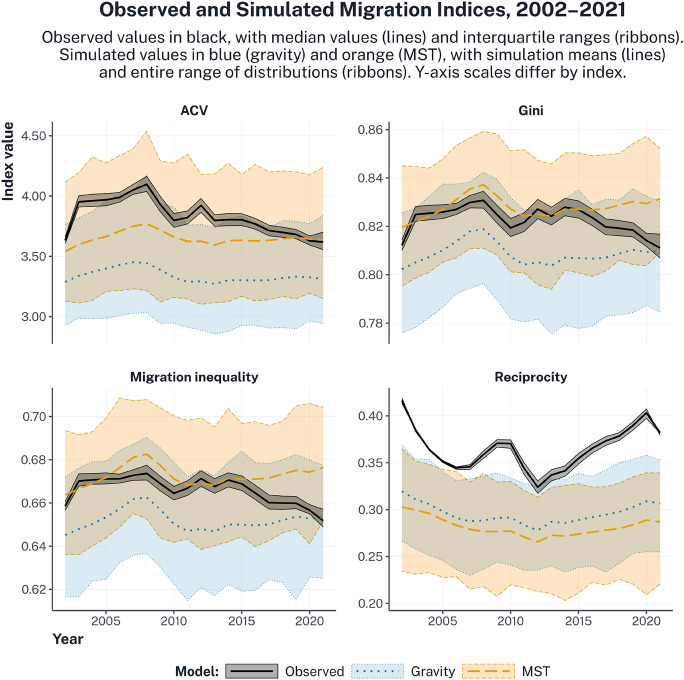 Figure 3
 Figure 4
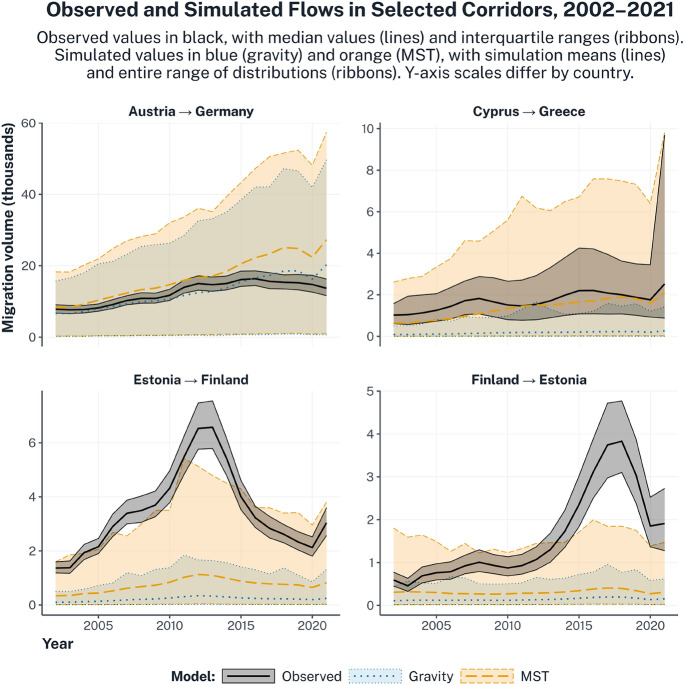 Figure 5
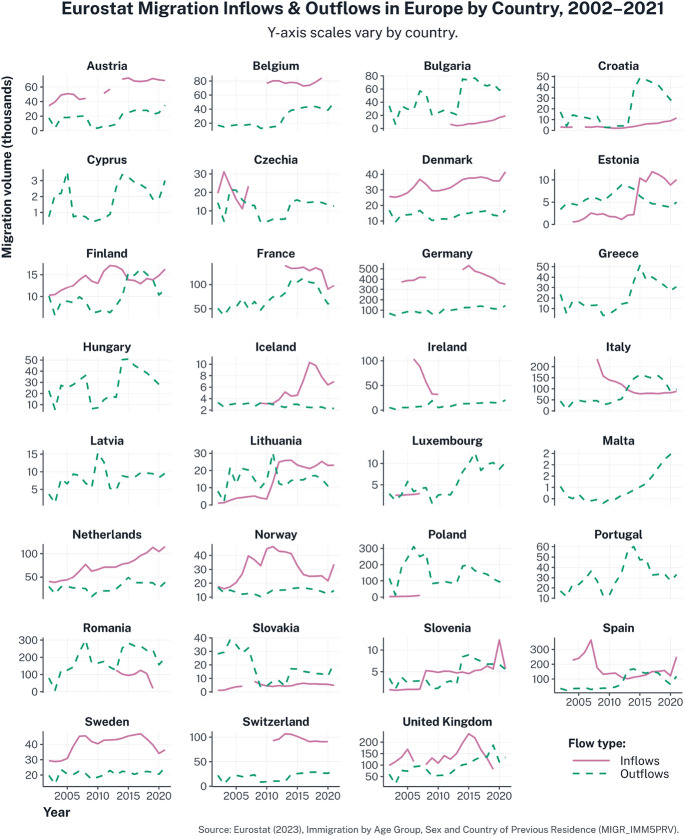 Figure 6
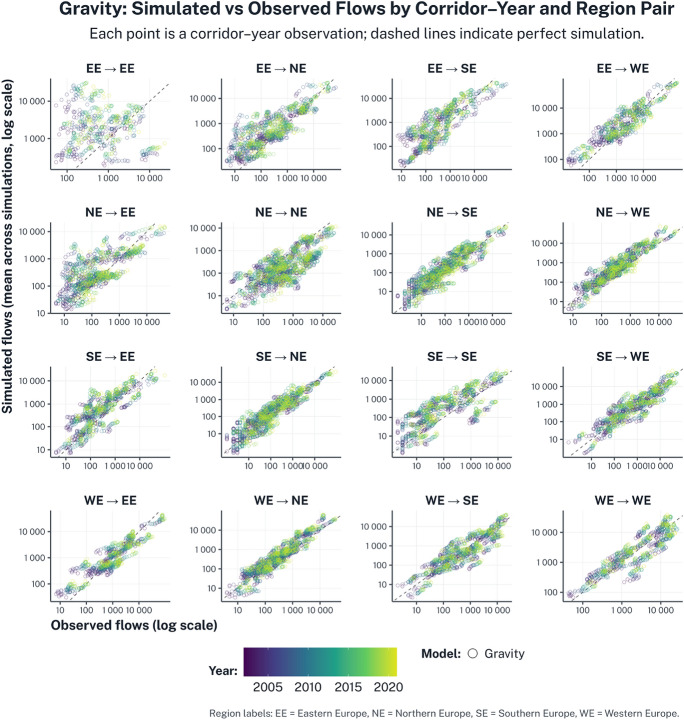 Figure 7
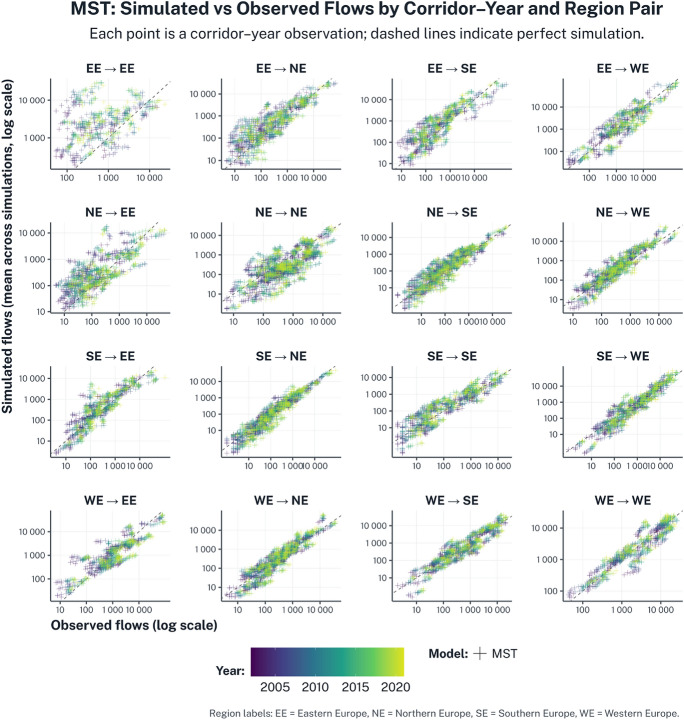 Figure 8
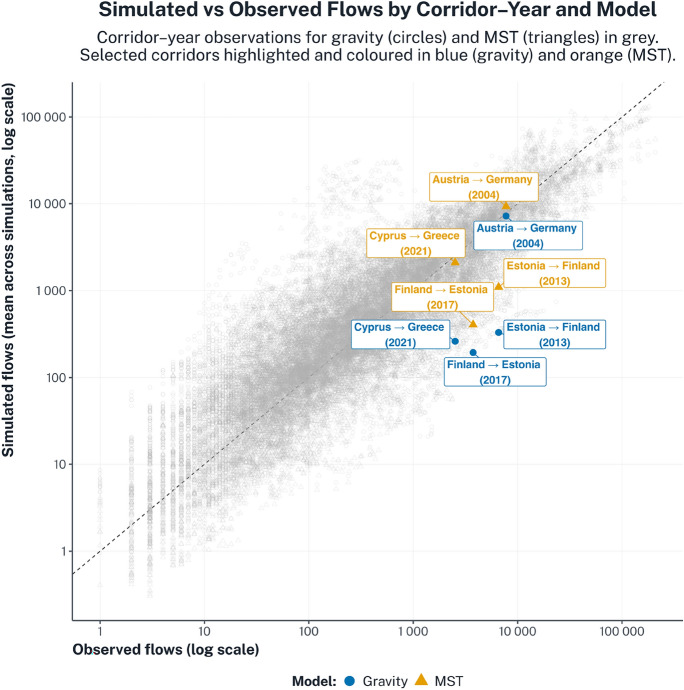 Figure 9
Peer Reviews
No public reviews on file for this paper yet. If you reviewed it on a platform where reviews are public (OpenReview, ICLR, NeurIPS, ICML), you can paste yours below so the community can read it here.
Videos
No videos yet. Explain this paper in a talk, walkthrough, or lecture? Add one.
Taxonomy
TopicsUrban, Neighborhood, and Segregation Studies · demographic modeling and climate adaptation · Human Mobility and Location-Based Analysis