pH profiling reveals progressive wound acidification during healing and higher pH in chronic non-healing wounds: a prospective, multicenter cohort study
Julian-Dario Rembe, Mareike Witte, Neslihan Ertas, Joachim Dissemond, Waseem Garabet, Maria Hovhannisyan, Katharina Beckamp, Hubert Schelzig, Markus U. Wagenhäuser, Ewa K. Stuermer

TL;DR
The study found that healing wounds become more acidic over time, while non-healing wounds remain more alkaline, suggesting pH could be a useful biomarker for wound monitoring.
Contribution
This study is the first prospective, multicenter cohort analysis showing progressive wound acidification correlates with healing and higher pH in chronic wounds.
Findings
Chronic and non-healing wounds had significantly higher pH (7.11-7.04) compared to healing wounds (6.59-6.82).
A pH gradient was observed, decreasing from the wound center to surrounding skin.
Longitudinal analysis showed a weekly pH decline of 0.05 units in healing wounds.
Abstract
The local microenvironment of wounds plays a crucial role in healing, with pH and temperature emerging as promising biomarkers. This prospective, multi-center, observational study assessed pH and temperature in acute and chronic wounds to identify physicochemical patterns associated with healing. A total of 117 patients with various wound etiologies underwent 226 pH and 181 temperature measurements at the wound center, edge, and surrounding skin. With a pH of 7.113 ± 0.659 and 7.043 ± 0.694, chronic and non-healing wounds exhibited significantly higher pH values than acute (6.592 ± 0.617) and healing wounds (6.820 ± 0.814; p<.05), with the wound center showing the largest difference (ΔpH = 0.52). A pH gradient was observed, decreasing from wound center to surrounding skin. Longitudinal analysis revealed a weekly pH decline of 0.05 units in healing wounds. Temperature showed a similar…
Genes, proteins, chemicals, diseases, species, mutations and cell lines named across the full text — each resolved to its canonical identifier and authoritative record.
Click any figure to enlarge with its caption.
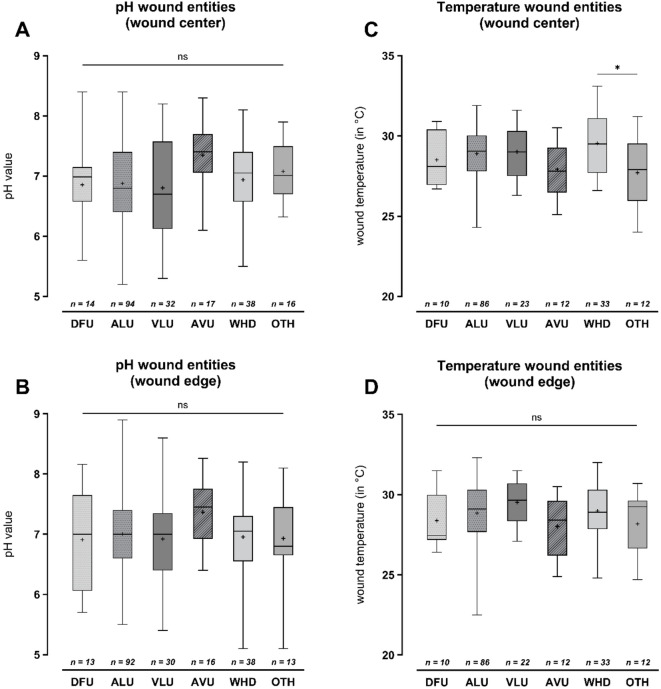 Figure 1
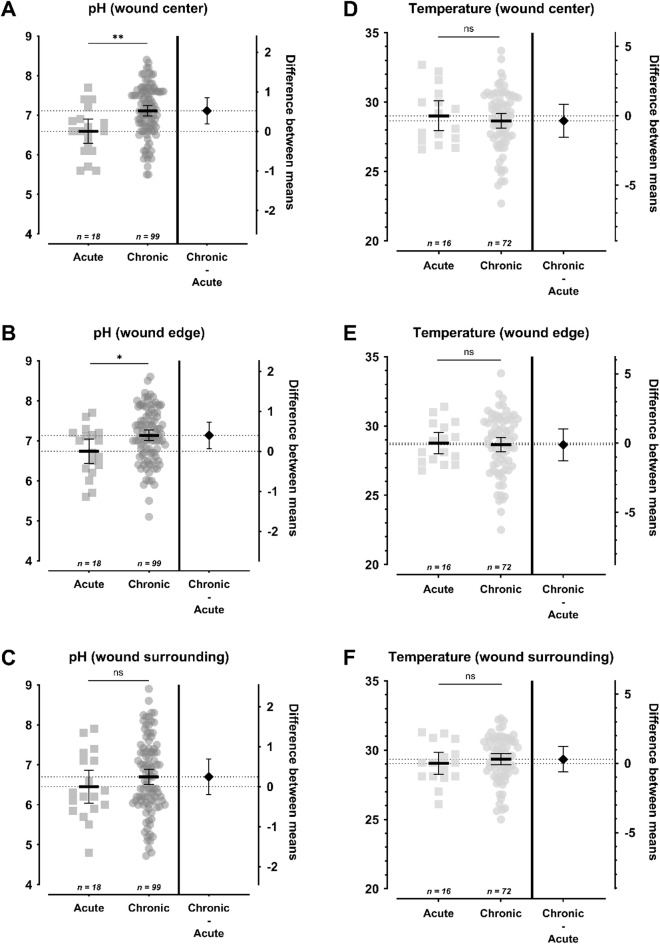 Figure 2
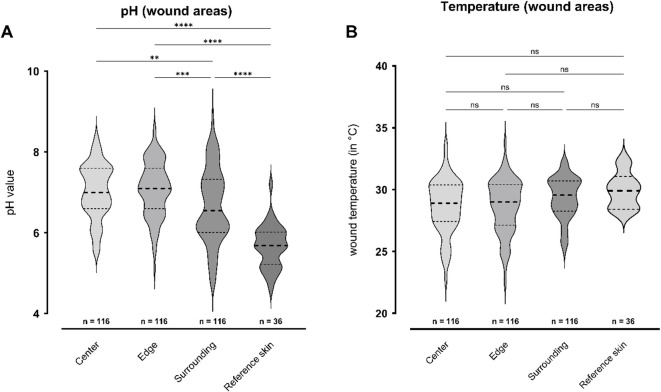 Figure 3
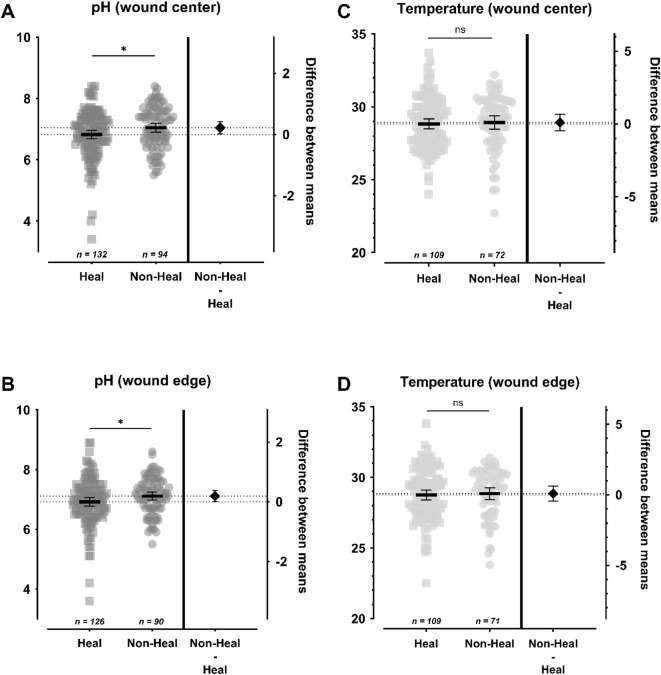 Figure 4
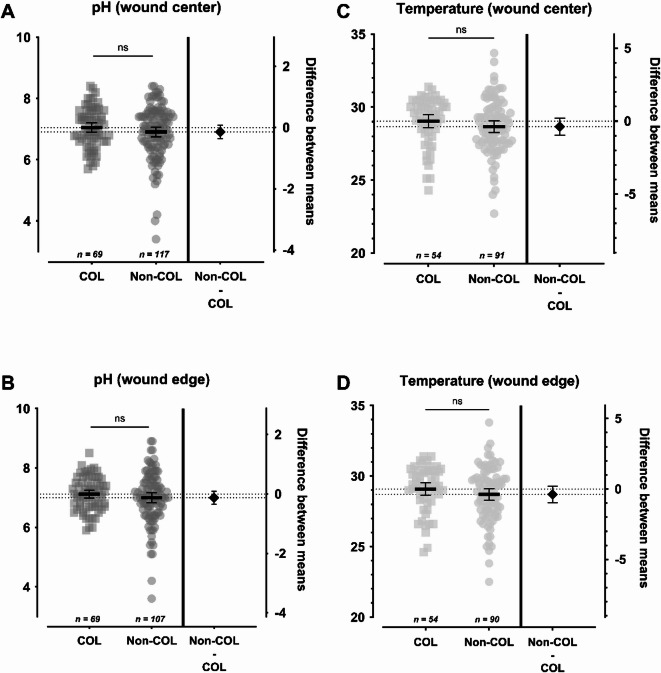 Figure 5
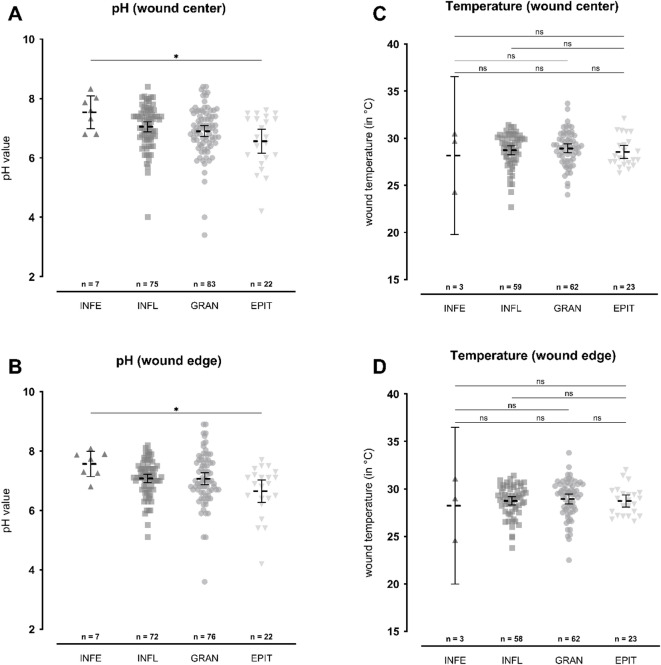 Figure 6
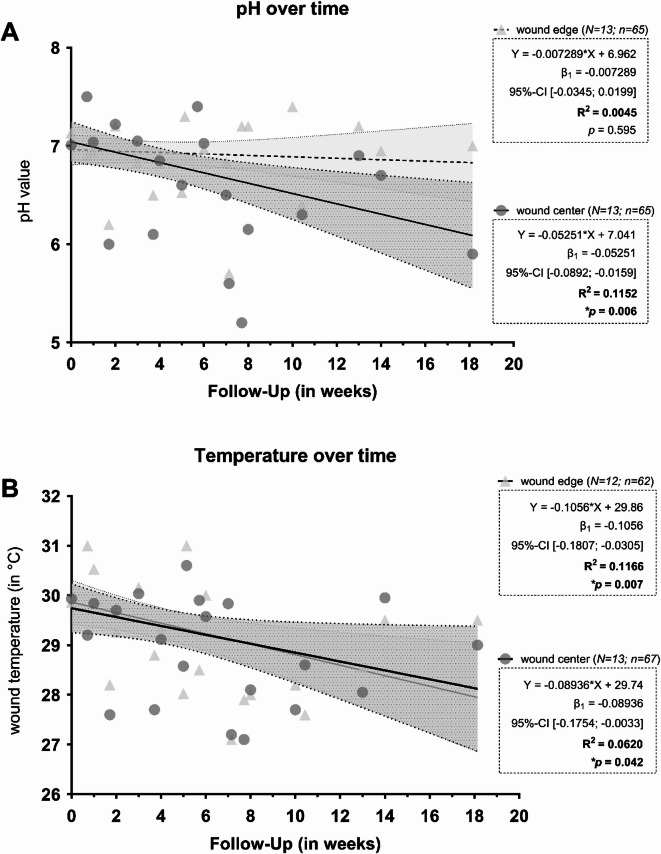 Figure 7
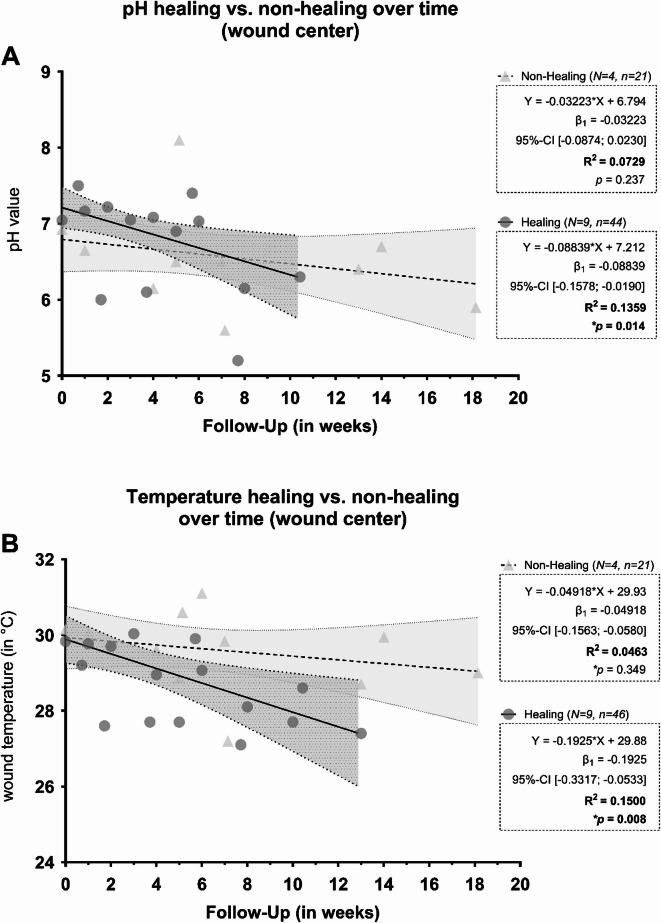 Figure 8
Peer Reviews
No public reviews on file for this paper yet. If you reviewed it on a platform where reviews are public (OpenReview, ICLR, NeurIPS, ICML), you can paste yours below so the community can read it here.
Videos
No videos yet. Explain this paper in a talk, walkthrough, or lecture? Add one.
Taxonomy
TopicsWound Healing and Treatments · Helicobacter pylori-related gastroenterology studies · Pressure Ulcer Prevention and Management