Dbf4-dependent kinase finetunes Ino80 function at chromosome replication origins
Priyanka Bansal, Shibojyoti Lahiri, Chandni Natalia Kumar, Jessica Furtmeier, Lorenz Spechtenhauser, Lorenzo Galanti, Juan de Dios Barba Tena, Erika Chacin, Garp Linder, María Ángeles Ortíz-Bazán, Marisa Müller, Petra Vizjak, Tobias Straub, Felix Mueller-Planitz

TL;DR
This study reveals that the Dbf4-Dependent Kinase (DDK) regulates the INO80 chromatin remodeler, improving replication and genome stability.
Contribution
The study identifies INO80 as a novel DDK target, showing its role in replication origin chromatin architecture.
Findings
DDK phosphorylates the Arp8 subunit of INO80, stabilizing the complex.
Phosphorylated INO80 improves nucleosome spacing and replication efficiency.
DDK regulates chromatin remodeling to support replication and genome stability.
Abstract
The highly conserved Dbf4-Dependent Kinase (DDK) plays a pivotal role during S phase. It phosphorylates the replicative helicase (minichromosome maintenance, MCM complex), which leads to the initiation of replication. However, few other targets, besides the MCM complex, are known, leaving DDK an understudied kinase. Here, we determine the nuclear DDK-dependent phosphoproteome by a two-pronged mass spectrometry approach. Among ~ 400 DDK-dependent phosphorylation targets, we find the Arp8 subunit of the INO80 chromatin remodeling complex. Arp8 phosphorylation stabilises INO80’s complex integrity, finetunes its nucleosome spacing at replication origins, stimulates replication and improves the replication stress response. Taken together, we report the regulation of a chromatin remodeler with nucleosome-spacing activity by the cell-cycle machinery. DDK not only regulates the core replication…
Genes, proteins, chemicals, diseases, species, mutations and cell lines named across the full text — each resolved to its canonical identifier and authoritative record.
Click any figure to enlarge with its caption.
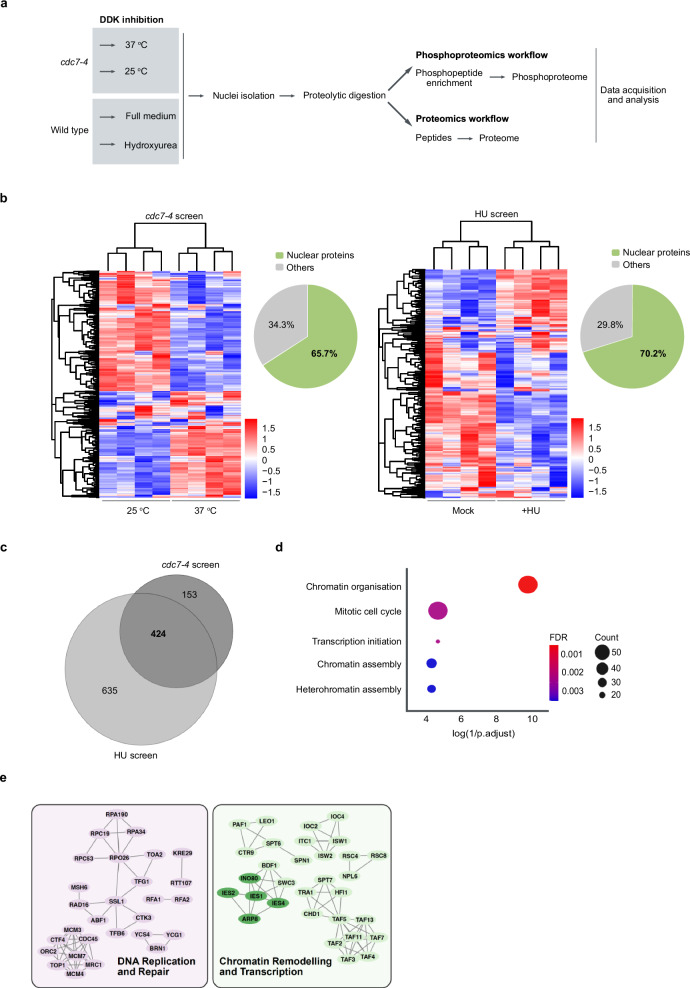 Figure 1
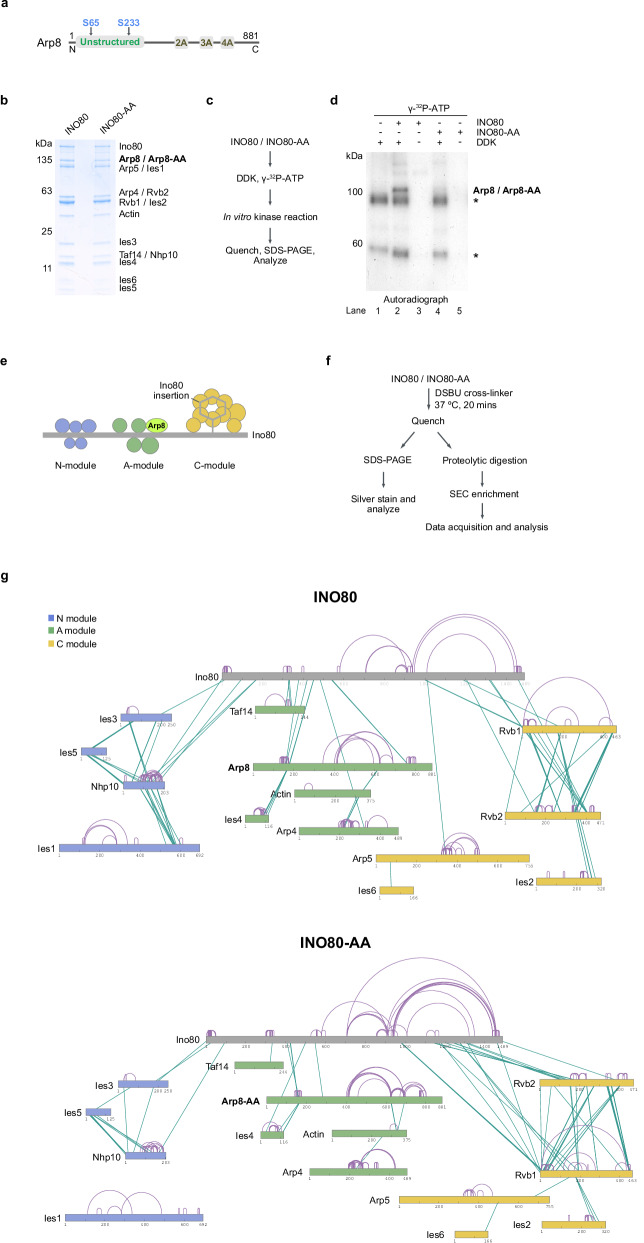 Figure 2
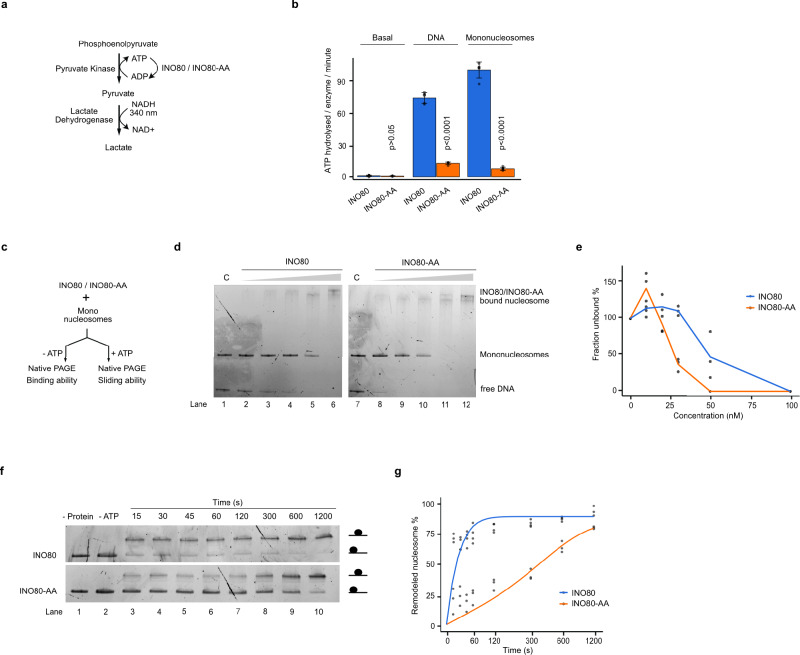 Figure 3
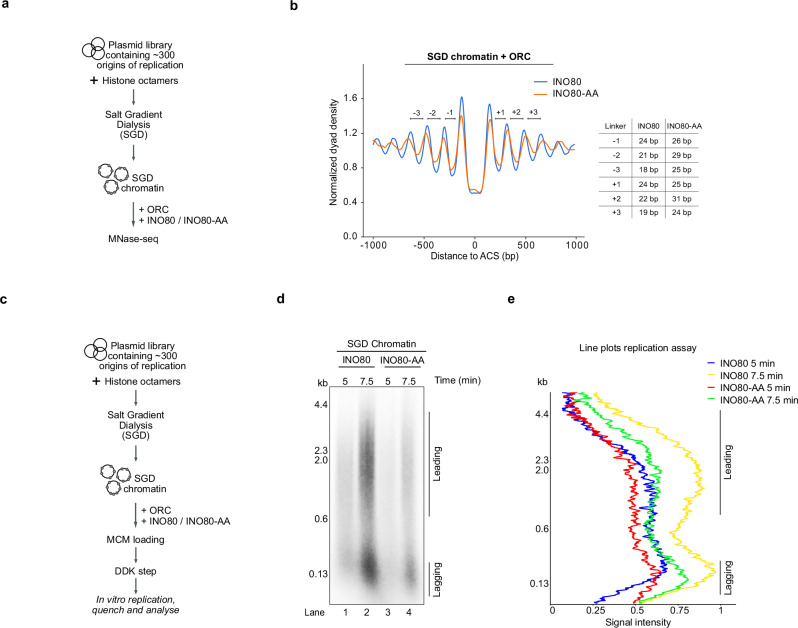 Figure 4
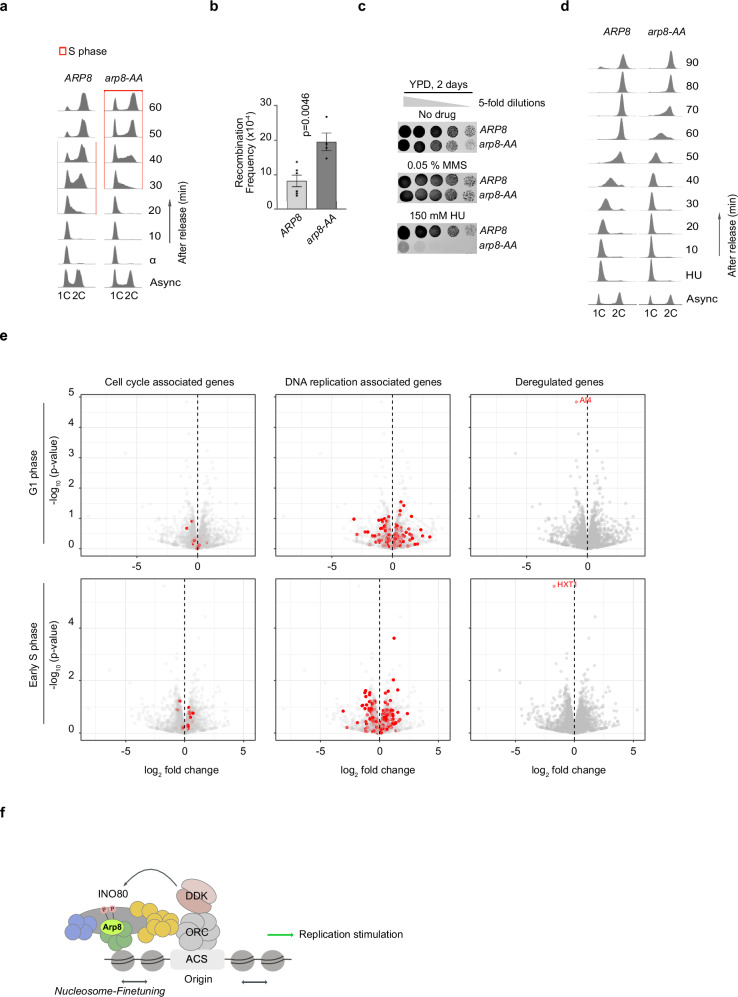 Figure 5
Peer Reviews
No public reviews on file for this paper yet. If you reviewed it on a platform where reviews are public (OpenReview, ICLR, NeurIPS, ICML), you can paste yours below so the community can read it here.
Videos
No videos yet. Explain this paper in a talk, walkthrough, or lecture? Add one.
Taxonomy
TopicsDNA Repair Mechanisms · Genetic factors in colorectal cancer · Microtubule and mitosis dynamics