Dual-role iron species in photoelectrocatalytic radical trifluoromethylation with trifluoroacetates
Sara Fernández-García, Sara Cuadros, Irene Bosque, Jose C. Gonzalez-Gomez, Francisco Juliá-Hernández

TL;DR
This paper introduces a new method for adding trifluoromethyl groups to molecules using light and electricity, avoiding harmful byproducts and making the process more sustainable.
Contribution
The study introduces a dual-function iron species in a photoelectrocatalytic system for efficient trifluoromethylation without stoichiometric oxidants.
Findings
The method uses in situ-generated iron species to enable C(sp²)–H trifluoromethylation without stoichiometric oxidants.
The process produces traceless byproducts and works under mild, tunable, and scalable conditions.
It allows functionalization of diverse (hetero)cyclic scaffolds, including electron-rich and easily oxidizable substrates.
Abstract
Trifluoromethylation remains a fundamental transformation in drug discovery, underpinning many top-selling pharmaceuticals. Emerging developments in iron ligand-to-metal charge transfer (LMCT) catalysis have redefined fluoroalkylation chemistry by unlocking the repurposing of readily available trifluoroacetates as radical trifluoromethyl sources. Recent (hetero)arene trifluoromethylation methods generally require stoichiometric inorganic oxidants to turnover photoactive iron catalysts, thereby limiting their broader applicability. Herein, we present an integrated photoelectrocatalytic strategy employing in situ-generated multifunctional iron species to achieve C(sp²)–H trifluoromethylation without stoichiometric oxidants and generating only traceless byproducts. Mechanistic studies identify catalytically active iron species exhibiting a dual synergistic function: promoting the…
Genes, proteins, chemicals, diseases, species, mutations and cell lines named across the full text — each resolved to its canonical identifier and authoritative record.
Click any figure to enlarge with its caption.
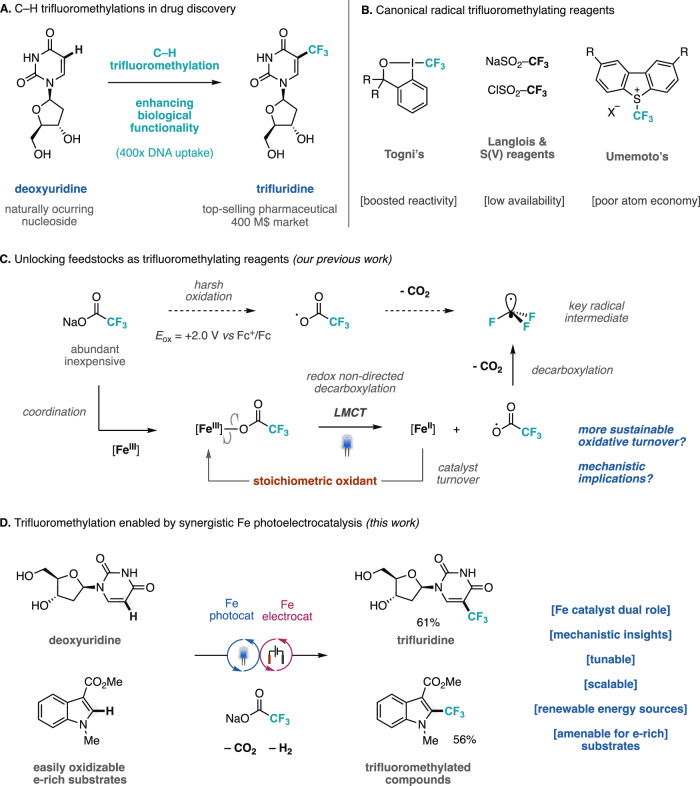 Figure 1
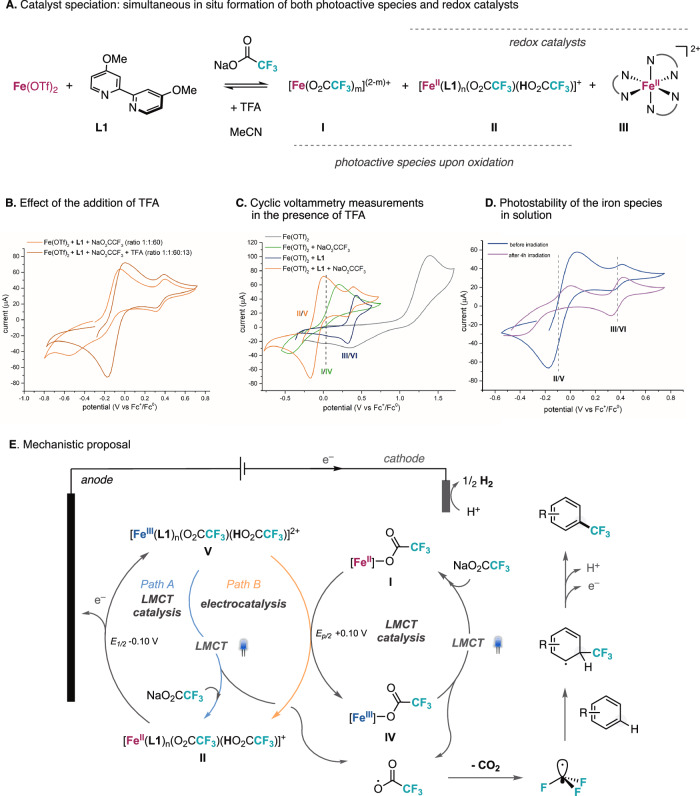 Figure 2
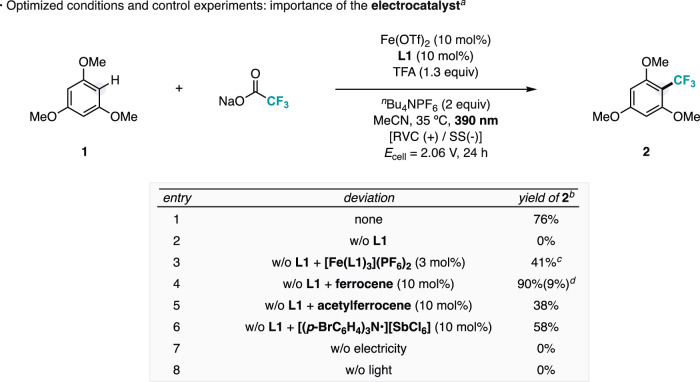 Figure 3
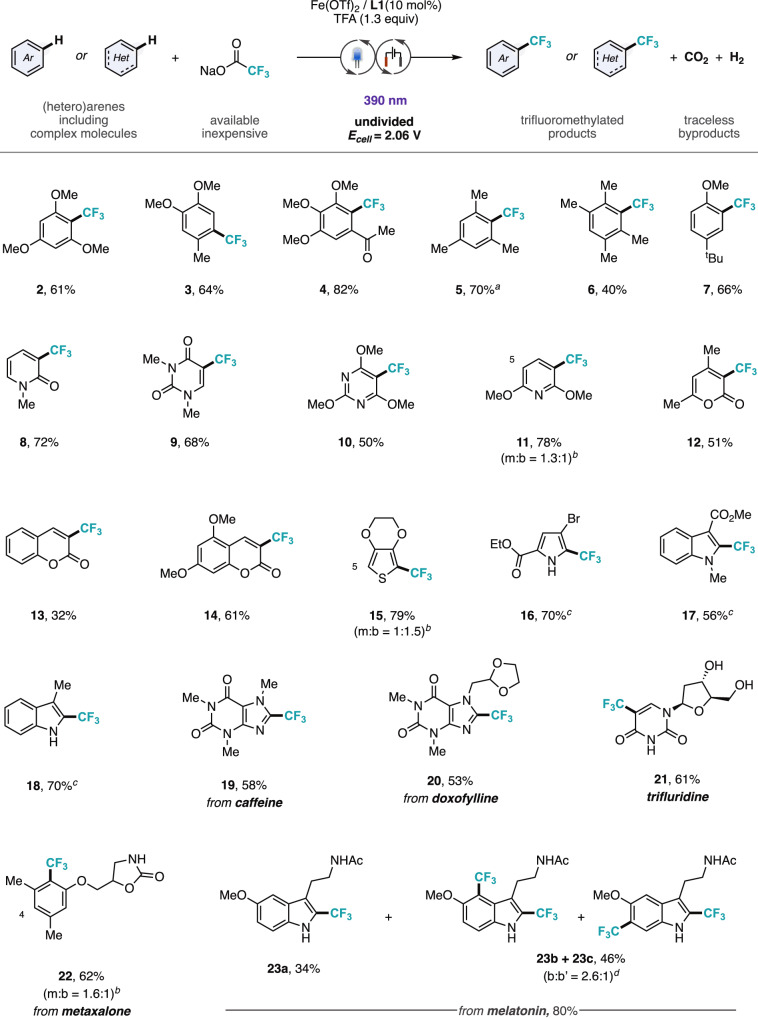 Figure 4
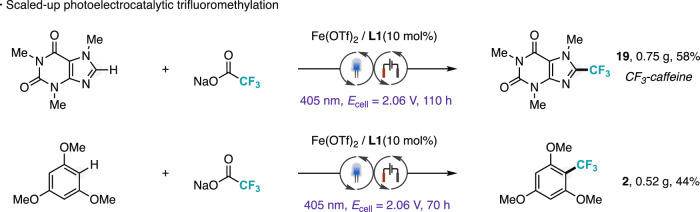 Figure 5
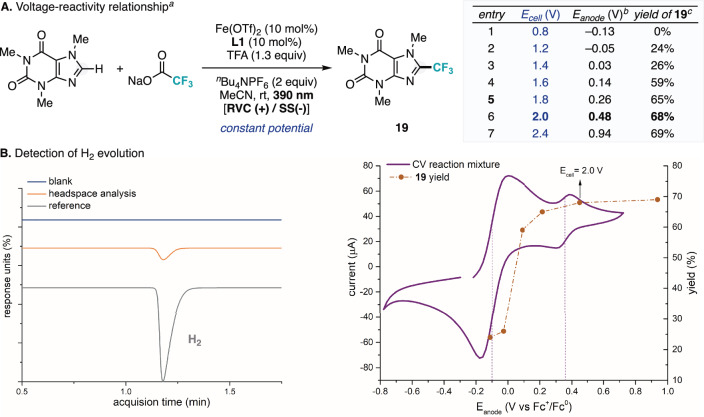 Figure 6
Peer Reviews
No public reviews on file for this paper yet. If you reviewed it on a platform where reviews are public (OpenReview, ICLR, NeurIPS, ICML), you can paste yours below so the community can read it here.
Videos
No videos yet. Explain this paper in a talk, walkthrough, or lecture? Add one.
Taxonomy
TopicsFluorine in Organic Chemistry · Radical Photochemical Reactions · Inorganic Fluorides and Related Compounds