Light-induced assembly and repeatable actuation in Ca2+-driven chemomechanical protein networks
Xiangting Lei, Carlos Floyd, Laura Casas-Ferrer, Tuhin Chakrabortty, Nithesh Chandrasekharan, Aaron R. Dinner, Scott Coyle, Jerry Honts, Saad Bhamla

TL;DR
Researchers developed a light-controlled protein network that can rapidly assemble and contract, enabling precise control over soft materials for applications like synthetic cells and programmable biomaterials.
Contribution
A novel light-controlled chemomechanical network using Tcb2 protein with repeatable actuation and optical control is introduced.
Findings
Tcb2 networks exhibit dynamic self-assembly and contraction rates comparable to actomyosin systems.
Optically triggered Ca2+ release enables precise growth and repeatable mechanical contractility.
A reaction-diffusion and elastic model explains network dynamics and enables programmable actuation.
Abstract
Programming rapid, repeatable motions in soft materials has remained a challenge in active matter and biomimetic design. Here, we present a light-controlled chemomechanical network based on Tetrahymena thermophila calcium-binding protein 2 (Tcb2), a Ca2+-sensitive contractile protein. These networks—driven by Ca2+-triggered structural rearrangements—exhibit dynamic self-assembly, spatiotemporal growth, and contraction rates comparable to actomyosin systems. By coupling light-sensitive chelators for optically triggered Ca2+ release, we achieve precise growth and repeatable mechanical contractility of Tcb2 networks, revealing emergent phenomena such as boundary-localized active regions and density gradient-driven reversals in motion. A coupled reaction-diffusion and elastic model explains these dynamics, highlighting the interplay between chemical network assembly and mechanical response.…
Genes, proteins, chemicals, diseases, species, mutations and cell lines named across the full text — each resolved to its canonical identifier and authoritative record.
Click any figure to enlarge with its caption.
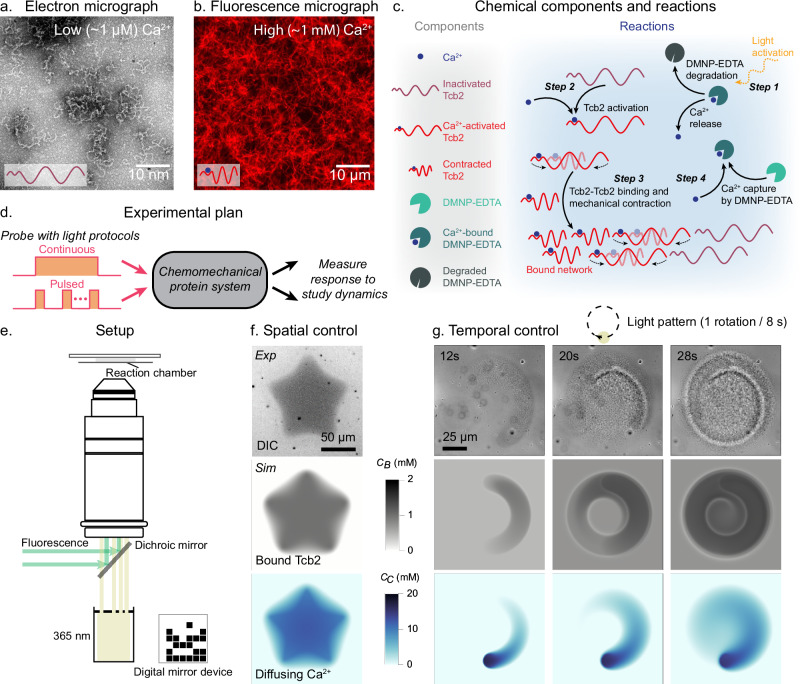 Figure 1
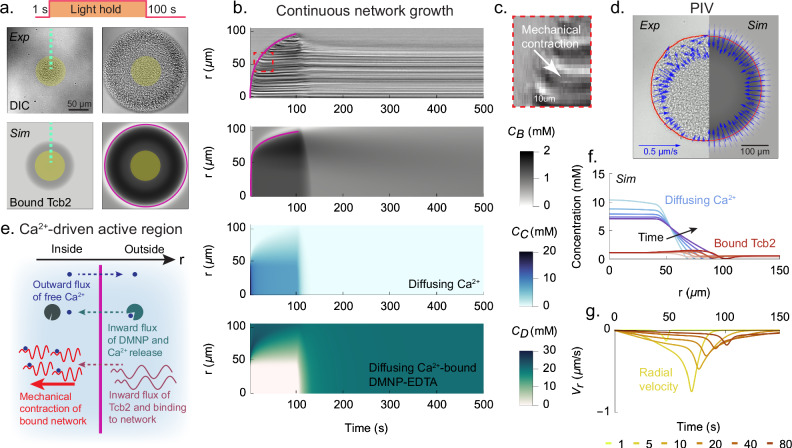 Figure 2
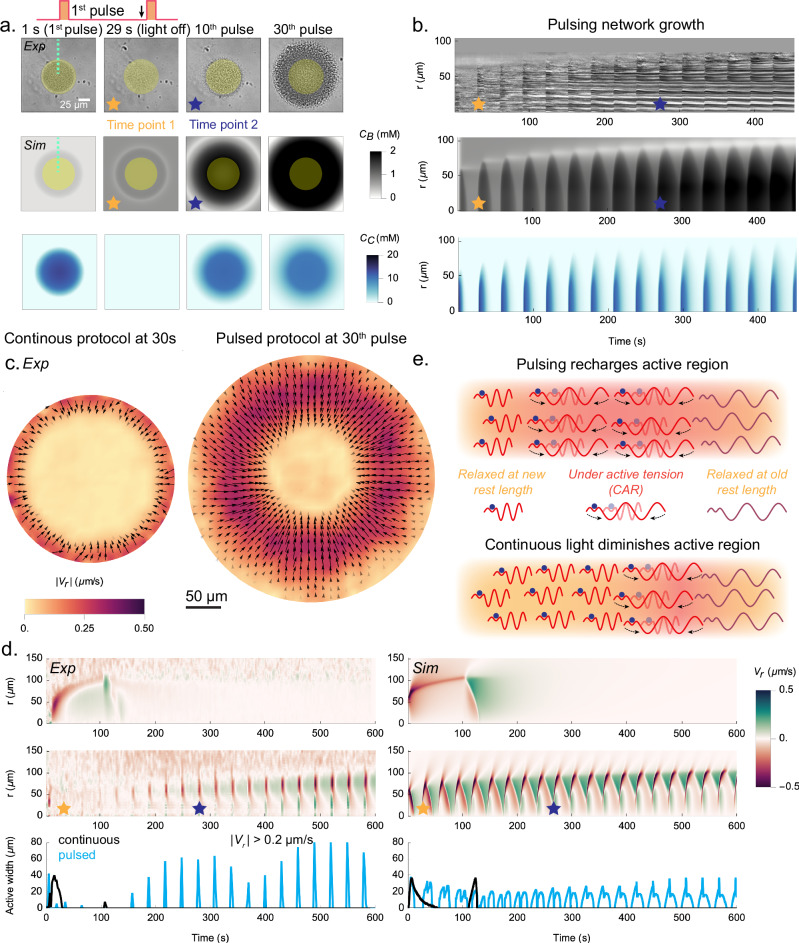 Figure 3
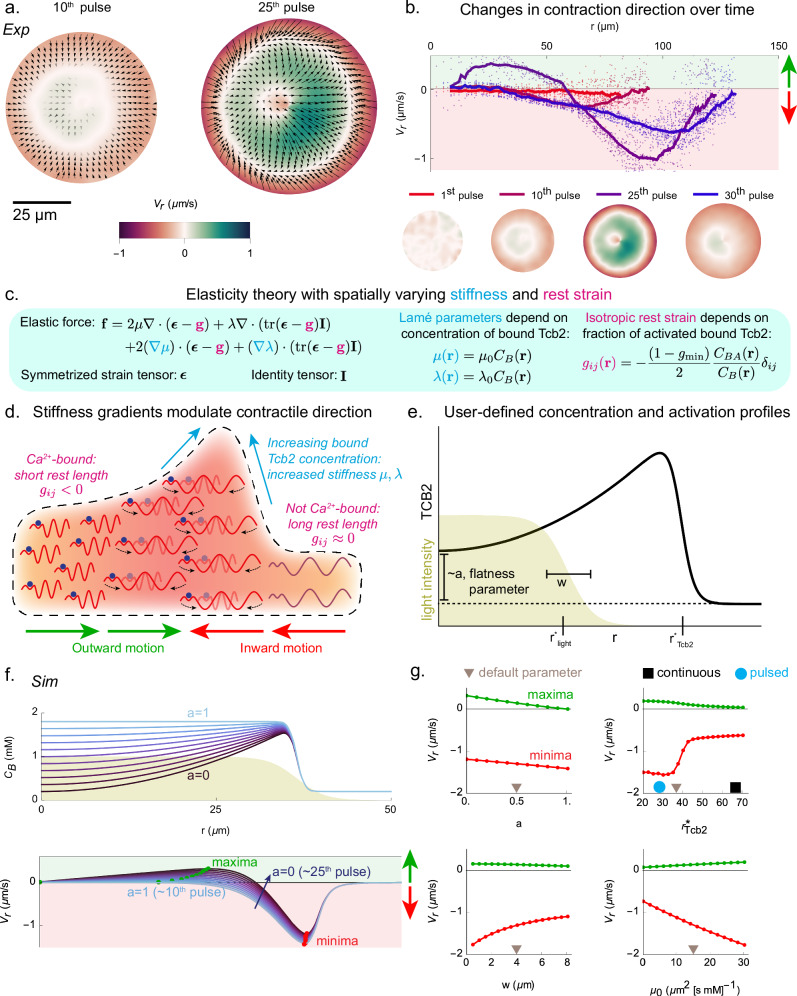 Figure 4
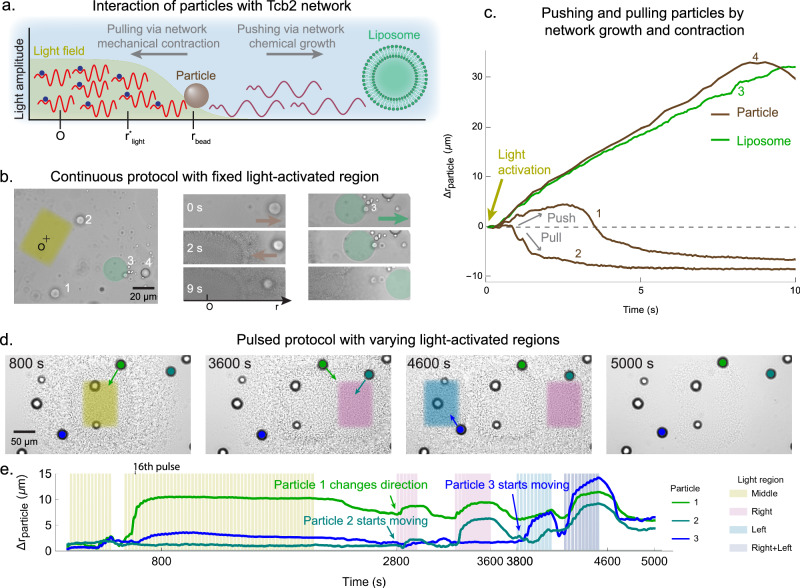 Figure 5
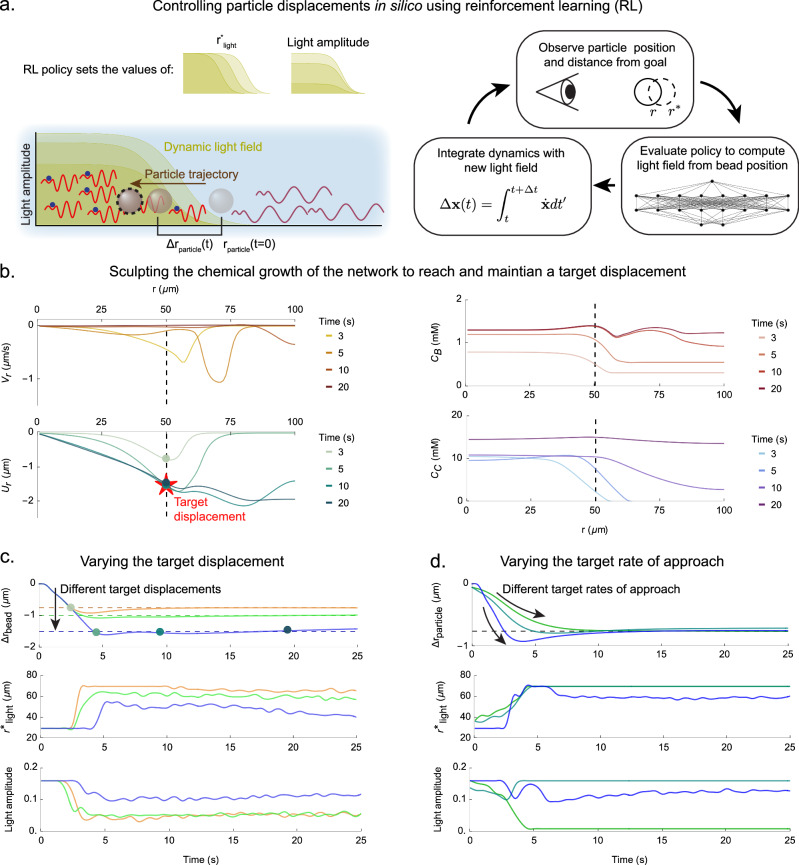 Figure 6
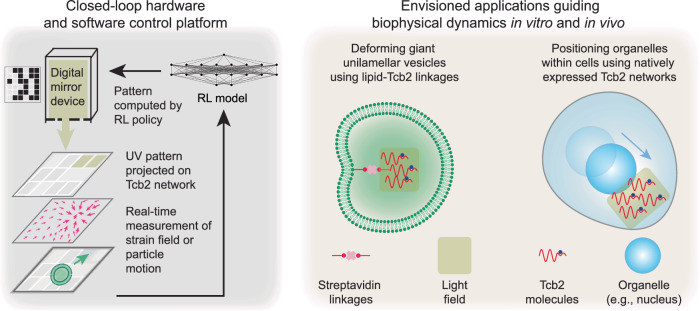 Figure 7
Peer Reviews
No public reviews on file for this paper yet. If you reviewed it on a platform where reviews are public (OpenReview, ICLR, NeurIPS, ICML), you can paste yours below so the community can read it here.
Videos
No videos yet. Explain this paper in a talk, walkthrough, or lecture? Add one.
Taxonomy
TopicsMicro and Nano Robotics · Advanced Materials and Mechanics · Cellular Mechanics and Interactions