Mechanism of beta-arrestin 1 mediated Src activation via Src SH3 domain revealed by cryo-electron microscopy
Natalia Pakharukova, Brittany N. Thomas, Harsh Bansia, Linus Li, Dana K. Bassford, Rinat R. Abzalimov, Jihee Kim, Alem W. Kahsai, Biswaranjan Pani, Kunhong Xiao, Roni Ochakovski, Shibo Liu, Xingdong Zhang, Seungkirl Ahn, Amedee des Georges, Robert J. Lefkowitz

TL;DR
This paper reveals how beta-arrestin 1 activates the Src protein using structural insights from cryo-electron microscopy.
Contribution
The study provides the first structural mechanism of beta-arrestin 1-mediated Src activation through SH3 domain interactions.
Findings
Beta-arrestin 1 interacts with Src's SH3 domain via two distinct sites.
These interactions disrupt Src's autoinhibited state and trigger its activation.
The findings suggest beta-arrestin 1 functions as an active regulator, not just a scaffold.
Abstract
Beta-arrestins (βarrs) are key regulators and transducers of G-protein coupled receptor signaling; however, little is known of how βarrs communicate with their downstream effectors. Here, we delineate structural mechanisms underlying βarr-mediated signal transduction. Using cryo-electron microscopy, we elucidate how βarr1 recruits and activates the non-receptor tyrosine kinase Src, a well-established signaling partner of βarrs. βarr1 engages Src SH3 through two distinct sites, each employing a different recognition mechanism: a polyproline motif in the N-domain and a non-proline-based interaction in the central crest region. At both sites βarr1 interacts with the aromatic surface of SH3, disrupting the autoinhibited conformation of Src and directly triggering its allosteric activation. This structural evidence establishes βarr1 as an active regulatory protein rather than a passive…
Genes, proteins, chemicals, diseases, species, mutations and cell lines named across the full text — each resolved to its canonical identifier and authoritative record.
Click any figure to enlarge with its caption.
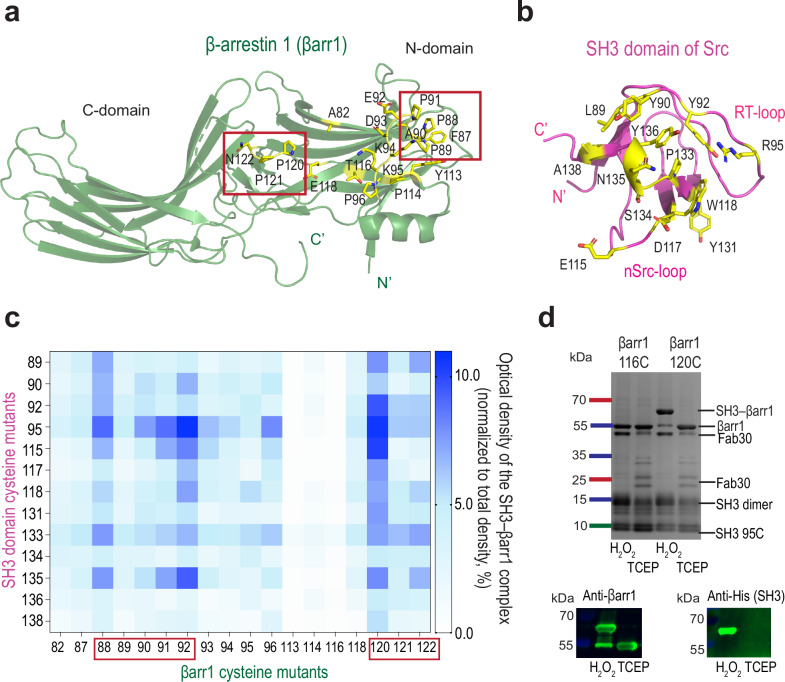 Figure 1
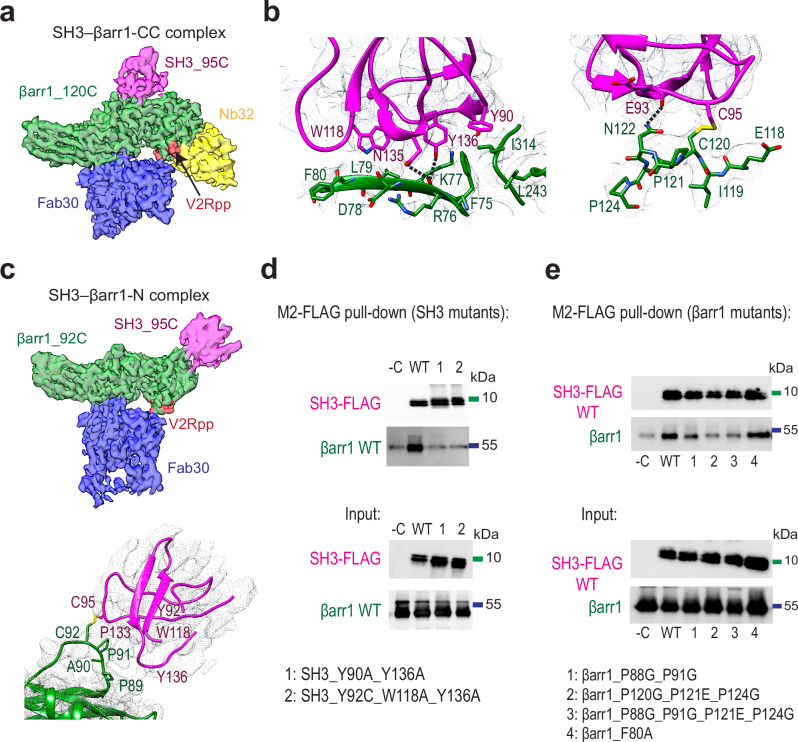 Figure 2
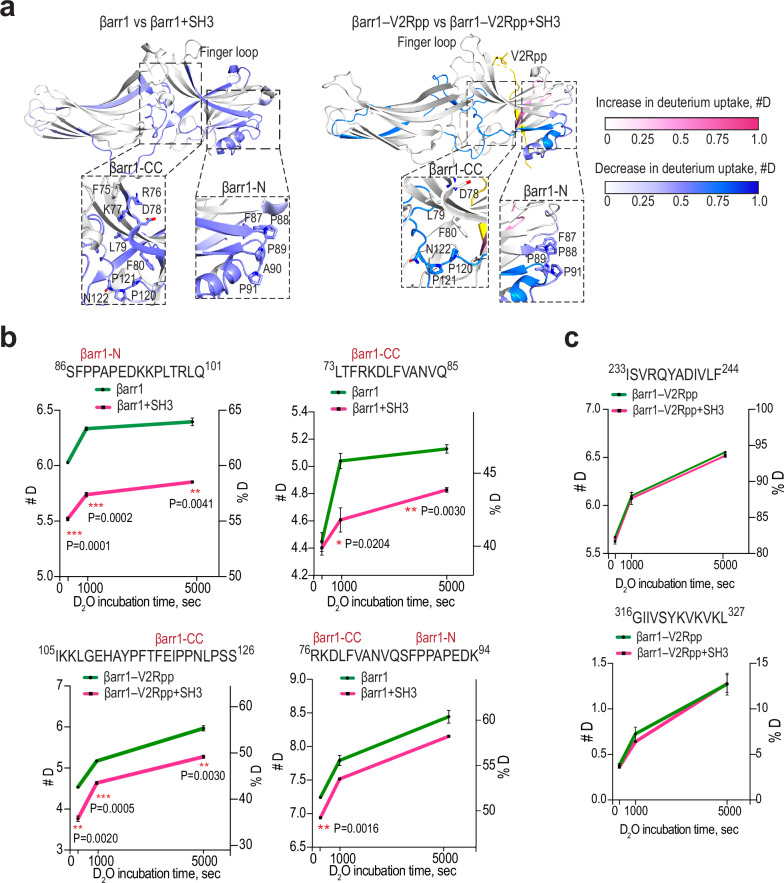 Figure 3
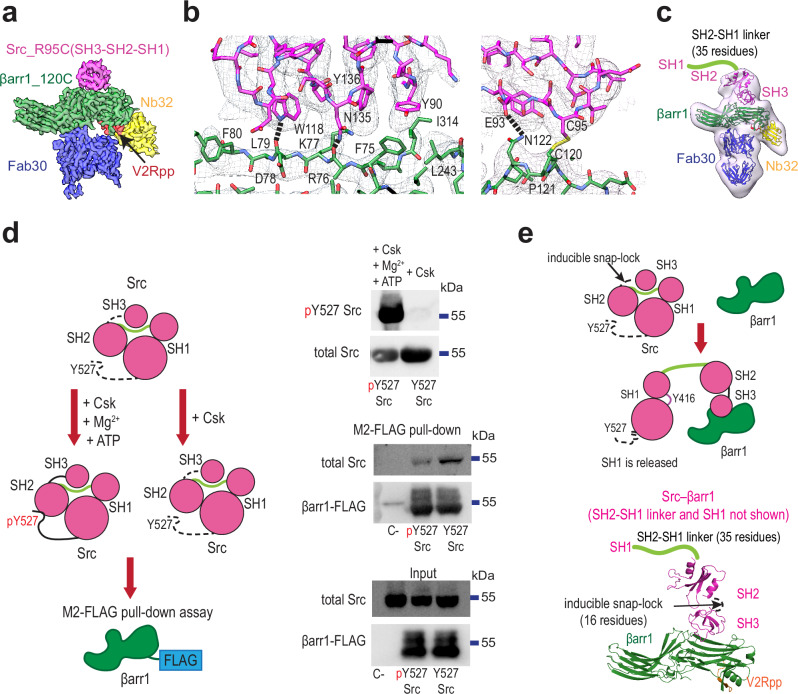 Figure 4
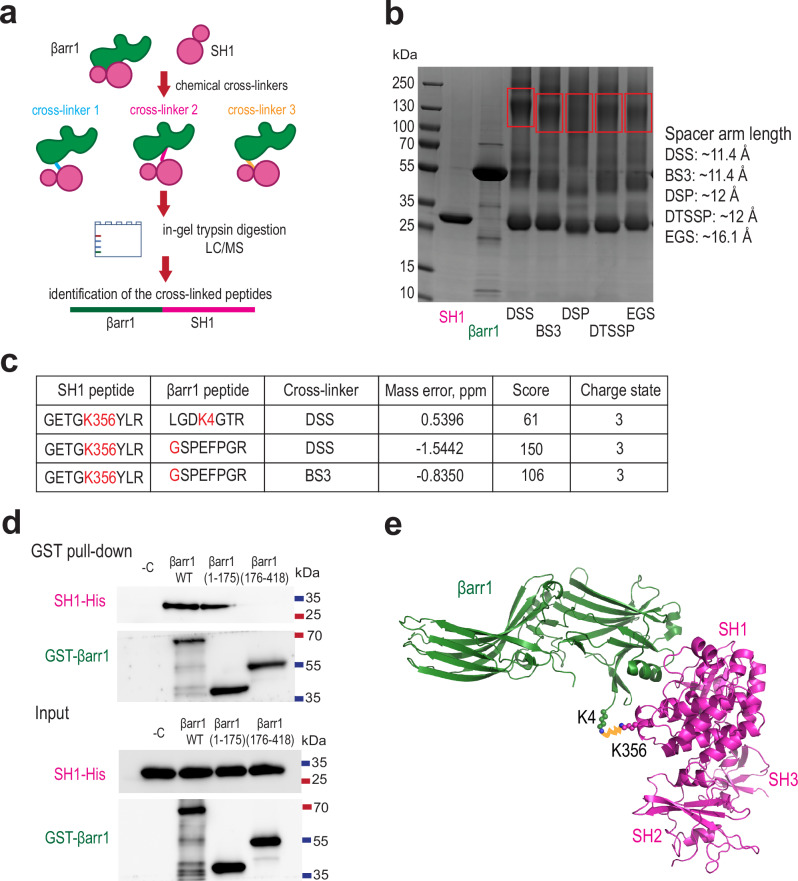 Figure 5
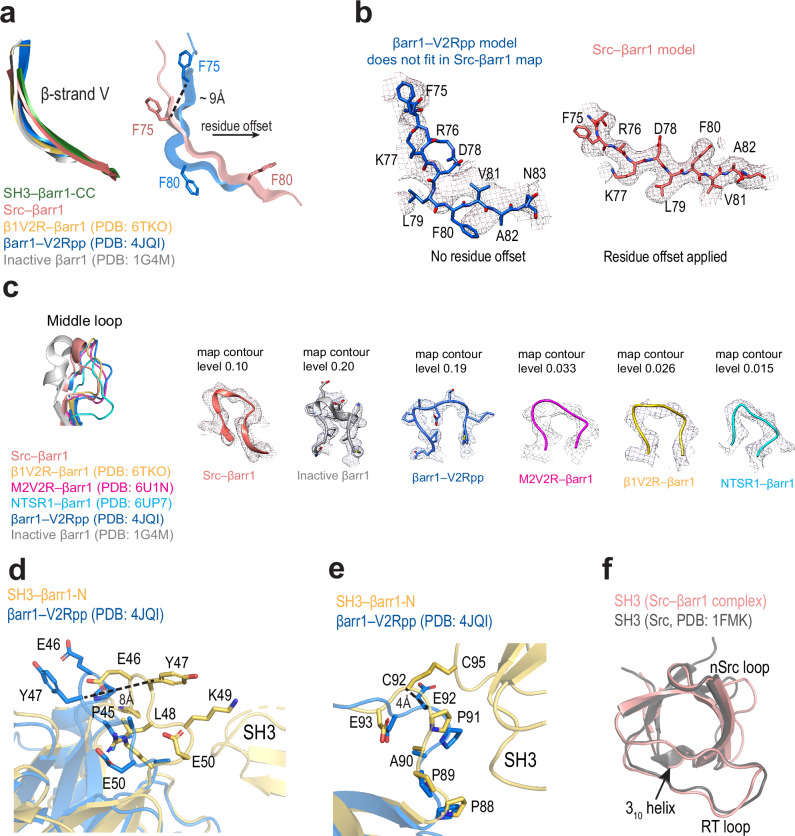 Figure 6
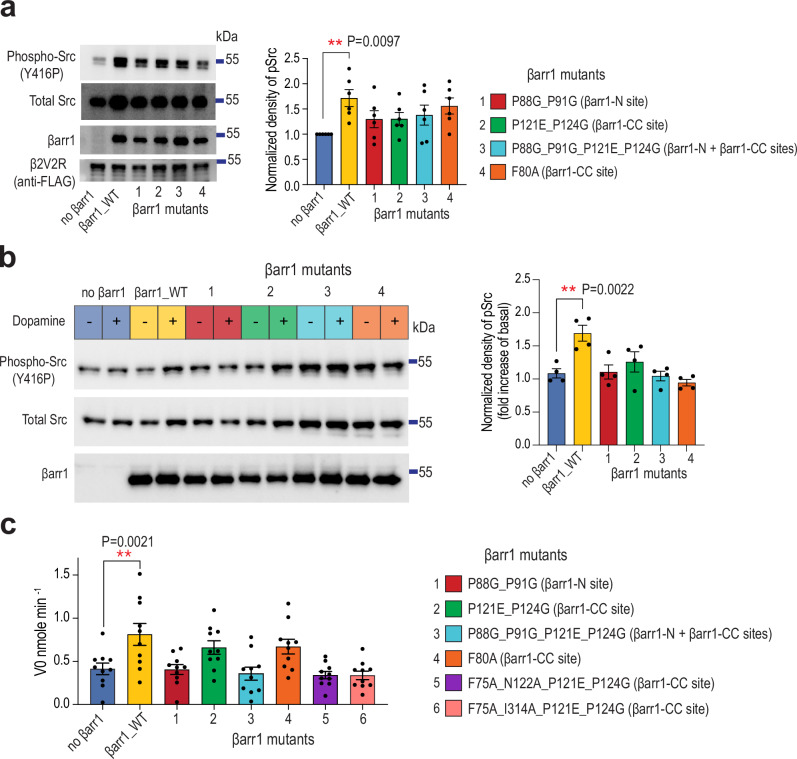 Figure 7
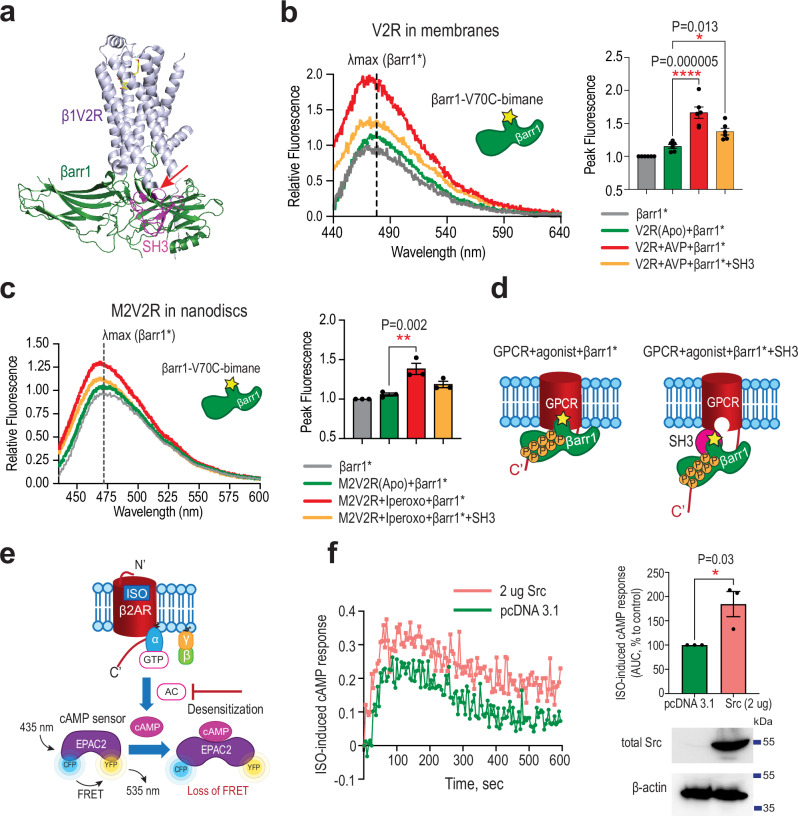 Figure 8
Peer Reviews
No public reviews on file for this paper yet. If you reviewed it on a platform where reviews are public (OpenReview, ICLR, NeurIPS, ICML), you can paste yours below so the community can read it here.
Videos
No videos yet. Explain this paper in a talk, walkthrough, or lecture? Add one.
Taxonomy
TopicsReceptor Mechanisms and Signaling · Renin-Angiotensin System Studies · Protein Kinase Regulation and GTPase Signaling