Cross-domain metabolic interactions link Methanobrevibacter smithii to colorectal cancer microbial ecosystems
Rokhsareh Mohammadzadeh, Alexander Mahnert, Tamara Zurabishvili, Lisa Wink, Christina Kumpitsch, Hansjoerg Habisch, Jannik Sprengel, Klara Filek, Polona Mertelj, Dominique Pernitsch, Kerstin Hingerl, Marija Durdevic, Gregor Gorkiewicz, Christian Diener, Alexander Loy

TL;DR
This study shows that Methanobrevibacter smithii, an archaeon in the gut, interacts with bacteria linked to colorectal cancer, possibly contributing to tumor development through metabolic cooperation.
Contribution
The study reveals novel cross-domain metabolic interactions between Methanobrevibacter smithii and CRC-associated bacteria, and identifies archaeal-derived tumor-modulating metabolites.
Findings
Methanobrevibacter smithii is consistently enriched in colorectal cancer patients across multiple studies.
M. smithii forms mutualistic interactions with CRC-causing bacteria like Fusobacterium nucleatum, enhancing metabolism.
Archaeal-derived compounds with tumor-modulating properties were identified through metabolomics.
Abstract
The human gut is colonized by trillions of microbes that influence the health of their human host. Whereas many bacterial species have now been linked to a variety of different diseases, the involvement of Archaea, an evolutionarily distinct group of microbes, in human disease remains elusive. By analyzing 19 independent clinical studies, we demonstrate that associations between Archaea and human diseases are widespread yet highly heterogeneous, with a pronounced and consistent enrichment of Methanobrevibacter smithii in colorectal cancer (CRC) patients. Metabolic modelling and in vitro co-culture identified distinct mutualistic interactions of M. smithii with CRC-causing bacteria such as Fusobacterium nucleatum, including metabolic enhancement. Metabolomics further reveal archaeal-derived compounds with tumor-modulating properties. Together, our results provide mechanistic insights…
Genes, proteins, chemicals, diseases, species, mutations and cell lines named across the full text — each resolved to its canonical identifier and authoritative record.
Click any figure to enlarge with its caption.
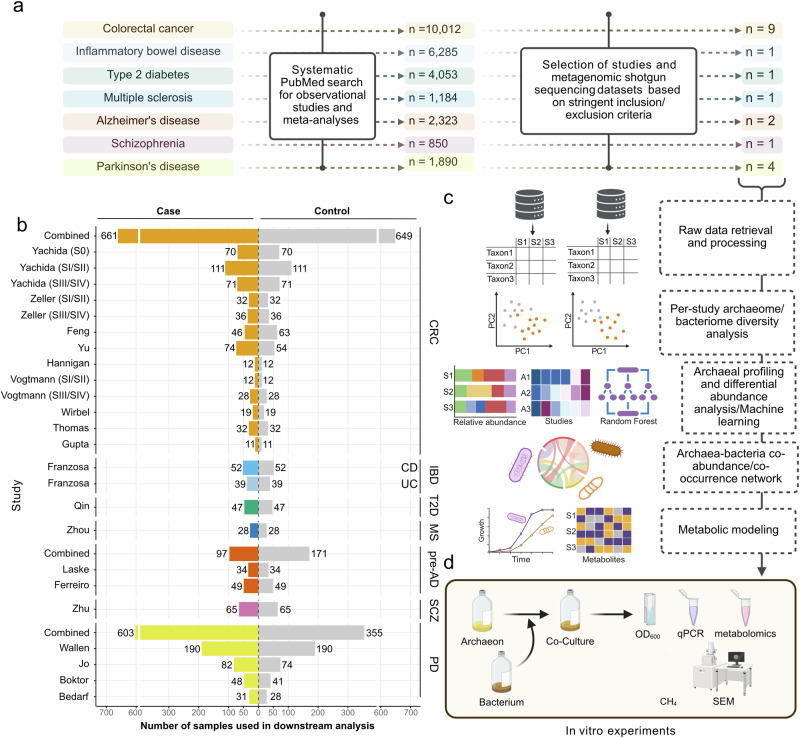 Figure 1
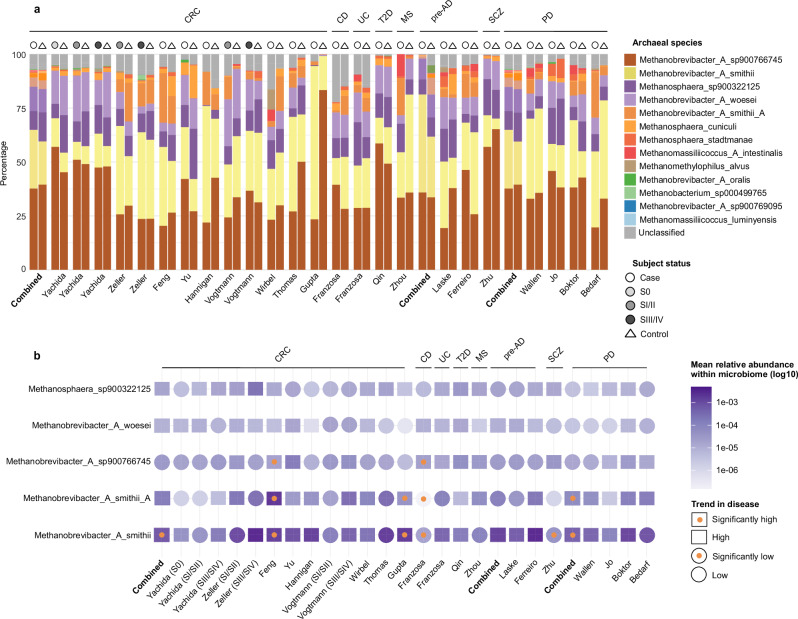 Figure 2
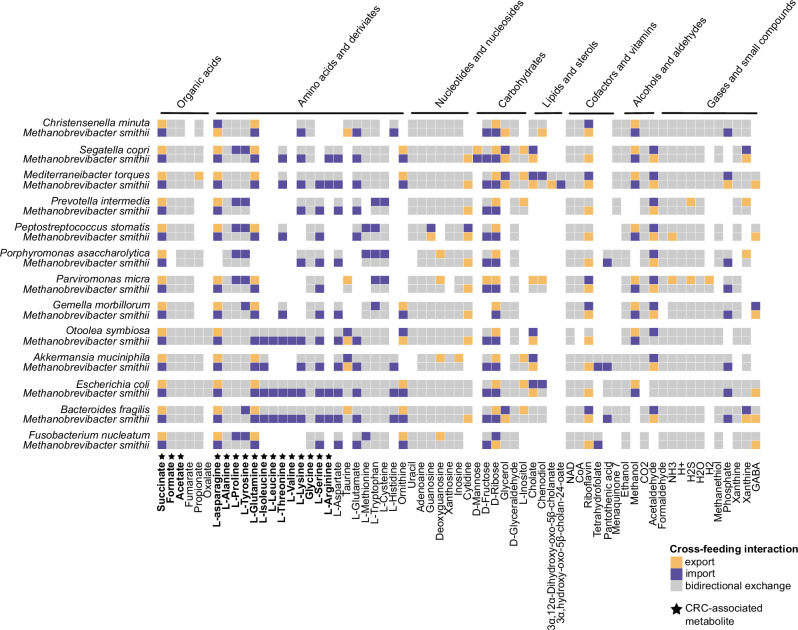 Figure 3
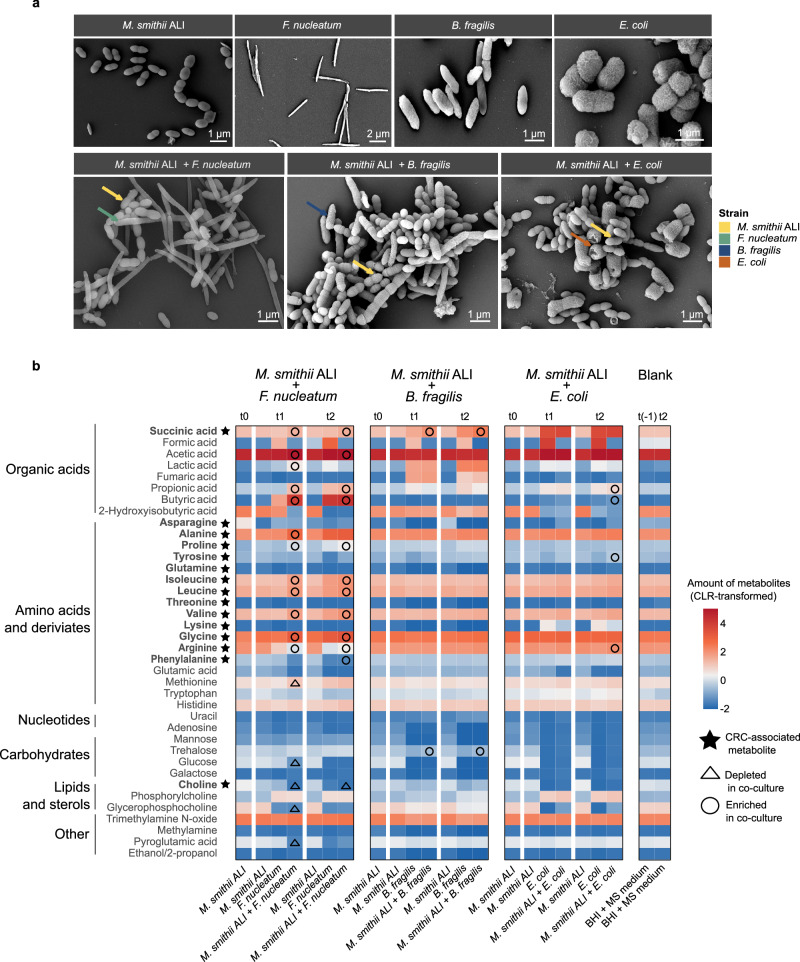 Figure 4
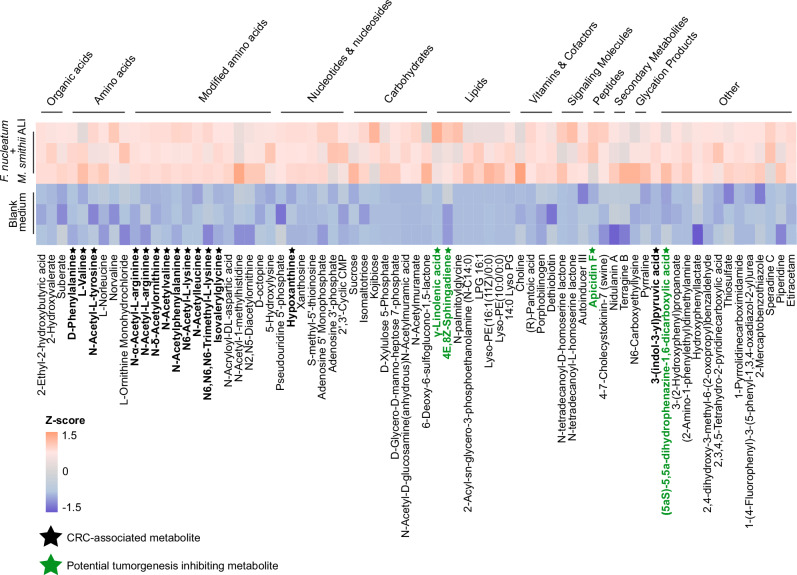 Figure 5
Peer Reviews
No public reviews on file for this paper yet. If you reviewed it on a platform where reviews are public (OpenReview, ICLR, NeurIPS, ICML), you can paste yours below so the community can read it here.
Videos
No videos yet. Explain this paper in a talk, walkthrough, or lecture? Add one.
Taxonomy
TopicsCancer Research and Treatments · Gut microbiota and health · Bacterial Genetics and Biotechnology