Q4ddPCR: a flexible, 4-target assay for high-resolution HIV reservoir profiling
Rachel Scheck, Mark Melzer, Gregory Gladkov, Louise Leyre, Adam R. Ward, Daniel B. Reeves, Naomi Perkins, T. Thinh Huynh, Deborah K. McMahon, Ronald J. Bosch, Bernard J. Macatangay, Joshua C. Cyktor, Joseph J. Eron, John W. Mellors, Rajesh T. Gandhi, Lisa Buchauer, R. Brad Jones

TL;DR
The paper introduces Q4ddPCR, a new assay that improves the accuracy of measuring HIV reservoirs by targeting four regions of the virus's genome.
Contribution
The novel contribution is the development of a multi-target droplet digital PCR assay that enhances HIV reservoir quantification and specificity.
Findings
Q4ddPCR reduces quantification gaps and assay dropout to 5% in measuring HIV reservoirs.
The assay closely correlates with viral outgrowth and tracks reservoir decay in longitudinal studies.
Multi-target readouts reveal clonal reservoir dynamics undetectable by existing methods.
Abstract
Precise and scalable quantification of the intact HIV reservoir is critical for advancing curative strategies. Current reservoir assays, such as the intact proviral DNA assay (IPDA), are limited by quantification failures or misclassification of defective proviruses due to HIV sequence heterogeneity. Q4ddPCR is a modular, droplet digital PCR simultaneously targeting four conserved regions in the HIV genome to improve specificity, reduce quantification gaps, and provide multi-layered readouts. It comprises two configurations: one fully based on Q4PCR primer/probes and one combining IPDA with gag and pol primer/probes from Q4PCR. We benchmark Q4ddPCR against 3650 near full-length proviral sequences from 13 virally suppressed people with HIV (PWH) generated by Q4PCR. Q4ddPCR closely matches sequence-confirmed reservoir measurements, and multi-probe readouts reveal clonal reservoir dynamics…
Genes, proteins, chemicals, diseases, species, mutations and cell lines named across the full text — each resolved to its canonical identifier and authoritative record.
Click any figure to enlarge with its caption.
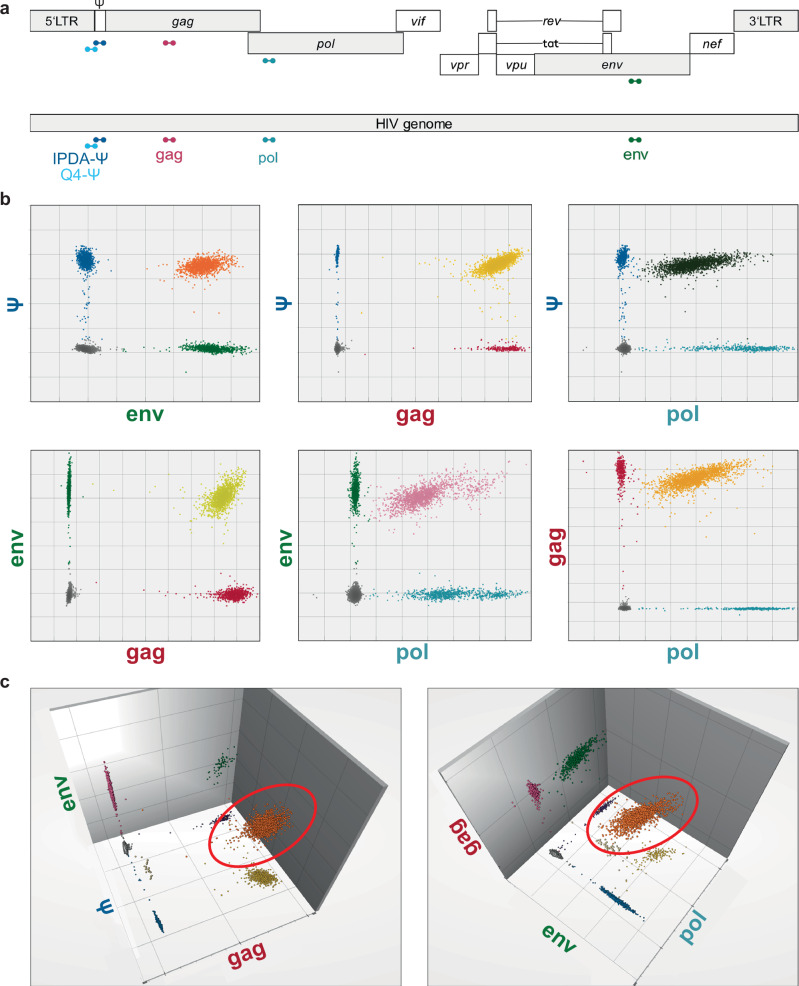 Figure 1
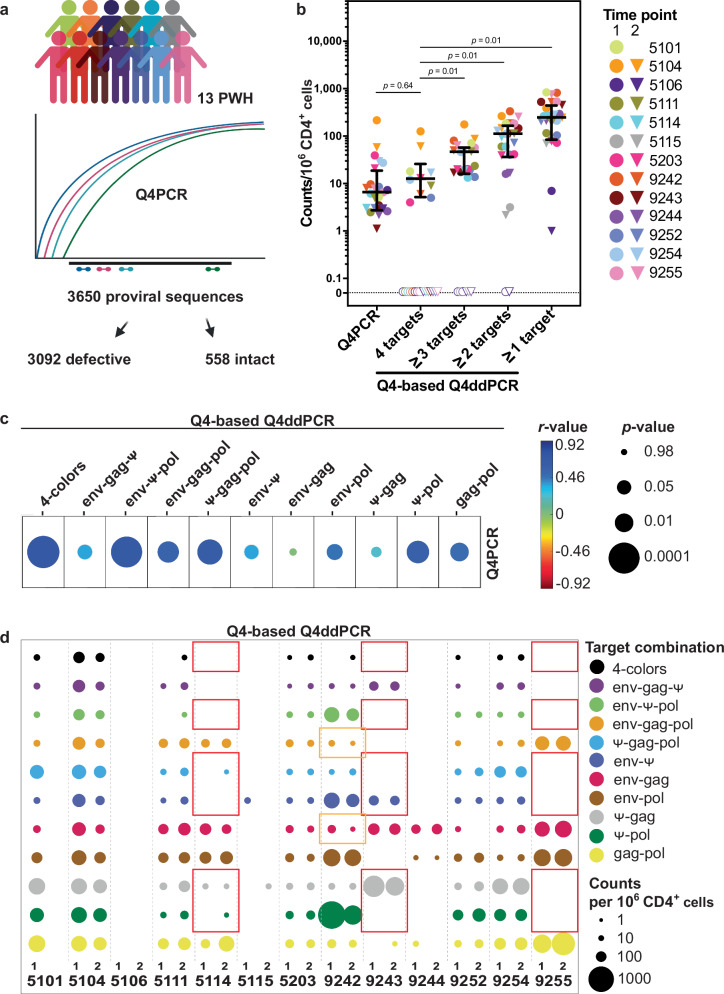 Figure 2
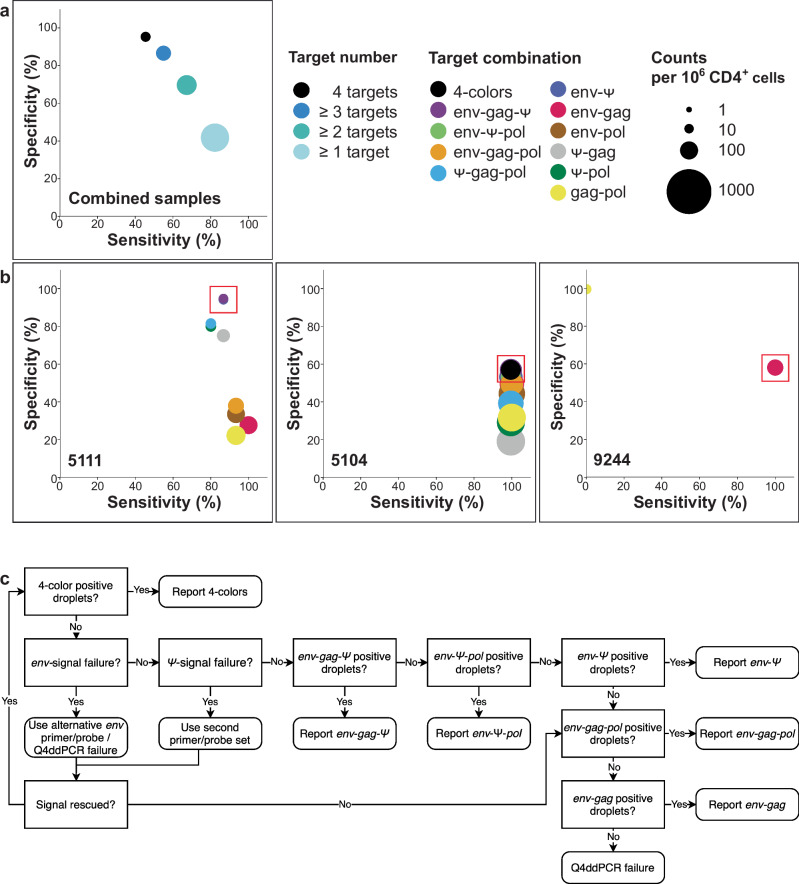 Figure 3
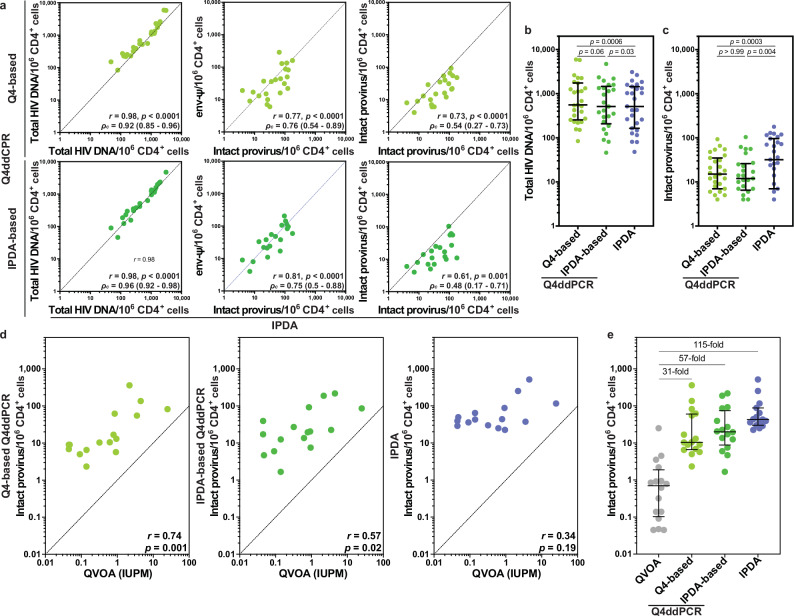 Figure 4
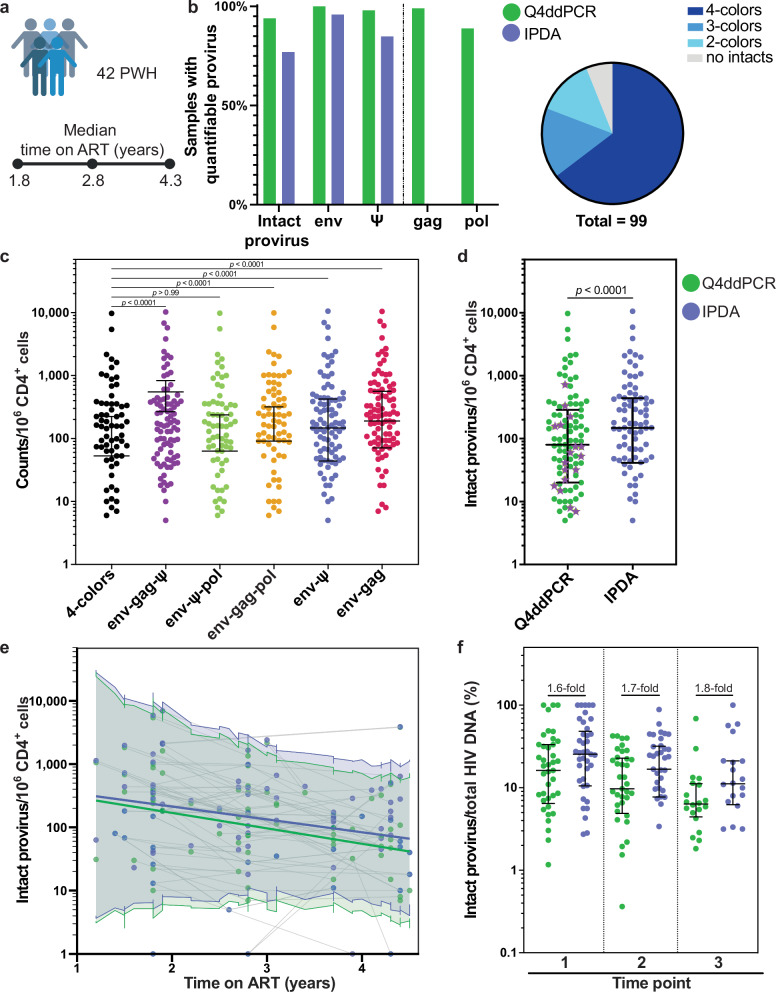 Figure 5
Peer Reviews
No public reviews on file for this paper yet. If you reviewed it on a platform where reviews are public (OpenReview, ICLR, NeurIPS, ICML), you can paste yours below so the community can read it here.
Videos
No videos yet. Explain this paper in a talk, walkthrough, or lecture? Add one.
Taxonomy
TopicsHIV Research and Treatment · Innovative Microfluidic and Catalytic Techniques Innovation · HIV/AIDS drug development and treatment