Intestinal interleukin-22 enhances GLP-1 production via the STAT3 pathway to improve glucose homeostasis during high-fat diet induced obesity in a study with male mice
Chae-Won Kim, Jae-Hee Ahn, Bo Ra Lee, Hong Min Kim, Youngjoo Han, Jae-Hyeon Jeong, Jaewon Cho, Hyunjin Jeong, Dae-Joon Kim, Seong-Eun Kim, Jeon-Kyung Kim, Yu-Bin Lee, Su Min Kim, Hye Hyun Yoo, Eun Hye Lee, Su Ryeon Seo, Kyung Bong Ha, Eun Soo Lee, Mi-Na Kweon, Hong Pyo Kim

TL;DR
This study shows that interleukin-22 in the intestines helps control blood sugar by boosting GLP-1 production in mice on high-fat diets.
Contribution
The study reveals a new role for IL-22 in regulating GLP-1 and glucose homeostasis via the STAT3 pathway in obesity.
Findings
IL-22 deficiency in mice reduces GLP-1 and worsens glucose tolerance on high-fat diets.
IL-22 activates STAT3 to directly increase GLP-1 production in the gut.
Butyrate boosts IL-22 and GLP-1 in an IL-22R-dependent manner, linking gut microbes to metabolic health.
Abstract
Metabolic disorders such as obesity and diabetes are influenced by glucagon-like peptide-1 (GLP-1), which regulates insulin secretion. Interleukin (IL)−22 maintains intestinal barrier function, yet its role in metabolic regulation remains unclear. Here, we show that intestinal IL-22 deficiency reduces GLP-1 production and impairs glucose tolerance in high-fat diet–fed male mice, whereas long-term IL-22 administration restores GLP-1 levels, improves glucose tolerance, and normalizes insulin secretion and pancreatic islet size. IL-22 activates STAT3 binding to the Gcg promoter, indicating a direct role in GLP-1 induction. Butyrate supplementation increased IL-22 levels and enhanced GLP-1 production in an IL-22R–dependent manner, suggesting that microbial metabolites contribute to IL-22–mediated metabolic regulation. Direct IL-22 administration elevated circulating GLP-1 and improved…
Genes, proteins, chemicals, diseases, species, mutations and cell lines named across the full text — each resolved to its canonical identifier and authoritative record.
Click any figure to enlarge with its caption.
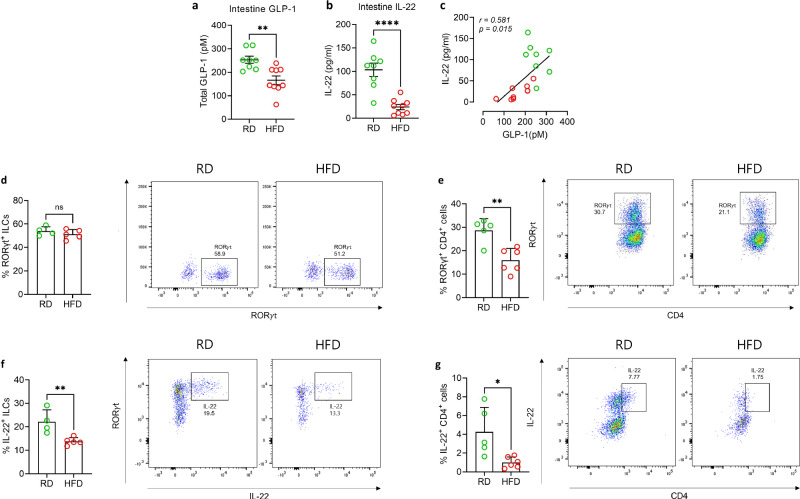 Figure 1
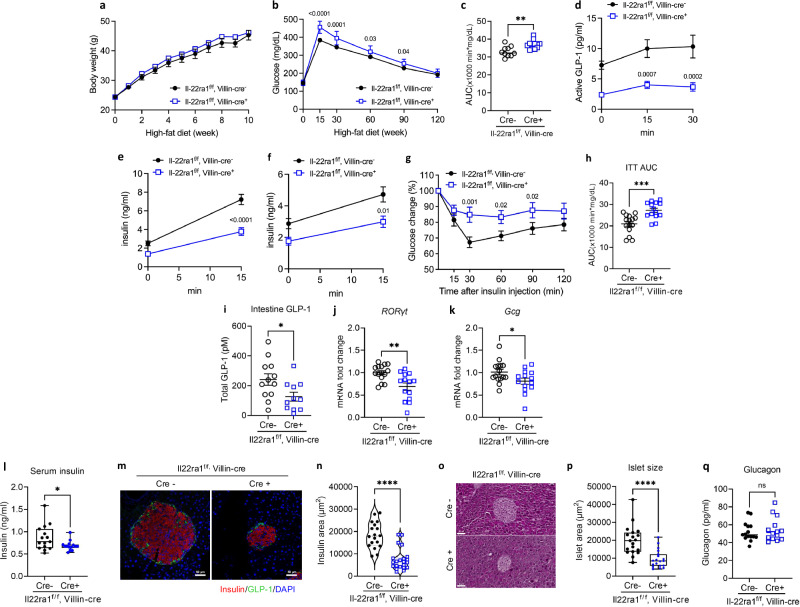 Figure 2
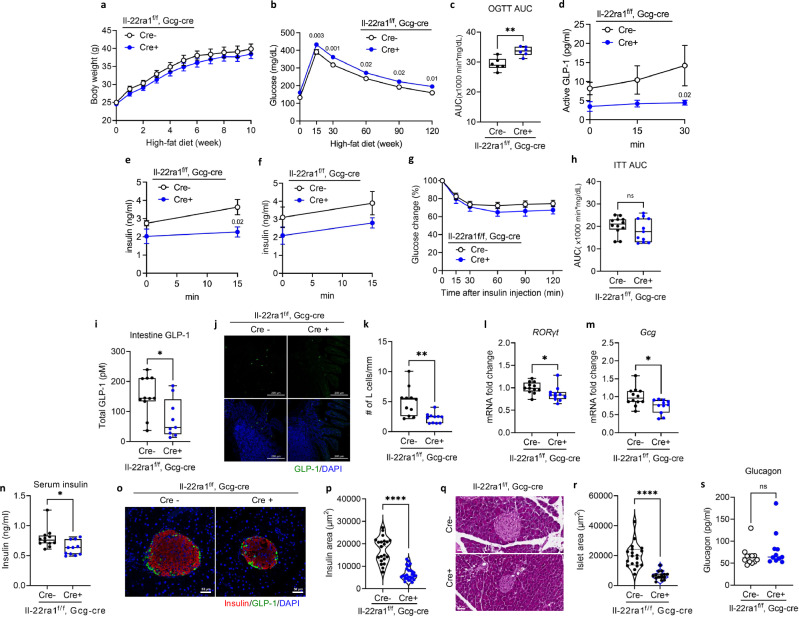 Figure 3
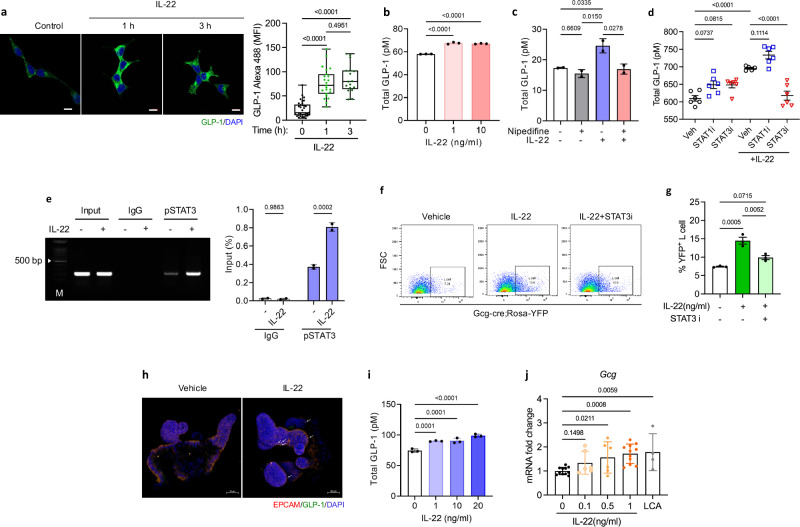 Figure 4
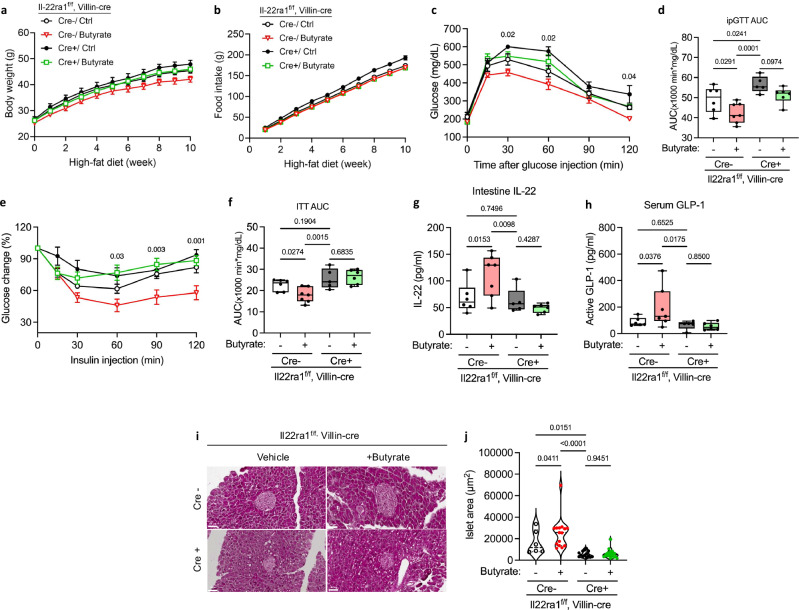 Figure 5
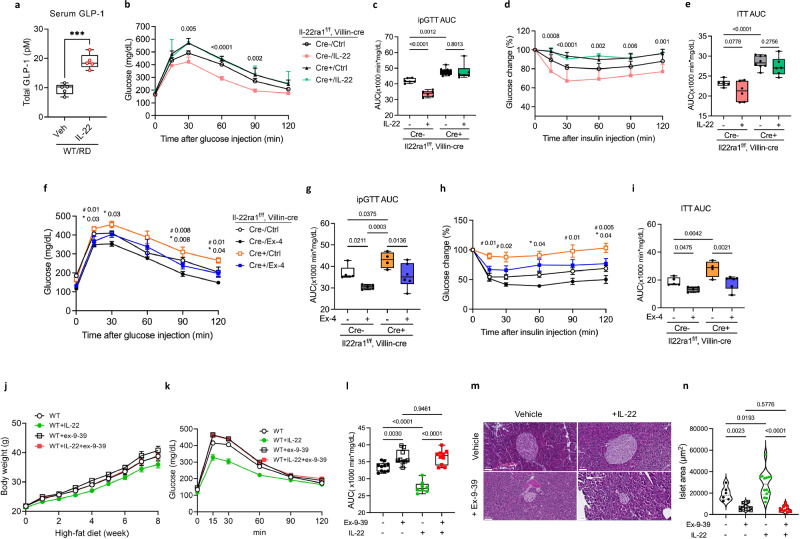 Figure 6
Peer Reviews
No public reviews on file for this paper yet. If you reviewed it on a platform where reviews are public (OpenReview, ICLR, NeurIPS, ICML), you can paste yours below so the community can read it here.
Videos
No videos yet. Explain this paper in a talk, walkthrough, or lecture? Add one.
Taxonomy
TopicsPsoriasis: Treatment and Pathogenesis · Diabetes Treatment and Management · Adipokines, Inflammation, and Metabolic Diseases