A signature-agnostic test for differences between tumor mutation spectra reveals carcinogen and ancestry effects
Samuel F. M. Hart, Nicolas Alcala, Alison F. Feder, Kelley Harris

TL;DR
A new statistical test detects differences in tumor mutation patterns, revealing effects of carcinogens and ancestry that are often missed by traditional methods.
Contribution
The paper introduces a signature-agnostic metric called AMSD to detect significant differences in mutation spectra between groups.
Findings
AMSD identifies mutation spectrum shifts in 11 out of 20 carcinogen-exposed mouse studies.
Ancestry is associated with distinct mutational patterns in human tumors across ten cancer types.
AMSD complements signature analysis by detecting environmental and genetic influences on mutagenesis.
Abstract
Despite dozens of tools to identify mutational signatures in cancer samples, there is not an established metric for quantifying whether signature exposures differ significantly between two heterogeneous groups of samples. We demonstrate that a signature-agnostic metric - the aggregate mutation spectrum distance permutation method (AMSD) - can rigorously determine whether mutational exposures differ between groups, a hypothesis that is not directly addressed by signature analysis. First, we reanalyze a study of carcinogen exposure in mice, determining that eleven of twenty tested carcinogens produce significant mutation spectrum shifts. Only three of these carcinogens were previously reported to induce distinct mutational signatures, suggesting that many carcinogens perturb mutagenesis by altering the composition of endogenous signatures. Next, we interrogate whether patient ancestry has…
Genes, proteins, chemicals, diseases, species, mutations and cell lines named across the full text — each resolved to its canonical identifier and authoritative record.
Click any figure to enlarge with its caption.
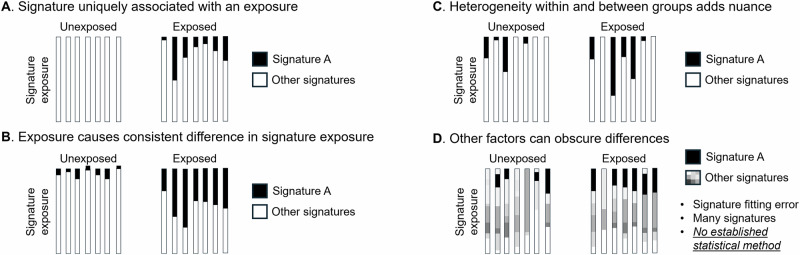 Figure 1
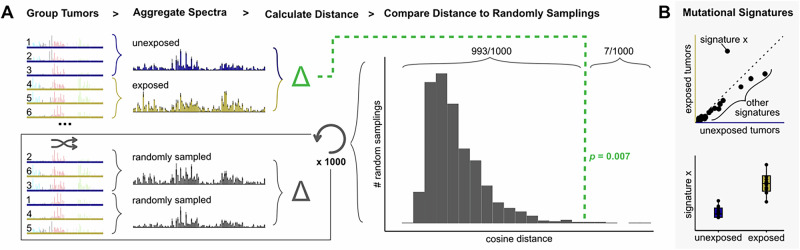 Figure 2
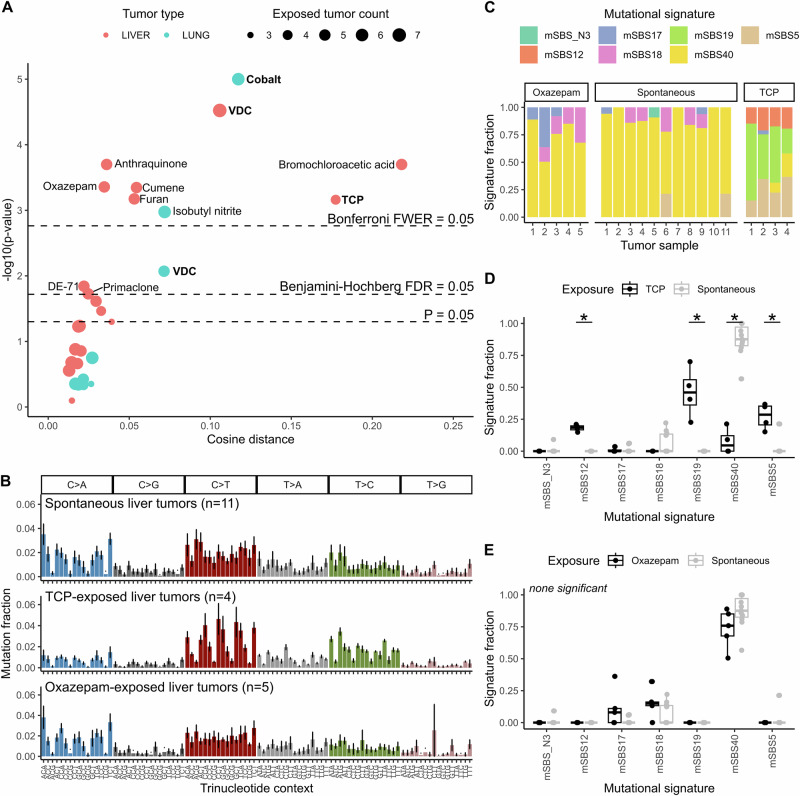 Figure 3
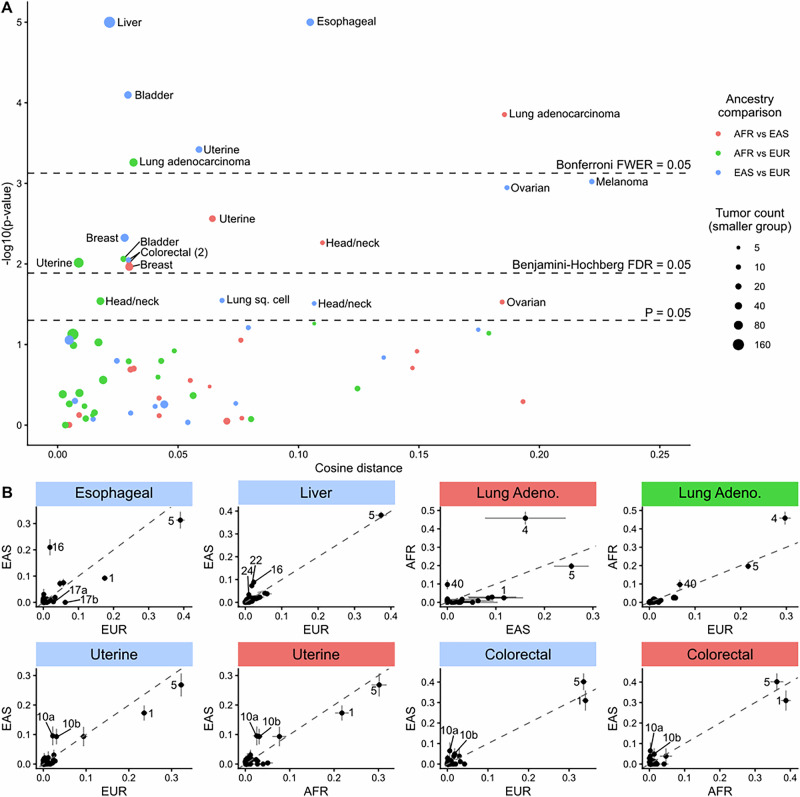 Figure 4
Peer Reviews
No public reviews on file for this paper yet. If you reviewed it on a platform where reviews are public (OpenReview, ICLR, NeurIPS, ICML), you can paste yours below so the community can read it here.
Videos
No videos yet. Explain this paper in a talk, walkthrough, or lecture? Add one.
Taxonomy
TopicsCancer Genomics and Diagnostics · Carcinogens and Genotoxicity Assessment · Glutathione Transferases and Polymorphisms