Phenylpropanoid metabolites from grape leaves contribute to strong defense roles against downy mildew based on physiological and transcriptomic analyses
Zhili Xun, Haijin Qin, Feng Li, Zhaoqian Yao, Yifan Xu, Min Wang, Liping Huang, Yue Zhu, Xueqing Geng, Qifeng Zhao

TL;DR
This study shows that grape leaves with higher levels of phenylpropanoid metabolites are more resistant to downy mildew, a serious grape disease.
Contribution
The study identifies specific genes and metabolites in grape leaves linked to resistance against downy mildew using transcriptomic and physiological analyses.
Findings
Moldova grape leaves showed higher resistance to downy mildew compared to Red Globe.
Moldova had higher levels of lignin, total phenols, and flavonoids, contributing to its resistance.
Transcriptomic analysis revealed that Moldova activated more disease-resistant genes in the phenylpropanoid pathway.
Abstract
Downy mildew caused by Plasmopara viticola seriously affects global grape production. In this study, the cultivars of Moldova and Red Globe were inoculated with Plasmopara viticola separately. The results showed that the inoculated sites on Red Globe leaves were densely covered with white cotton-like mycelial mats, whereas sparse white mycelia were observed on Moldova leaves. Disease index analysis of Moldova and Red Globe after inoculation with the pathogen showed that Red Globe had a much higher disease index than Moldova, indicating that Red Globe was a highly resistant cultivar, while Moldova was a susceptible cultivar. Furthermore, it was discovered that Moldova had significantly higher contents of lignin, total phenols, and flavonoids than Red Globe. Moreover, RNA-seq technology was used to analyze transcriptomic changes in Red Globe and Moldova after inoculation at 1 dpi and 5…
Genes, proteins, chemicals, diseases, species, mutations and cell lines named across the full text — each resolved to its canonical identifier and authoritative record.
Click any figure to enlarge with its caption.
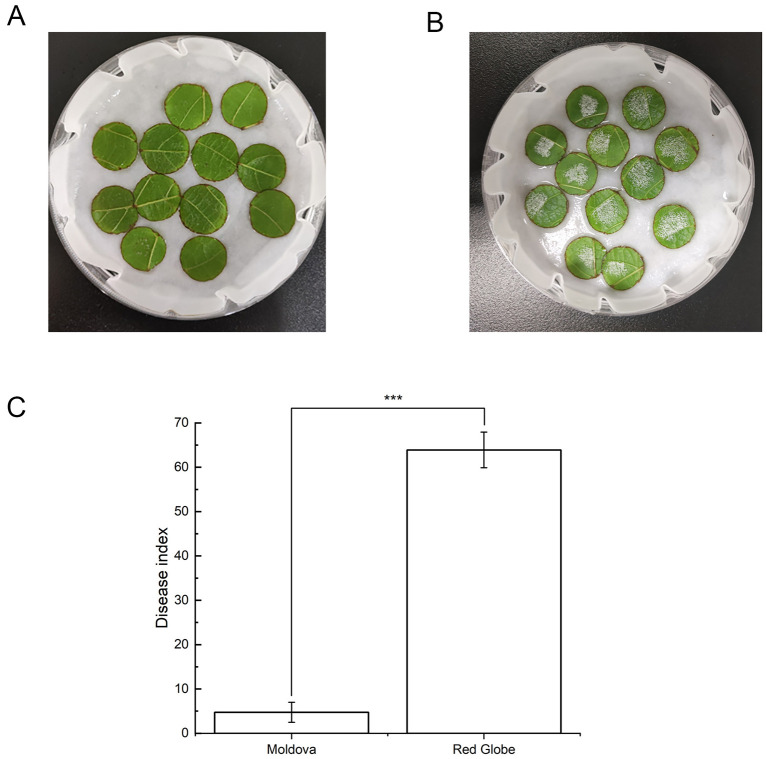 Figure 1
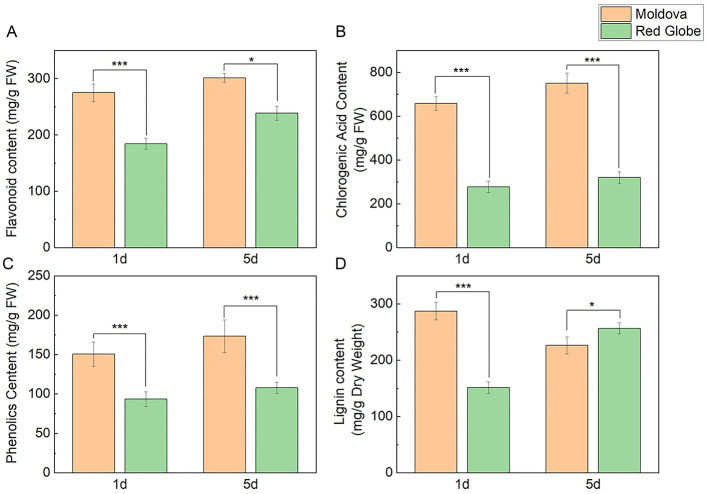 Figure 2
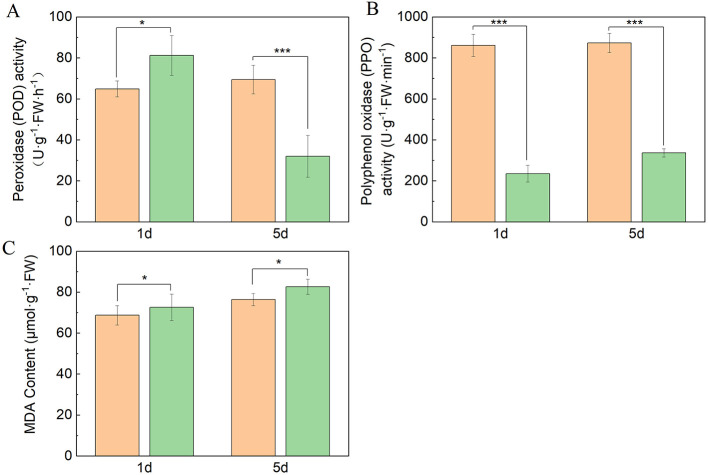 Figure 3
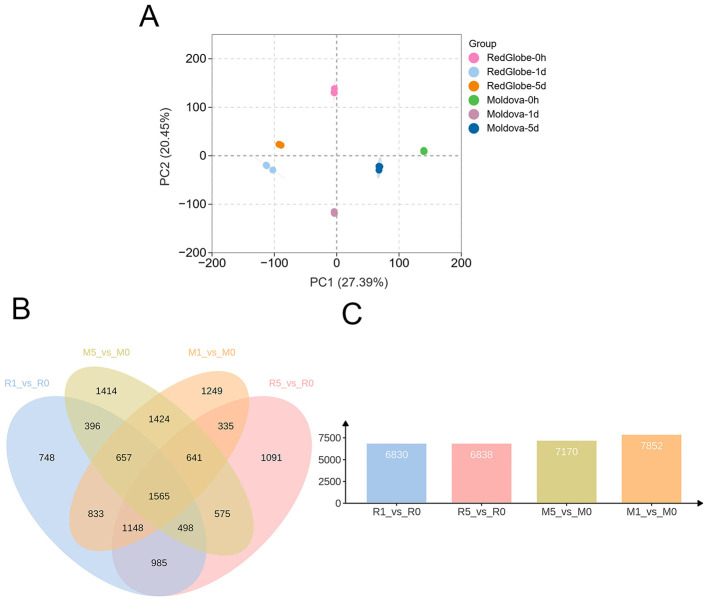 Figure 4
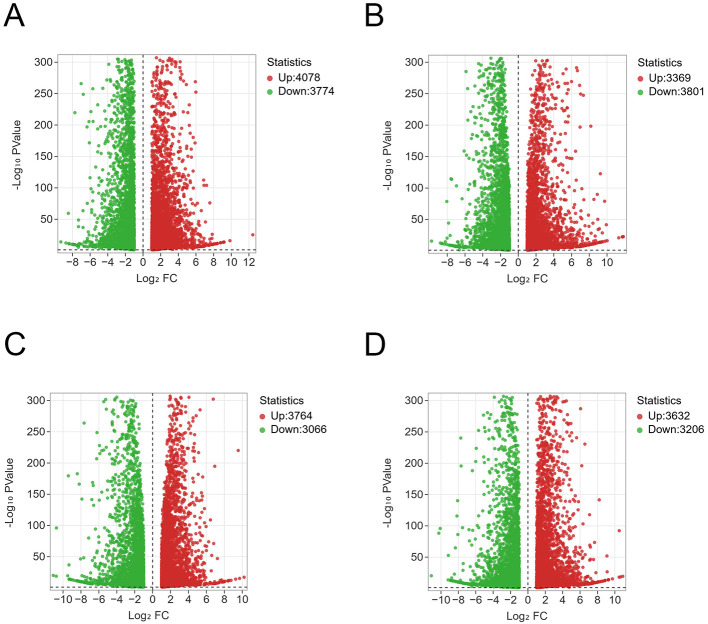 Figure 5
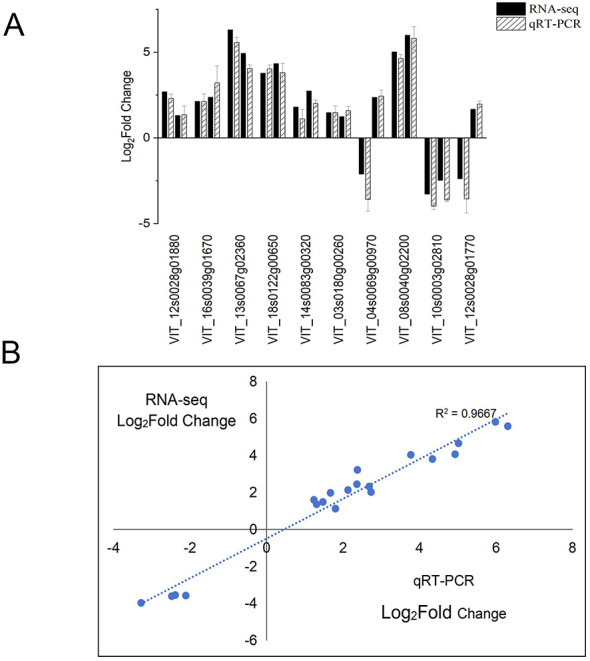 Figure 6
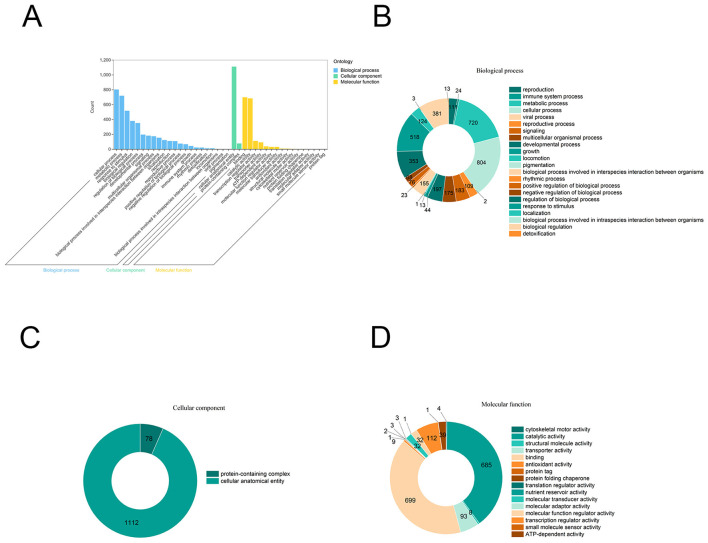 Figure 7
Peer Reviews
No public reviews on file for this paper yet. If you reviewed it on a platform where reviews are public (OpenReview, ICLR, NeurIPS, ICML), you can paste yours below so the community can read it here.
Videos
No videos yet. Explain this paper in a talk, walkthrough, or lecture? Add one.
Taxonomy
TopicsHorticultural and Viticultural Research · Plant Gene Expression Analysis · Fermentation and Sensory Analysis