Clinical features of Tropheryma Whipplei in pediatric pneumonia: an mNGS and tNGS-based case-control study
Yijia Pan, Na Du, Yong Liu, Ming Wu, Sijia Hao, Yulu He, Yanfang Jiang

TL;DR
This study explores how Tropheryma whipplei affects children with pneumonia, finding that it may not be a main cause of the disease.
Contribution
The study identifies TW-positive pediatric pneumonia as having milder symptoms, suggesting TW may act as a colonizer rather than a primary pathogen.
Findings
TW-positive patients were younger, had lower BMIs, and showed milder inflammation compared to controls.
Severe TW-positive cases had localized right-lung lesions and more bronchial involvement.
TW-positive pediatric pneumonia was frequently associated with co-detections of Mycoplasma pneumoniae and other pathogens.
Abstract
Tropheryma whipplei (TW), which causes Whipple disease, has recently been associated with respiratory diseases, particularly pneumonia. To understand its role in pediatric pneumonia, this study analyzed the clinical and pathogenetic characteristics of TW in pediatric pneumonia patients. We utilized metagenomic and targeted next-generation sequencing (mNGS/tNGS) data from 3,759 pediatric bronchoalveolar lavage fluid (BALF) samples (2023-2024). This case-control study included 103 TW-positive pediatric pneumonia patients (59 with severe pneumonia, SPTW+; 44 with mild pneumonia, MPTW+), along with 206 TW-negative pneumonia patients as controls (118 with severe pneumonia, SPTW-; 88 with mild pneumonia, MPTW-). Through inter-group comparisons, the results showed that TW-positive patients were younger and had lower BMIs than controls, with shorter hospital stays and milder inflammation.…
Genes, proteins, chemicals, diseases, species, mutations and cell lines named across the full text — each resolved to its canonical identifier and authoritative record.
Click any figure to enlarge with its caption.
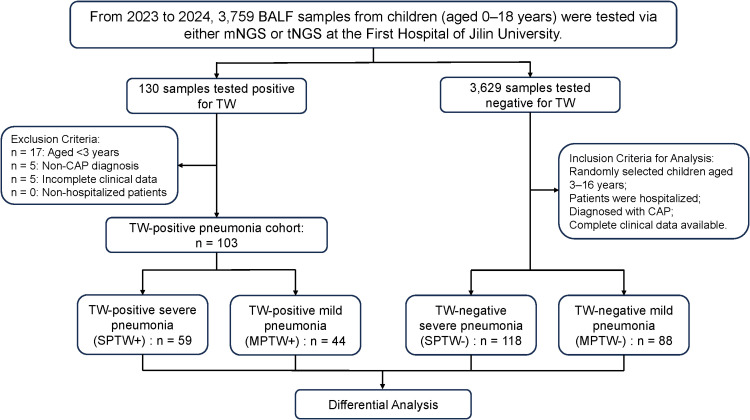 Figure 1
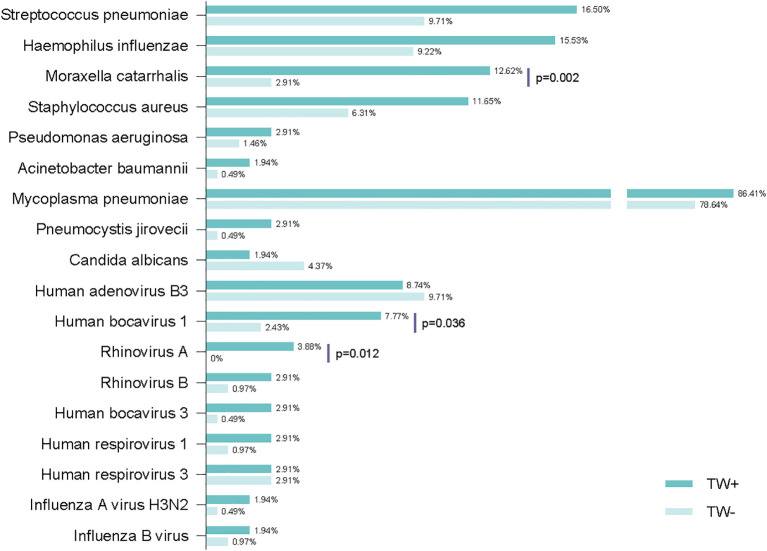 Figure 2
Peer Reviews
No public reviews on file for this paper yet. If you reviewed it on a platform where reviews are public (OpenReview, ICLR, NeurIPS, ICML), you can paste yours below so the community can read it here.
Videos
No videos yet. Explain this paper in a talk, walkthrough, or lecture? Add one.
Taxonomy
TopicsWhipple's Disease and Interleukins · Lysosomal Storage Disorders Research · Autoimmune Neurological Disorders and Treatments