Exposome involvement in the development of acne vulgaris
Katerina Grafanaki, Daniella Bakoli Sgourou, Alexandros Maniatis, Christos C. Zouboulis

TL;DR
This paper explores how environmental and lifestyle factors (the exposome) influence the development of acne, emphasizing the need for equitable, community-based prevention and treatment strategies.
Contribution
The paper introduces an exposome-based framework for acne, integrating molecular mechanisms with social determinants of health.
Findings
The sebaceous gland acts as a central sensor integrating environmental and internal signals in acne development.
Environmental exposures interact with genetic and epigenetic factors to drive persistent inflammation in acne.
Structural inequalities shape acne severity and access to care, highlighting the need for health equity-focused strategies.
Abstract
Acne vulgaris is one of the most prevalent chronic inflammatory skin diseases worldwide, characterized by marked clinical heterogeneity, fluctuating disease course, and strong sensitivity to environmental and lifestyle factors. The exposome, encompassing lifelong environmental, lifestyle, psychosocial, microbial, and intrinsic exposures, offers an integrative framework for re-conceptualizing acne as an environmentally modulated inflammatory disease. This review synthesizes external and internal exposomal drivers of acne, including pollution, radiation, climate and occupational factors, diet, smoking, cosmetics, psychosocial stress, and microbial ecosystems. We highlight the sebaceous gland as a central exposome sensor that integrates metabolic, immune, microbial, and neuroendocrine signals. Genetic susceptibility, epigenetic reprogramming, and non-coding RNA networks are key modifiers…
Genes, proteins, chemicals, diseases, species, mutations and cell lines named across the full text — each resolved to its canonical identifier and authoritative record.
Click any figure to enlarge with its caption.
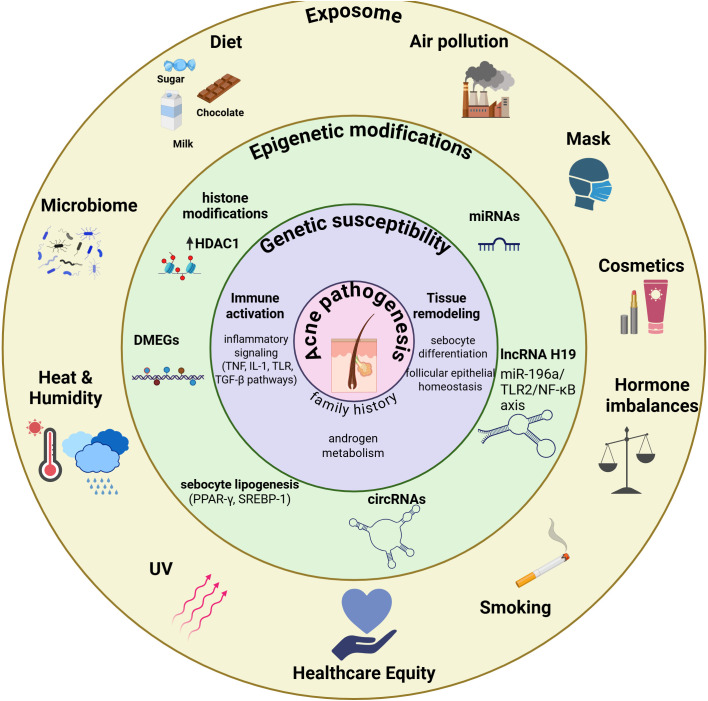 Figure 1
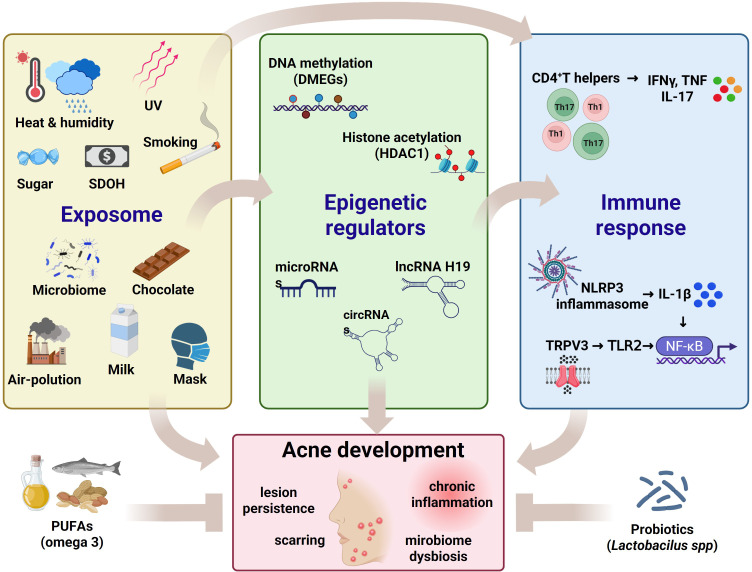 Figure 2
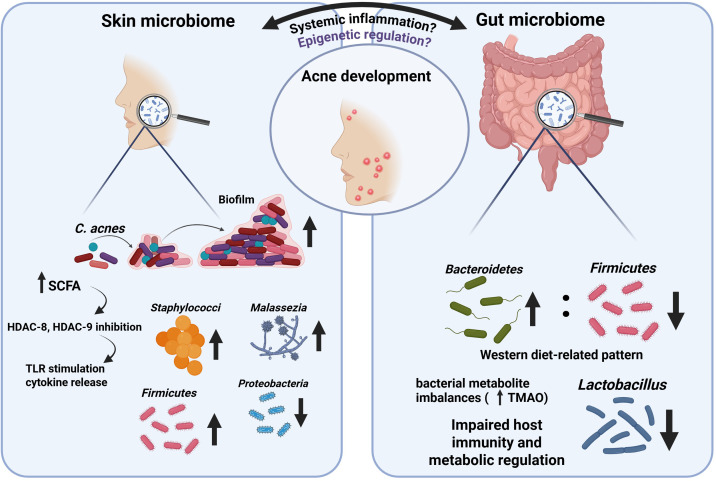 Figure 3
Peer Reviews
No public reviews on file for this paper yet. If you reviewed it on a platform where reviews are public (OpenReview, ICLR, NeurIPS, ICML), you can paste yours below so the community can read it here.
Videos
No videos yet. Explain this paper in a talk, walkthrough, or lecture? Add one.
Taxonomy
TopicsAcne and Rosacea Treatments and Effects · Skin Protection and Aging · Dermatology and Skin Diseases