Mechanistic insights of hypoglycemic components from Polygonatum polysaccharide
Zeming Ren, Sisi Chen, Zhongxiu Guo, Xiyu Mei, Yeling Tong, Yane Liu, Ziyun Gao, Xuan Chen, Guanhai Dai

TL;DR
This study identifies a specific fraction of Polygonatum polysaccharide that effectively lowers blood sugar by promoting gut-produced short-chain fatty acids and improving insulin sensitivity.
Contribution
The study isolates and characterizes a novel hypoglycemic polysaccharide fraction (PP III) and reveals its mechanism involving gut microbiota and hepatic AMPK activation.
Findings
PP III significantly reduces hyperglycemia and improves insulin sensitivity in diabetic mice.
PP III's mechanism involves gut microbiota-mediated production of acetic and propionic acids, which inhibit hepatic gluconeogenesis.
Propionic acid promotes leptin secretion and activates the AMPK pathway in the liver.
Abstract
This study aimed to fractionate Polygonatum cyrtonema polysaccharide (PP) into distinct components, evaluate their hypoglycemic efficacy using both in vitro and in vivo models, and elucidate the mechanisms of the most active fraction. Three polysaccharide fractions (PP I, PP II, PP III) were extracted from Polygonatum cyrtonema Hua via ethanol gradient precipitation. The molecular weight distribution and monosaccharide composition were determined using high-performance gel permeation chromatography and pre-column derivatization high-performance liquid chromatography. Hypoglycemic activity was evaluated using insulin-resistant (IR)-HepG2 cells and a db/db mice model. Transcriptomic sequencing and functional enrichment analysis were conducted on PP III-treated db/db mice. Ileocecal short-chain fatty acid contents were quantified by GC-MS. Serum insulin and LEP concentrations were…
Genes, proteins, chemicals, diseases, species, mutations and cell lines named across the full text — each resolved to its canonical identifier and authoritative record.
Click any figure to enlarge with its caption.
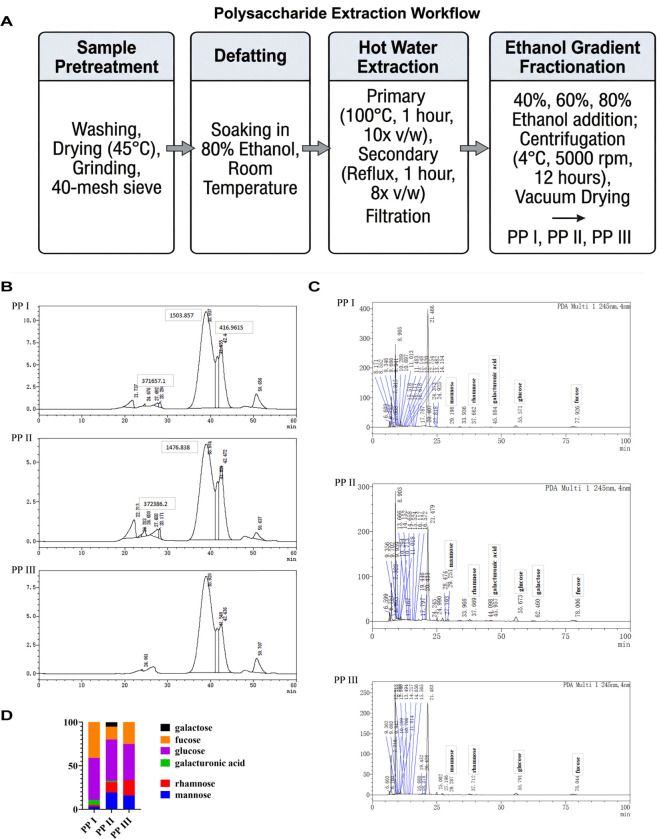 Figure 1
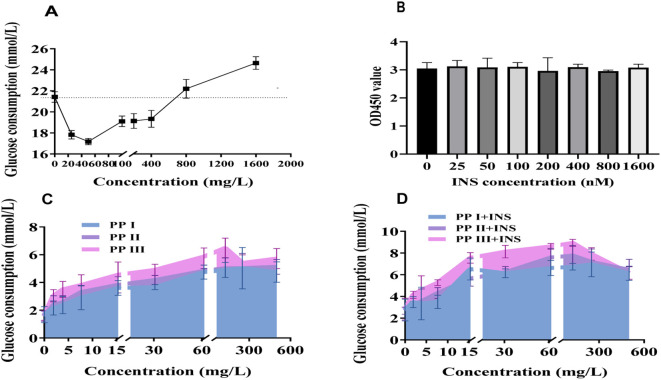 Figure 2
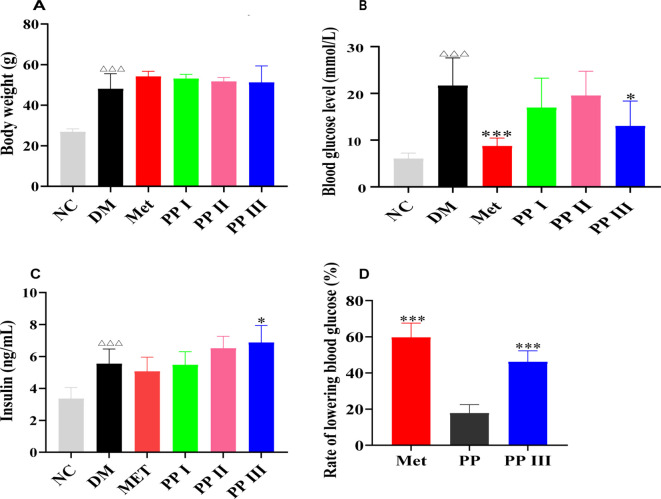 Figure 3
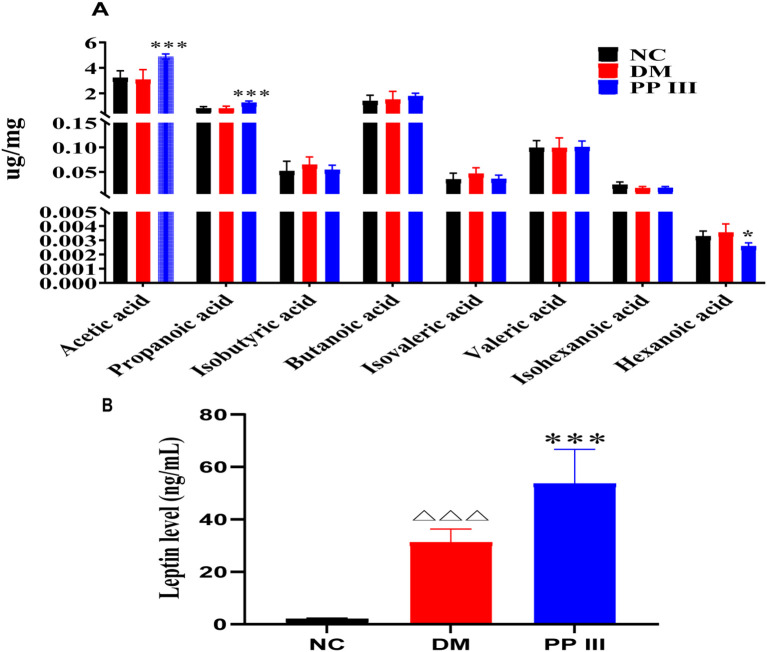 Figure 4
 Figure 5
 Figure 6
Peer Reviews
No public reviews on file for this paper yet. If you reviewed it on a platform where reviews are public (OpenReview, ICLR, NeurIPS, ICML), you can paste yours below so the community can read it here.
Videos
No videos yet. Explain this paper in a talk, walkthrough, or lecture? Add one.
Taxonomy
TopicsPolysaccharides and Plant Cell Walls · Seaweed-derived Bioactive Compounds · Polysaccharides Composition and Applications