Attenuated crosstalk between urothelium and fibroblasts promotes ureteral stricture development
Rongchang Guo, Xuhong Zhang, Chengbang Wang, Junqi Cui, Kai Wang, Bao Hua, Shangqing Song, Yun Zou, Lin Zhou, Haisong Tan, Siyuan Liang, Le Tao, Jiangyi Wang, Wenfeng Li, Long Li, Guopeng Yu, Qing Yang, Yushan Liu, Bin Xu, Yiwei Wang

TL;DR
This study finds that reduced communication between urothelial cells and fibroblasts contributes to the development of ureteral strictures, a type of urinary tract blockage.
Contribution
The study identifies novel molecular interactions, including ANXA1 and FPR2, linking urothelial-fibroblast crosstalk to fibrotic remodeling in ureteral strictures.
Findings
Urothelial cells in ureteral stricture tissues show reduced expression of ROS-associated genes and ANXA1.
Fibroblasts in affected tissues exhibit decreased THBS1 and FPR2 receptor expression.
Impaired urothelial-fibroblast communication is linked to fibrotic remodeling in ureteral strictures.
Abstract
Ureteral stricture (US), characterized by fibrotic remodeling of the ureteral wall, represents an obstructive urological disorder with incompletely characterized pathophysiological mechanisms. This study integrates single-cell RNA sequencing (scRNA-seq) with immunohistochemical validation in human tissues to investigate the molecular and cellular mechanisms underlying US pathogenesis. Specimens of US (n = 7) and normal ureters (n = 8) were collected from patients prospectively. Single-cell RNA sequencing was performed to dissect the transcriptomic landscape of US, with subsequent immunohistochemical and immunofluorescence staining employed to validate key molecular and cellular findings at the protein level. In US tissues, we identified significant downregulation of urothelial cell-specific gene signatures, accompanied by attenuated intercellular crosstalk between urothelial cells and…
Genes, proteins, chemicals, diseases, species, mutations and cell lines named across the full text — each resolved to its canonical identifier and authoritative record.
Click any figure to enlarge with its caption.
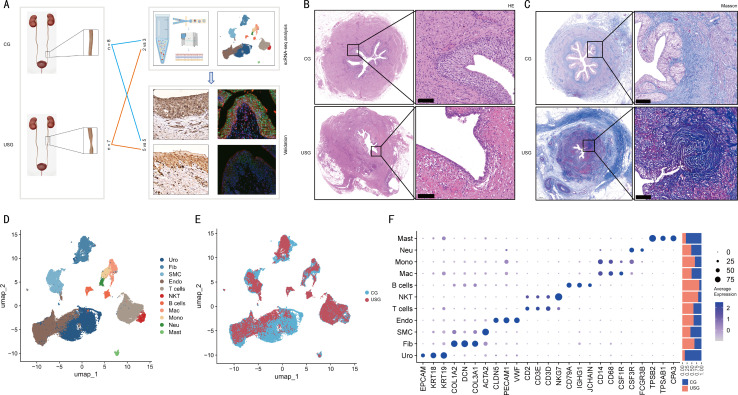 Figure 1
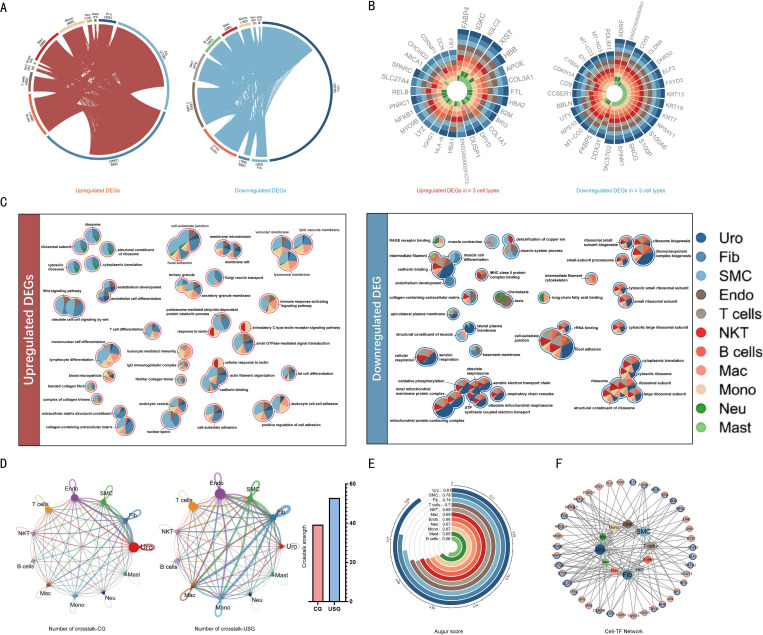 Figure 2
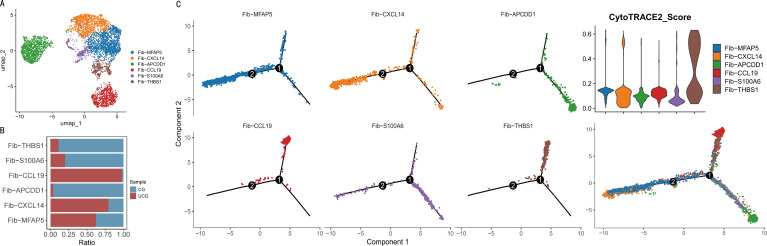 Figure 3
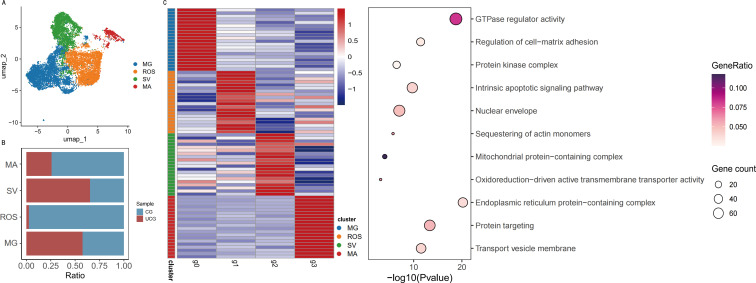 Figure 4
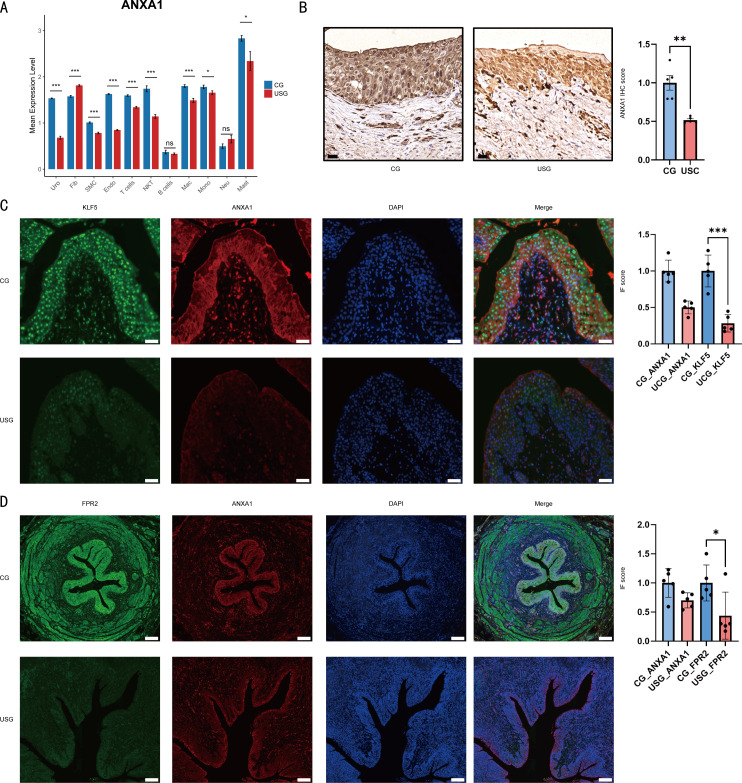 Figure 5
Peer Reviews
No public reviews on file for this paper yet. If you reviewed it on a platform where reviews are public (OpenReview, ICLR, NeurIPS, ICML), you can paste yours below so the community can read it here.
Videos
No videos yet. Explain this paper in a talk, walkthrough, or lecture? Add one.
Taxonomy
TopicsUreteral procedures and complications · Bladder and Urothelial Cancer Treatments · Tissue Engineering and Regenerative Medicine