Case Report: Treatment of ultra-late phrenic nerve stimulation after cardiac resynchronization therapy with double-layer spacer isolation technique
Cai He, Wei Wang, Yue Bao, Hongwei Han

TL;DR
A patient experienced phrenic nerve stimulation twelve years after heart therapy, which was resolved using a new isolation technique.
Contribution
The paper introduces a novel double-layer spacer isolation technique to address ultra-late phrenic nerve stimulation.
Findings
Phrenic nerve stimulation occurred twelve years after CRT without lead dislodgement.
Reprogramming failed, but the double-layer spacer isolation technique successfully isolated the nerve and restored therapy.
Abstract
Ultra-late phrenic nerve stimulation (PNS) without evidence of lead dislodgement after cardiac resynchronization therapy (CRT) can be frequently solved by reprogramming and seldom leads to reintervention. We reported a case of super-response to CRT patient, PNS occurred after twelve years of the surgery. Reprogramming the parameters was ineffective. We innovatively used a double-layer spacer isolation technique to effectively isolate the left ventricular lead and the phrenic nerve, achieving the effect of cardiac resynchronization therapy.
Genes, proteins, chemicals, diseases, species, mutations and cell lines named across the full text — each resolved to its canonical identifier and authoritative record.
Click any figure to enlarge with its caption.
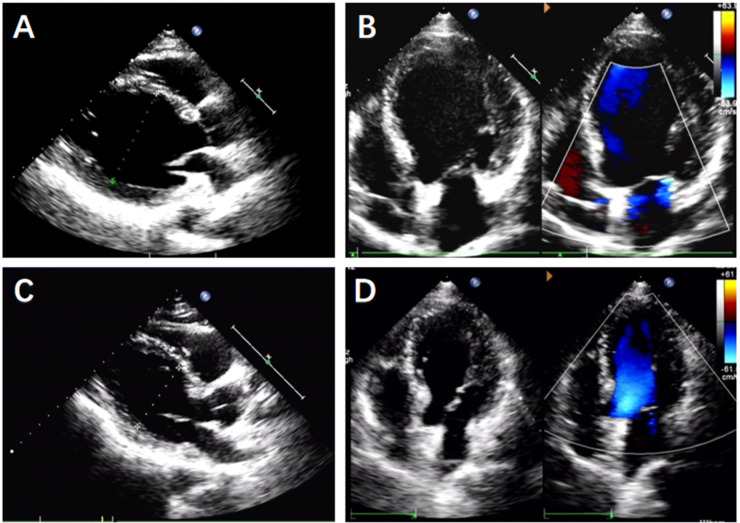 Figure 1
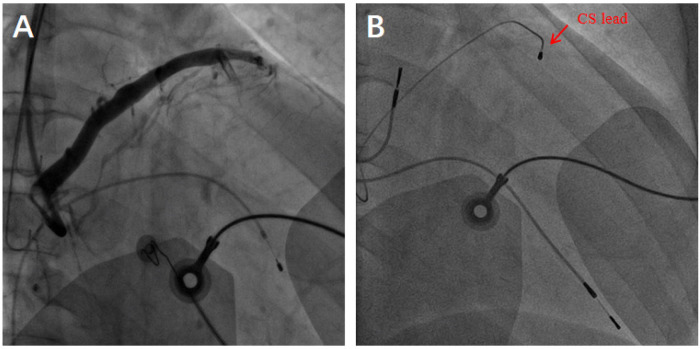 Figure 2
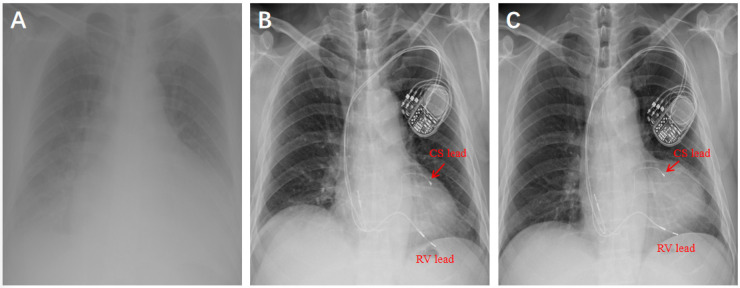 Figure 3
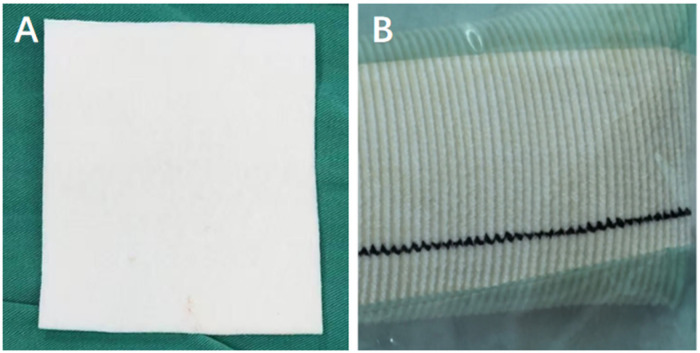 Figure 4
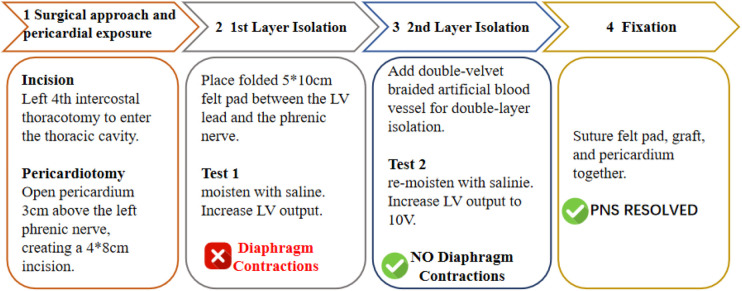 Figure 5
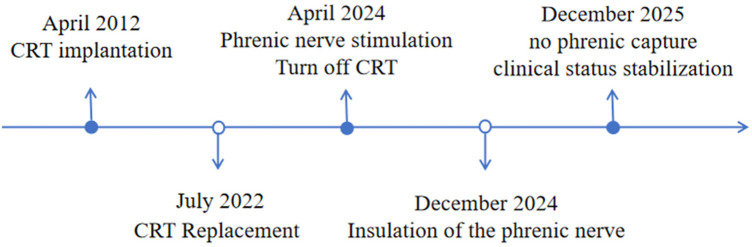 Figure 6
Peer Reviews
No public reviews on file for this paper yet. If you reviewed it on a platform where reviews are public (OpenReview, ICLR, NeurIPS, ICML), you can paste yours below so the community can read it here.
Videos
No videos yet. Explain this paper in a talk, walkthrough, or lecture? Add one.
Taxonomy
TopicsCardiac pacing and defibrillation studies · Transplantation: Methods and Outcomes · Vagus Nerve Stimulation Research