EV-derived small non-coding RNAs from porcine follicular fluid regulate follicle development using Pandora sequence
Junhe Hu, Shuting Peng, Wei Deng, Zhenzhen Guo, Juan Wu, Xiansheng Tan, Zhi Zeng, Aiqun Wang

TL;DR
This study shows that small RNA molecules in pig follicular fluid help control oocyte development, with differences between small and large follicles that could improve reproductive technologies.
Contribution
The study identifies size-dependent SncRNA profiles and their regulatory roles in follicle development, offering new biomarkers for reproductive technologies.
Findings
Porcine follicular fluid EVs contain distinct SncRNA profiles in small and large follicles, with piRNA and tsRNA showing significant differences.
Eight upregulated and four downregulated SncRNAs were identified in large follicles, linked to oocyte maturation and developmental pathways.
GO and KEGG analyses revealed key roles in oocyte meiosis, embryonic development, insulin, and Notch signaling pathways.
Abstract
Follicular fluid extracellular vesicles (EVs) have emerged as critical mediators of intercellular communication during oocyte development. This study investigates the role of small non-coding RNAs (SncRNAs) within porcine follicular fluid extracellular vesicles in regulating oocyte maturation, with a focus on functional disparities between small (group S: < 3 mm) and large (group L:>6 mm) follicles. Extracellular vesicles were isolated from porcine follicular fluid via ultracentrifugation and characterized by nanoparticle tracking analysis (NTA), transmission electron microscopy (TEM), and nanoflow cytometry for CD63 and CD81 positive expression. Pandora sequencing of SncRNAs identified differentially expressed SncRNAs (piRNAs, rRNAs, tsRNAs, miRNAs, and snoRNAs) across follicle sizes using Pandora sequence. Firstly, SncRNA composition analysis demonstrated distinct proportional…
Genes, proteins, chemicals, diseases, species, mutations and cell lines named across the full text — each resolved to its canonical identifier and authoritative record.
Click any figure to enlarge with its caption.
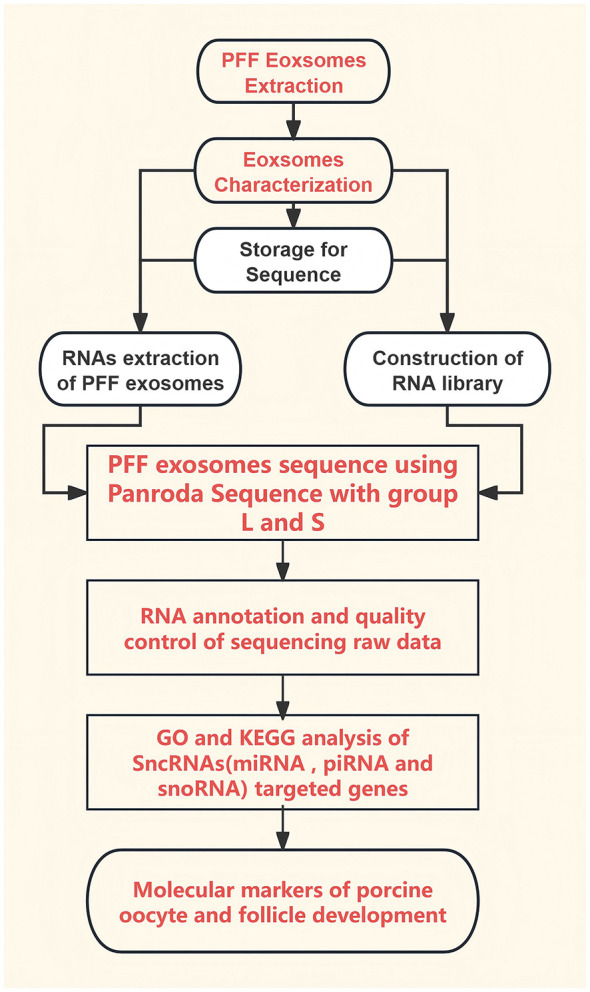 Figure 1
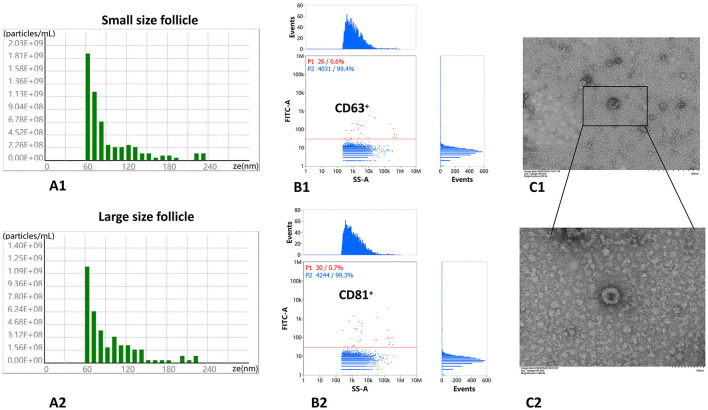 Figure 2
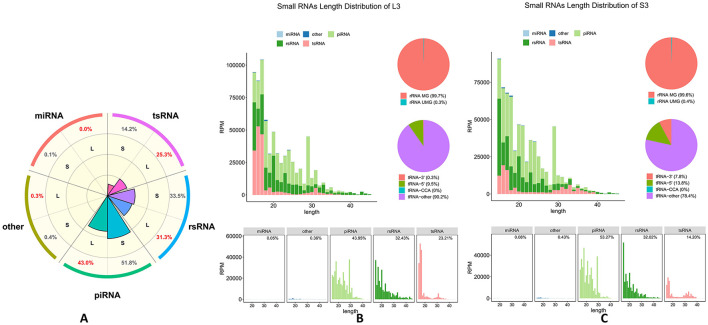 Figure 3
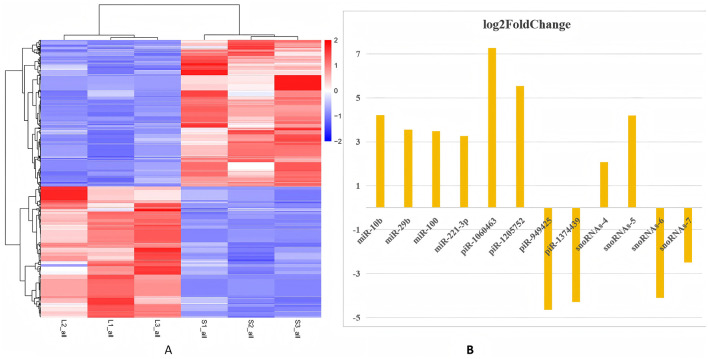 Figure 4
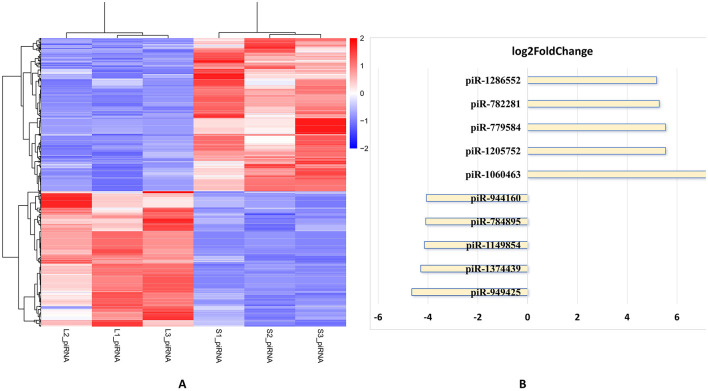 Figure 5
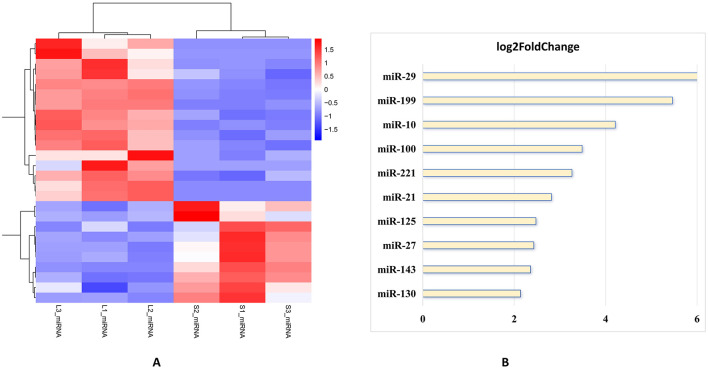 Figure 6
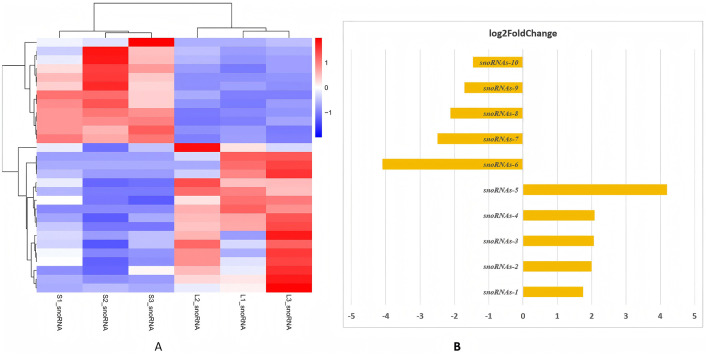 Figure 7
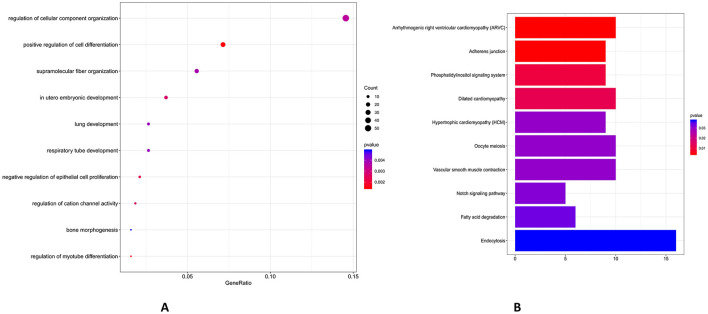 Figure 8
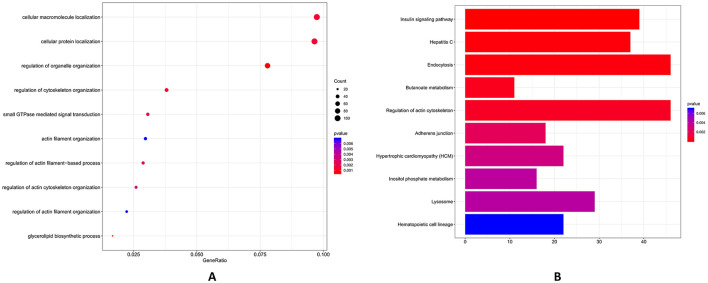 Figure 9
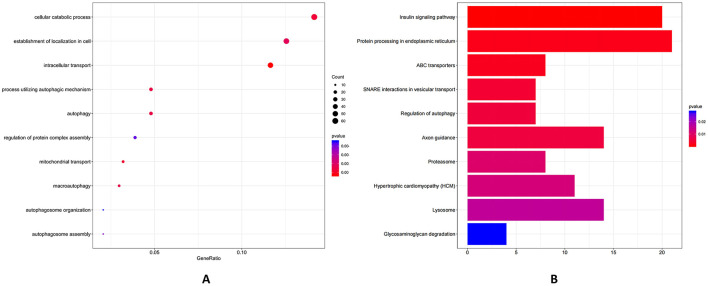 Figure 10
Peer Reviews
No public reviews on file for this paper yet. If you reviewed it on a platform where reviews are public (OpenReview, ICLR, NeurIPS, ICML), you can paste yours below so the community can read it here.
Videos
No videos yet. Explain this paper in a talk, walkthrough, or lecture? Add one.
Taxonomy
TopicsReproductive Biology and Fertility · Extracellular vesicles in disease · Reproductive System and Pregnancy