Decoding m6A: a new frontier in maternal-foetal immunology
Ruimin Yuan, Junzhe Hao, Mingyu Huang, Yumeng Lin, Haoran Chen, Chuchu Wang, Lan Yuan, Zhongyu Han

TL;DR
This review explores how m6A RNA modifications influence the maternal-foetal immune environment and their potential as biomarkers for pregnancy-related diseases.
Contribution
The paper systematically outlines m6A's regulatory network during pregnancy and its role in maternal-foetal immunology.
Findings
m6A modifications are dynamically regulated by writer, eraser, and reader proteins during pregnancy.
m6A influences RNA metabolism and gene expression in maternal-foetal immune interactions.
The study highlights gaps in understanding m6A's role in pregnancy disorders and its clinical potential.
Abstract
m6A is the predominant internal RNA modification in eukaryotic cells and is distinguished by its abundance and evolutionary conservation. This epigenetic mechanism is dynamically controlled by a coordinated system of writer, eraser, and reader proteins. This sophisticated posttranscriptional regulatory mechanism precisely controls gene expression by influencing RNA metabolism, including its stability, translation, and splicing. Recent advances have revealed the functions of m6A in female reproductive cancers, early embryonic development, and stem cell differentiation. However, its functional roles and molecular mechanisms throughout pregnancy and in related disorders remain incompletely understood, which, to some extent, limits its clinical translation. This review systematically outlines the core regulators of m6A, advanced detection technologies, and its regulatory network across the…
Genes, proteins, chemicals, diseases, species, mutations and cell lines named across the full text — each resolved to its canonical identifier and authoritative record.
Click any figure to enlarge with its caption.
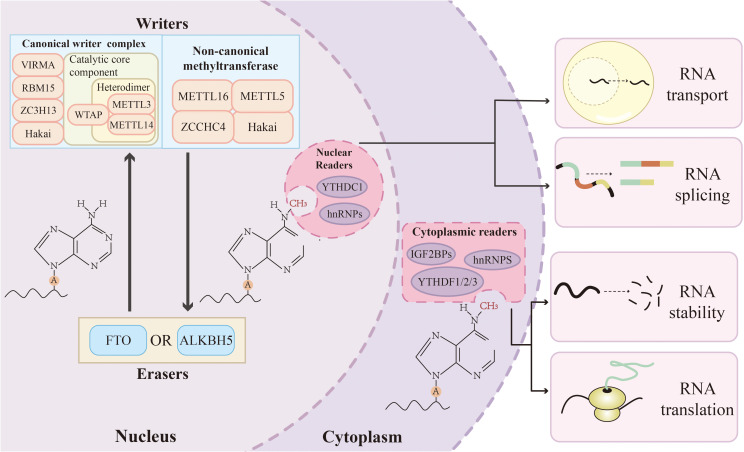 Figure 1
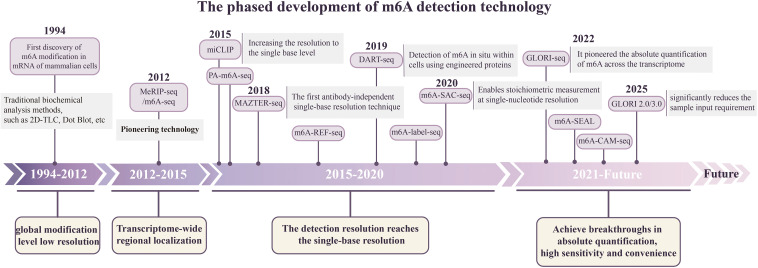 Figure 2
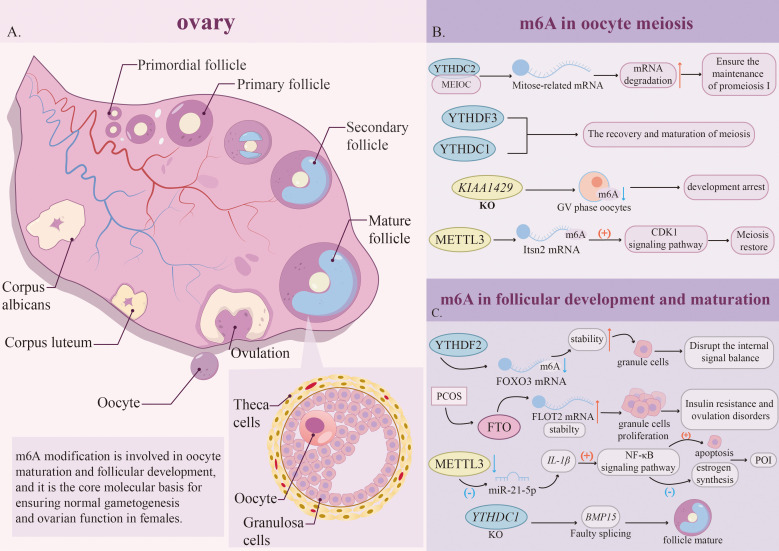 Figure 3
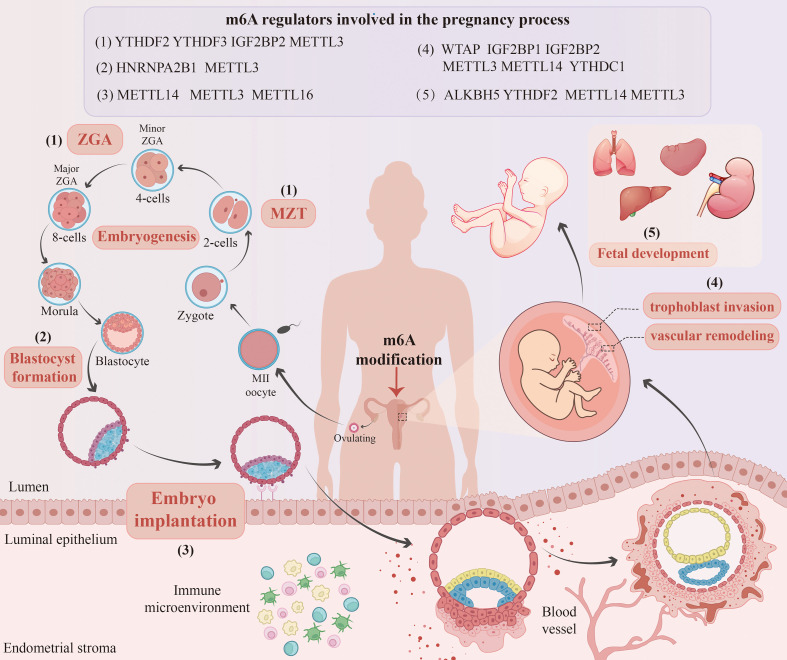 Figure 4
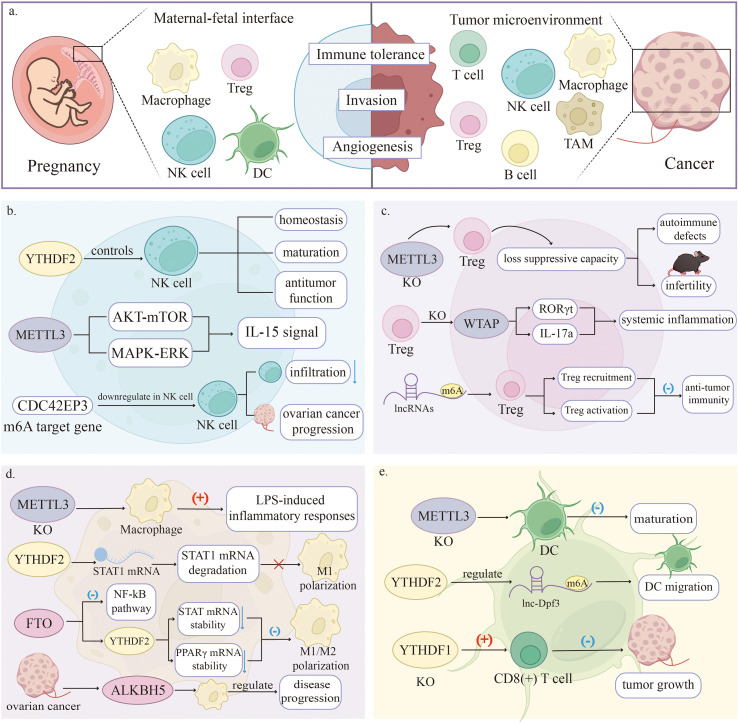 Figure 5
Peer Reviews
No public reviews on file for this paper yet. If you reviewed it on a platform where reviews are public (OpenReview, ICLR, NeurIPS, ICML), you can paste yours below so the community can read it here.
Videos
No videos yet. Explain this paper in a talk, walkthrough, or lecture? Add one.
Taxonomy
TopicsRNA modifications and cancer · RNA Research and Splicing · Cancer-related gene regulation