Magnetic resonance imaging-based detection of retinal hemorrhages in a multicenter cohort of abusive head trauma
Maria Hahnemann, Bernd Karger, Sibylle Banaschak, Hans-Joachim Mentzel, Alexander Radbruch, Daniel Wittschieber

TL;DR
This study explores how MRI, especially SWI sequences, can detect retinal hemorrhages in abusive head trauma when fundoscopy is not sufficient.
Contribution
The study evaluates the diagnostic utility of various MRI sequences for detecting retinal hemorrhages in abusive head trauma.
Findings
SWI showed higher sensitivity (76.9%) compared to T2*w (47.8%) in detecting retinal hemorrhages.
MRI detected retinal hemorrhages not reported by fundoscopy in three cases.
T2w imaging provided complementary information in selected cases.
Abstract
In pediatric abusive head trauma (AHT), retinal hemorrhages are a key diagnostic feature. Detection by fundoscopy may be delayed or limited, whereas magnetic resonance imaging (MRI) enables non-invasive, objective assessment on routine brain sequences. To evaluate the diagnostic utility of different MRI sequences—particularly susceptibility-weighted imaging (SWI), T2*-weighted (T2*w), and morphological sequences—in detecting retinal hemorrhages in AHT. In this retrospective multicenter study (2006–2015), 57 well-documented AHT cases from three German institutions were analyzed. A subgroup consisted of “confession cases.” MRI scans were reviewed for retinal hemorrhages across SWI, T2*w, T1-weighted, T2-weighted (T2w), and fluid-attenuated inversion recovery (FLAIR) sequences by blinded expert readers. Fundoscopy results served as the gold standard. Sensitivities were calculated for…
Genes, proteins, chemicals, diseases, species, mutations and cell lines named across the full text — each resolved to its canonical identifier and authoritative record.
Click any figure to enlarge with its caption.
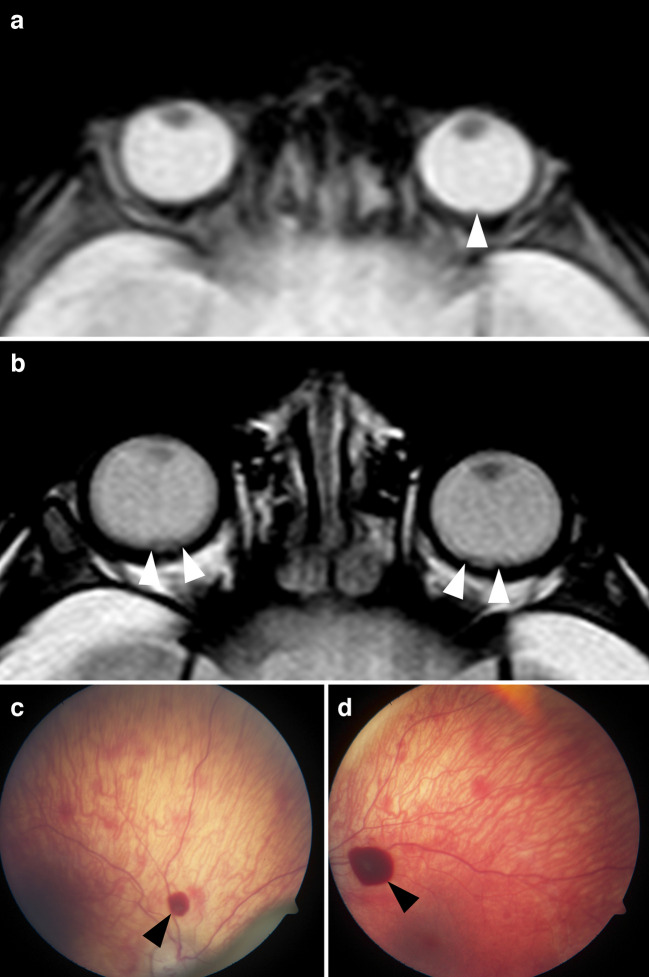 Figure 1
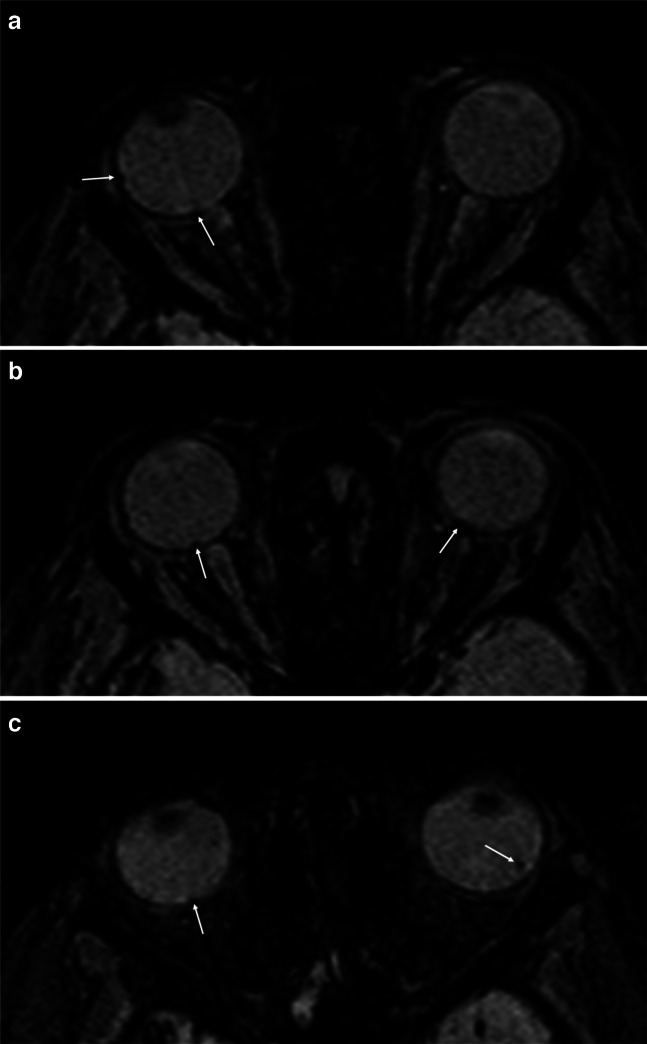 Figure 2
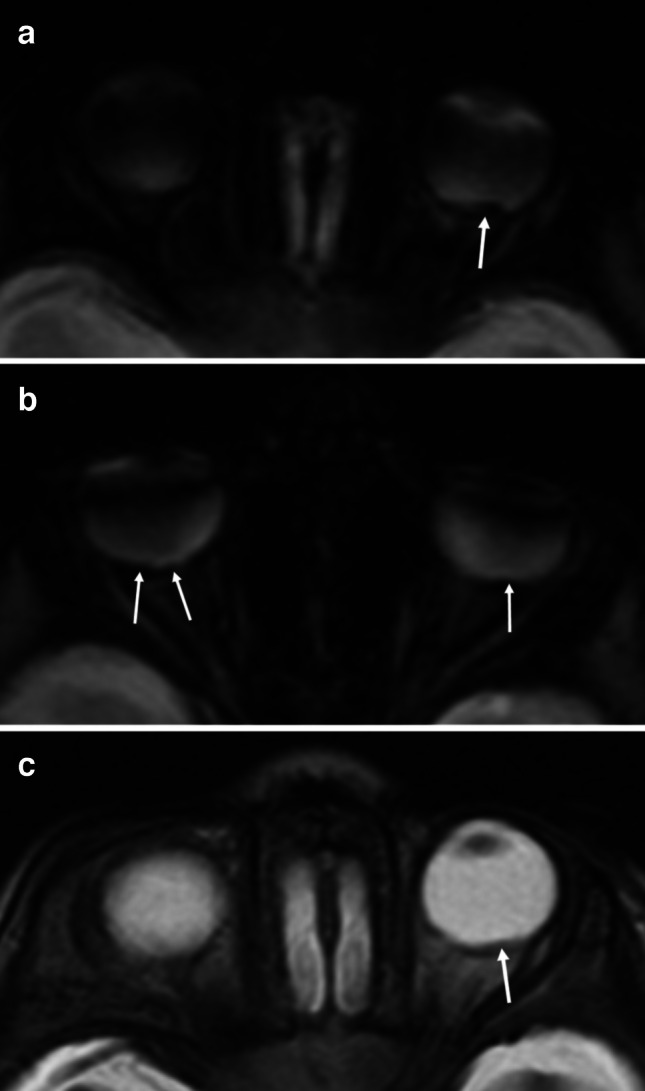 Figure 3
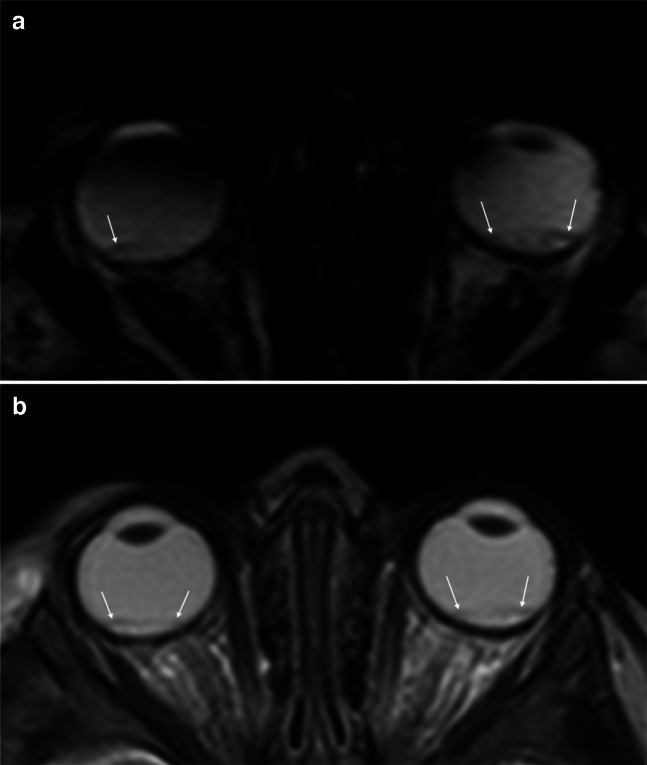 Figure 4
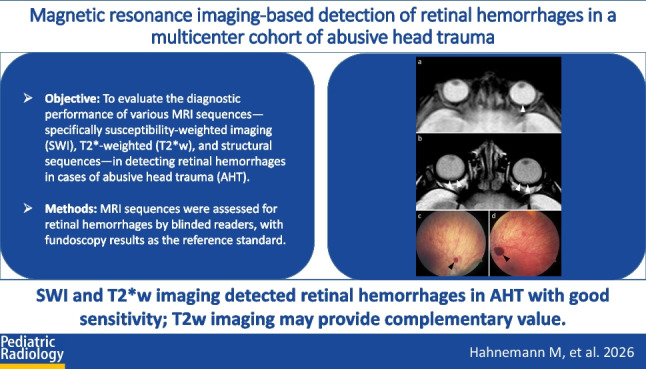 Figure 5
Peer Reviews
No public reviews on file for this paper yet. If you reviewed it on a platform where reviews are public (OpenReview, ICLR, NeurIPS, ICML), you can paste yours below so the community can read it here.
Videos
No videos yet. Explain this paper in a talk, walkthrough, or lecture? Add one.
Taxonomy
TopicsChild Abuse and Related Trauma · Traumatic Ocular and Foreign Body Injuries · Restraint-Related Deaths