Sarcopenia, body composition, physical performance, and clinical features in Parkinson’s disease: a cross-sectional comparative study
João Rafael Gomes de Luna, Danielle Pessoa Lima, Vlademir Carneiro Gomes, Fábia Karine de Moura Lopes, Samuel Brito de Almeida, Pedro Lucas de Souza Barroso, Heitor Rios de Medeiros Virginio, Antonio Brazil Viana Júnior, Virgínia Oliveira Fernandes, Jarbas de Sá Roriz-Filho

TL;DR
This study compares muscle and body composition in Parkinson’s disease patients and controls, finding subtle impairments not captured by standard sarcopenia measures.
Contribution
The study reveals clinically relevant muscle and balance impairments in Parkinson’s disease patients that are missed by traditional sarcopenia diagnostics.
Findings
PD patients had worse balance, higher fall risk, and lower calf circumference compared to controls.
PD patients showed reduced handgrip strength and appendicular skeletal muscle mass index at the 40th percentile.
Despite similar sarcopenia prevalence, PD patients had lower fat mass and muscle mass despite higher protein intake.
Abstract
To compare sarcopenia prevalence, body composition, physical performance, and related clinical features between middle-aged and older patients with mild-to-moderate Parkinson’s disease (PD) and matched controls. A cross-sectional study carried out at a tertiary hospital in Brazil. Patients with PD in Hoehn and Yahr stages 1–3 and controls matched for age, sex and comorbidities were assessed. We measured handgrip strength with a hand dynamometer. Body composition and muscle mass were evaluated using DEXA. Sarcopenia was diagnosed following EWGSOP2 criteria. Clinical, cognitive and nutritional assessments were also performed. The study population comprised 250 patients (124 with PD), of whom one hundred and nine (43.6%) were female. The median age was 69.5 (IQR 61.9 – 76). Similar prevalences of sarcopenia were found among PD patients (9.7%) and controls (11.1%). PD patients had higher…
Genes, proteins, chemicals, diseases, species, mutations and cell lines named across the full text — each resolved to its canonical identifier and authoritative record.
Click any figure to enlarge with its caption.
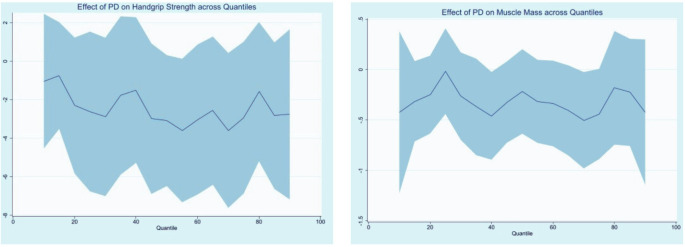 Figure 1
Peer Reviews
No public reviews on file for this paper yet. If you reviewed it on a platform where reviews are public (OpenReview, ICLR, NeurIPS, ICML), you can paste yours below so the community can read it here.
Videos
No videos yet. Explain this paper in a talk, walkthrough, or lecture? Add one.
Taxonomy
TopicsNutrition and Health in Aging · Parkinson's Disease and Spinal Disorders · Balance, Gait, and Falls Prevention