A binational study of the association between white matter hyperintensities and functional outcome in stroke patients
Eva B. Aamodt, Martin Røvang, Mona K. Beyer, Karim Borei, Farhaan S. Vahidy, Thomas B. H. Potter

TL;DR
This study compares white matter hyperintensities in stroke patients from Norway and the US, finding similar hyperintensity levels but different factors linked to them.
Contribution
The study introduces an improved automatic WMH segmentation method incorporating stroke lesions and compares cross-national associations with WMH burden.
Findings
No significant difference in WMH percentage was found between Norwegian and US stroke patients.
Age was the main factor for higher WMH burden in Norway, while very high age, smoking, and being underweight were key in the US.
Post-stroke dependency was associated with WMH burden in Norway but driven by stroke severity and treatment in the US.
Abstract
Measures of white matter hyperintensities (WMHs) represent a crucial part of post-stroke outcome prediction. Automatic WMH segmentation has proven particularly challenging in stroke cases. Using an improved method for WMH segmentation that incorporates stroke lesions, we set out to explore factors associated with higher WMH burden, as well as the association between WMH burden and post-stroke dependency across two different countries that may demonstrate significant variation in radiological presentation. A total of 384 acute ischemic stroke (AIS) survivors from the Norwegian Cognitive Impairment After Stroke (Nor-COAST; NO) study and the Houston Methodist Registry of Neurological Endpoint Assessments among Patients with Ischemic and Hemorrhagic Stroke (REINAH; US) database were analyzed. MRI and clinical data were collected upon acute care hospital admission. WMHs were measured…
Genes, proteins, chemicals, diseases, species, mutations and cell lines named across the full text — each resolved to its canonical identifier and authoritative record.
Click any figure to enlarge with its caption.
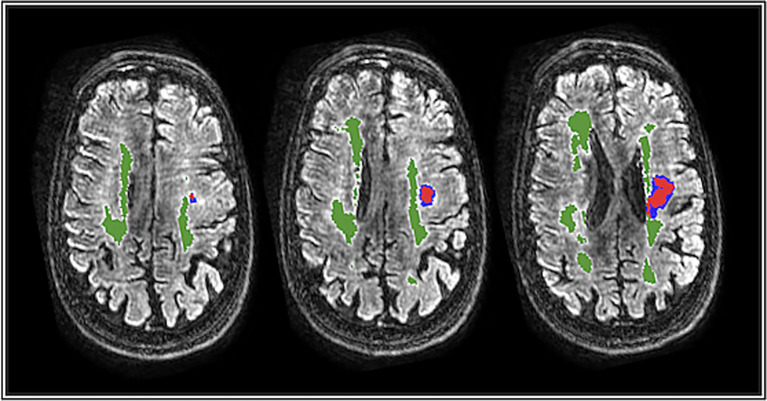 Figure 1
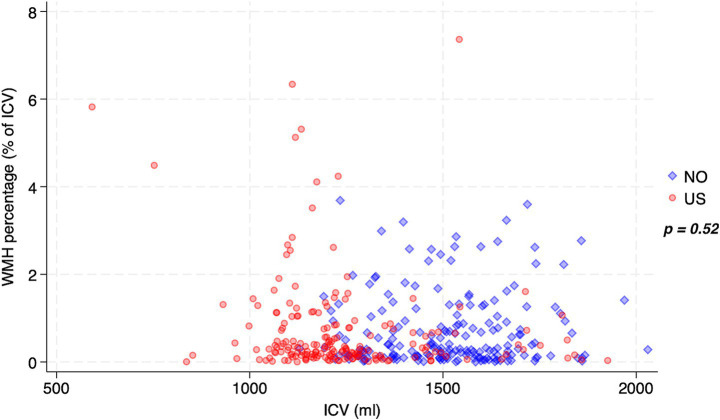 Figure 2
Peer Reviews
No public reviews on file for this paper yet. If you reviewed it on a platform where reviews are public (OpenReview, ICLR, NeurIPS, ICML), you can paste yours below so the community can read it here.
Videos
No videos yet. Explain this paper in a talk, walkthrough, or lecture? Add one.
Taxonomy
TopicsAcute Ischemic Stroke Management · Dementia and Cognitive Impairment Research · Neurological Disease Mechanisms and Treatments