Deep learning-driven false-lumen volumes predict adverse remodeling better than diameter in patients with residual aortic dissection on CT
Joris Fournel, Mariangela De Masi, Charlotte Lu, Virgile Omnes, Baptiste Muselier, Badih Ghattas, Olivier Bouchot, Moundji Kafi, Alain Lalande, Marine Gaudry, Alexis Jacquier, Axel Bartoli

TL;DR
A deep-learning model accurately measures aortic dissection volumes on CT scans, showing that local false-lumen volumes predict adverse remodeling better than diameter or global volumes.
Contribution
A deep-learning model for automated aortic dissection volume measurement is developed and validated, showing local false-lumen volumes are better predictors of adverse remodeling than traditional metrics.
Findings
The deep-learning model achieved high accuracy in segmenting aortic dissection components with strong agreement to manual measurements.
Local false-lumen volumes (FLLoc) outperformed maximal diameter (Dmax) and global false-lumen volumes in predicting adverse aortic remodeling.
FLLoc showed good predictive performance with high sensitivity and specificity in identifying patients at risk for adverse remodeling.
Abstract
1. To develop a deep-learning segmentation model for automated measurement of maximal aortic diameter (Dmax) and volumes of aortic dissection components: true-lumen (TL), circulating false-lumen (CFL), and thrombus (Th) on CT angiography (CTA). 2. To assess the predictive value of these measures for adverse aortic remodeling in residual aortic dissection (RAD). This retrospective study included 322 patients from two centers. The segmentation model was trained on 120 patients (Center 1) and tested on an internal dataset (30 patients, Center 1) and an external dataset (10 patients, Center 2) in terms of Dice Similarity Coefficient (DSC). The model extracted Dmax, global false-lumen volume (FLGlo = CFL + Th), and local false-lumen volume (FLLoc, measured 3 cm around the largest diameter). Clinical validation was performed on 83 patients from Center1 (internal validation, 2-year follow-up)…
Genes, proteins, chemicals, diseases, species, mutations and cell lines named across the full text — each resolved to its canonical identifier and authoritative record.
Click any figure to enlarge with its caption.
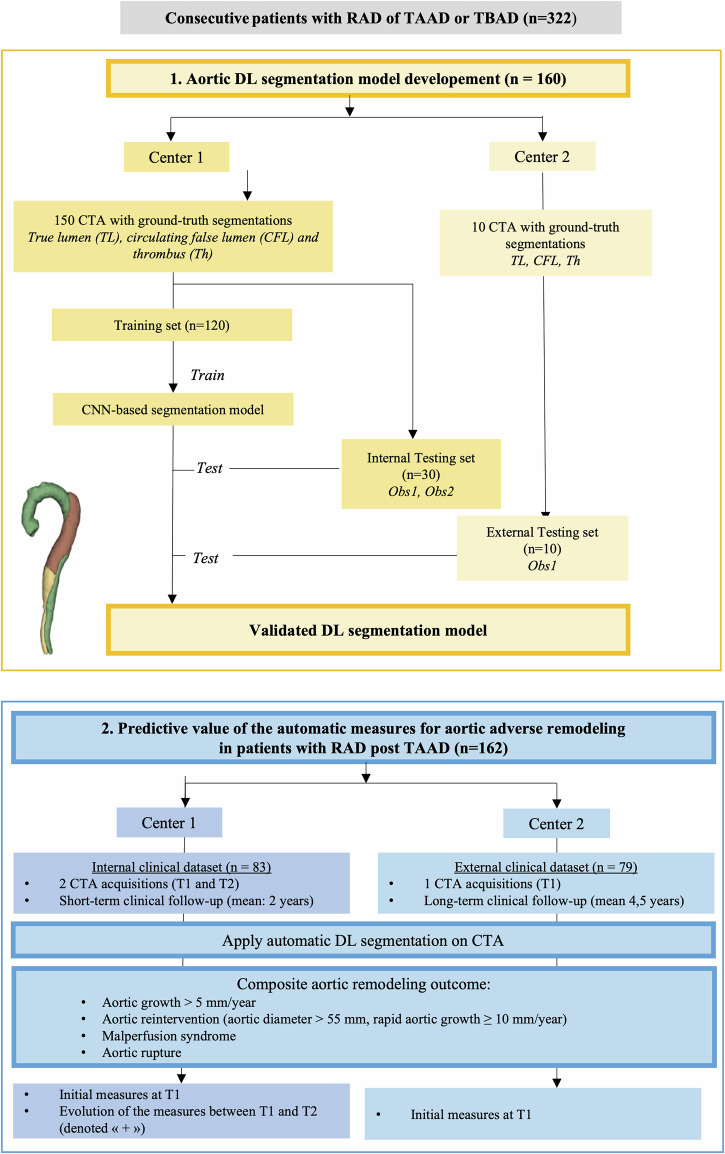 Figure 1
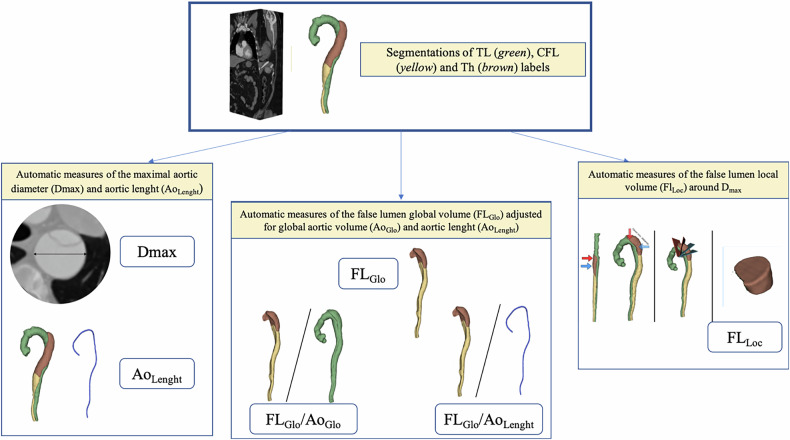 Figure 2
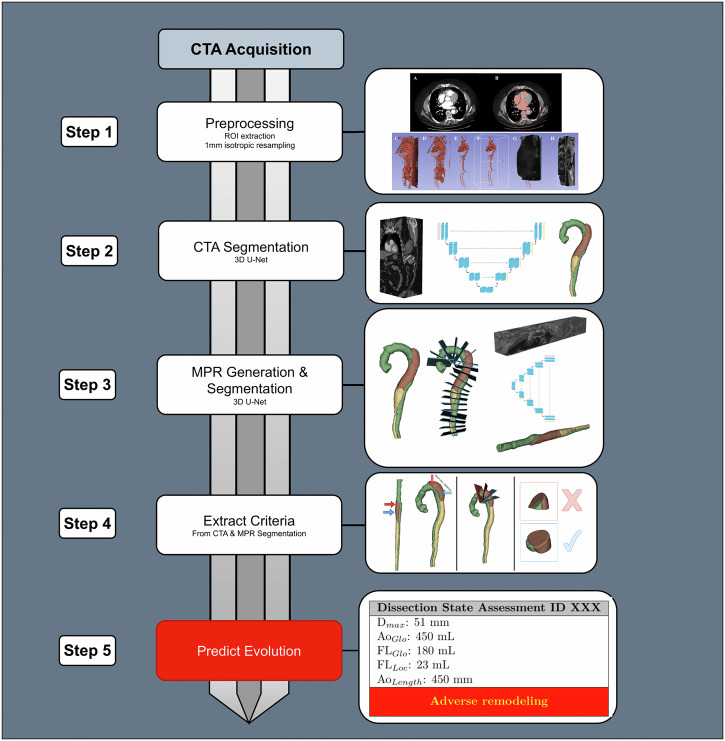 Figure 3
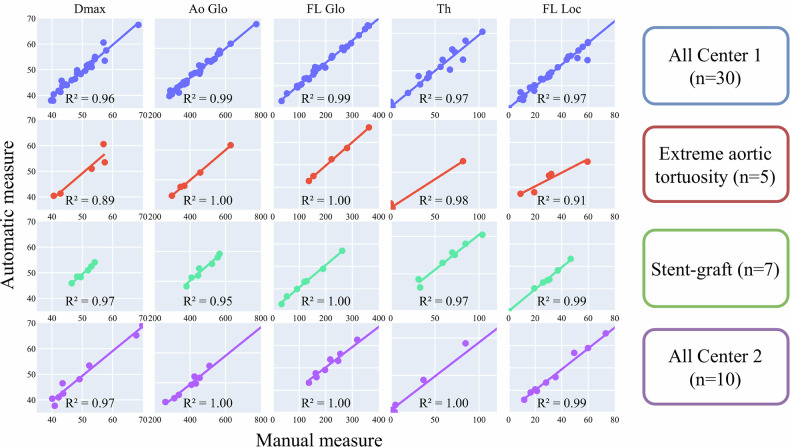 Figure 4
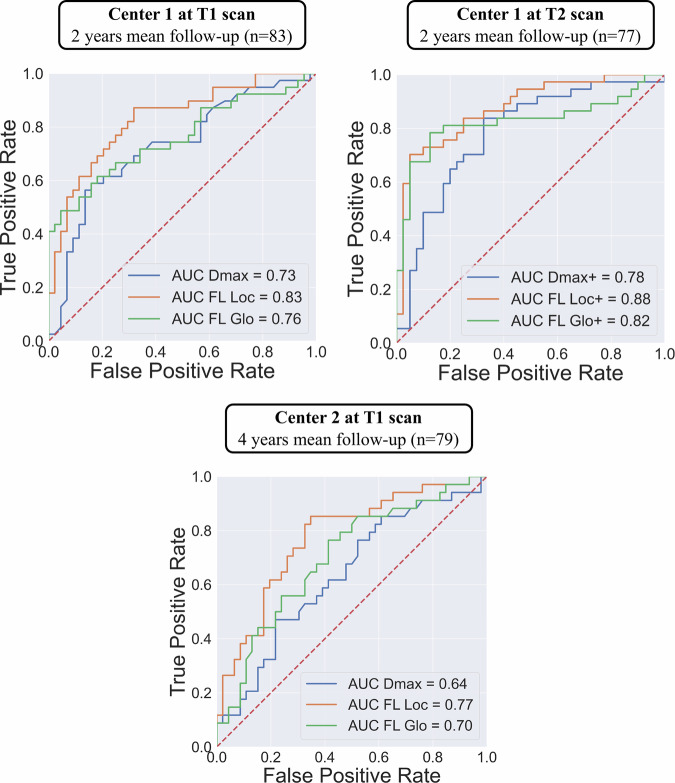 Figure 5
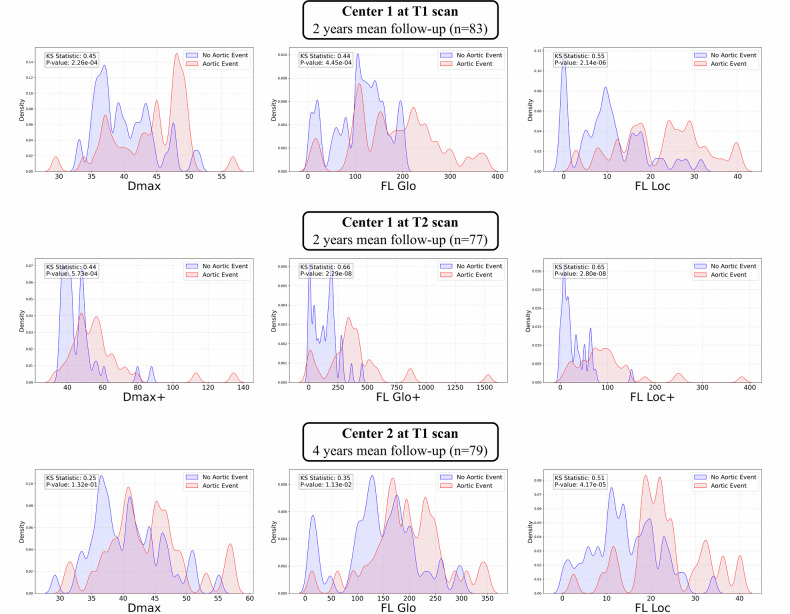 Figure 6
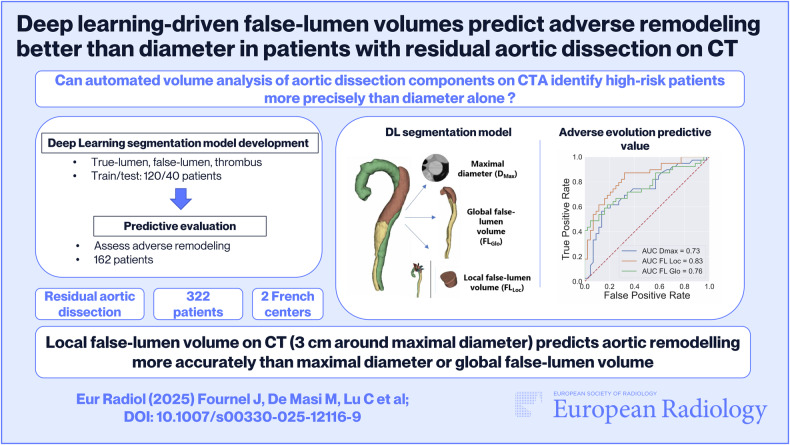 Figure 7
Peer Reviews
No public reviews on file for this paper yet. If you reviewed it on a platform where reviews are public (OpenReview, ICLR, NeurIPS, ICML), you can paste yours below so the community can read it here.
Videos
No videos yet. Explain this paper in a talk, walkthrough, or lecture? Add one.
Taxonomy
TopicsAortic Disease and Treatment Approaches · Aortic aneurysm repair treatments · Cardiac Valve Diseases and Treatments