Key stakeholder views on atrial fibrillation screening: a systematic mixed-studies review and interpretive analysis
Kirsty McKenzie, Anushka Jacob, Ben Freedman, Melissa Kilkelly, Rakesh Narendra Modi, Nicole Lowres

TL;DR
This study explores views of key stakeholders on implementing atrial fibrillation screening, highlighting barriers and requirements for successful programs.
Contribution
The study provides a comprehensive synthesis of stakeholder perspectives on AF screening, identifying system-level barriers and needs for implementation.
Findings
Stakeholders are cautiously optimistic about AF screening but concerned about risks and healthcare system burdens.
Systematic screening lacks evidence, and handheld ECG devices are seen as practical but raise concerns about consumer devices.
Implementation barriers include workflow issues, remuneration, data systems, and data security.
Abstract
It is essential to understand the key barriers and stakeholder needs related to screening to focus efforts for designing appropriate programmes. Therefore, this study aimed to synthesize the existing literature to understand the pertinent concepts and requirements from key stakeholders regarding implementation of atrial fibrillation (AF) screening. Database searches were run in MEDLINE via Ovid, Embase via Ovid, CINAHL via Ebsco, PsycInfo via Ebsco, Scopus, and Web of Science Core Collection using specified keywords; supplemented by Google and grey literature searches. Original research papers were included if they contained stakeholder views on implementation of AF screening. A critical interpretive synthesis of data was performed. From 13 332 titles/abstracts, 105 full texts were reviewed and 34 papers included (16 qualitative; 8 surveys; 10 mixed-methods). Significant evidence gaps…
Genes, proteins, chemicals, diseases, species, mutations and cell lines named across the full text — each resolved to its canonical identifier and authoritative record.
Click any figure to enlarge with its caption.
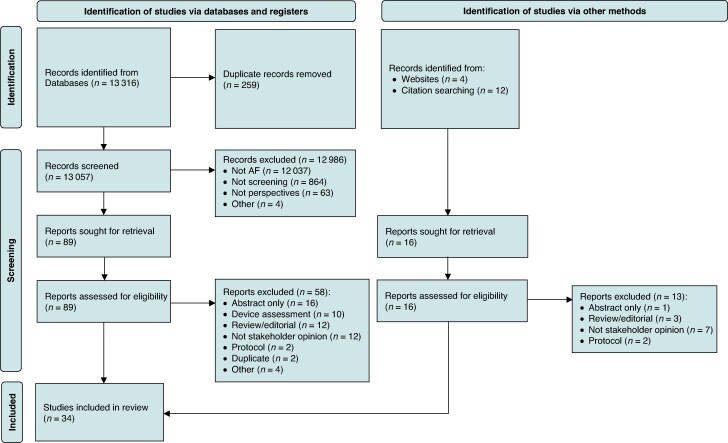 Figure 1
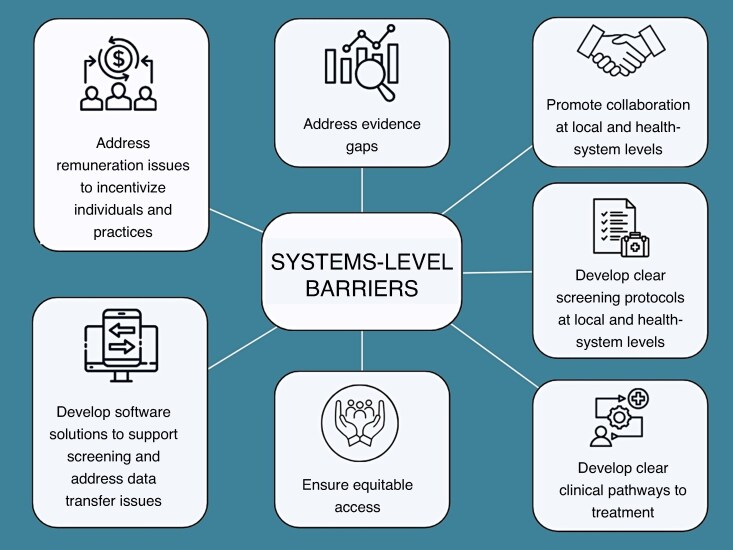 Figure 2
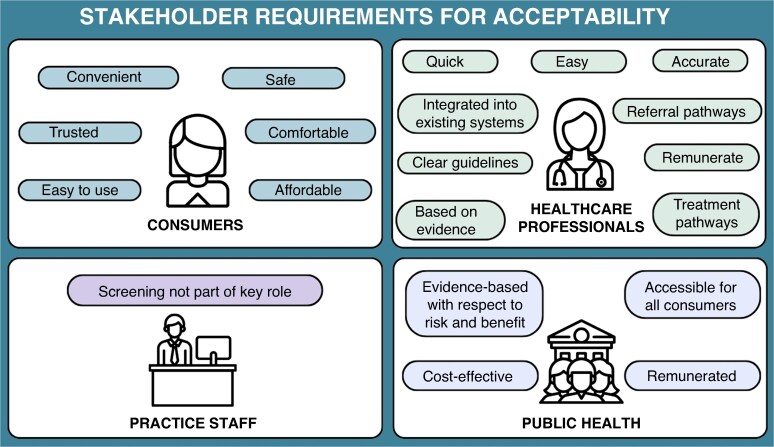 Figure 3
| Study | Country | Screening approach/setting | Methodology | Stakeholders |
|---|---|---|---|---|
| A'Court | United Kingdom | Consumer-led wearables | Mixed methods: 6 semi-structured interviews 3 focus-group discussions Content analysis of clinic letters | 20 cardiology healthcare professionals GP ( Cardiologist ( Cardiology Trainees ( Nurse Practitioners ( |
| Atlas | United States of America | Opportunistic single screen Handheld ECG Age 65+ years | Quantitative: Survey | 153 primary care physicians |
| Bleske | Mexico | Opportunistic single screen Handheld ECG Age 50+ years with risk factors | Mixed methods: 10 surveys 5 interviews | 10 patients |
| Boriani | Europe, Asia/Oceania, Americas | Consumer-led wearables (hypothetical) | Quantitative: Survey | 588 cardiology healthcare professionals |
| Callanan | Ireland | Opportunistic single screen (hypothetical) | Qualitative: 10 structured interviews | 8 general practitioners |
| da Costa | Europe, United Kingdom, Asia/Oceania, Canada | Opportunistic single screen Pulse palpation Age 40+ years | Mixed methods: Outcome data from screening 10 semi-structured interviews | 10 pharmacists |
| Ding | Americas, | Consumer-led wearables (hypothetical) | Quantitative: Survey | 1601 cardiac healthcare professionals Electrophysiologist ( Cardiologists ( Fellows ( Other physician ( Advance practice practitioner ( Nurse ( Other, e.g. trainee ( |
| Ding | United States of America | Systematic prolonged screening Stroke survivors Smartwatch PPG for 14 days Age 50+ years | Mixed methods: 90 System Usability Scale surveys 10 in-depth interviews | 90 stroke survivors |
| Engler | Europe | Four different approaches (hypothetical) Opportunistic single time point Opportunistic prolonged Systematic single time point/prolonged Population-wide patient-led | Qualitative: 24 semi-structured interviews | 13 cardiac healthcare professionals |
| Hall | United Kingdom | Opportunistic single screen Handheld ECG Diabetes patients | Qualitative: 9 semi-structured interviews | 9 patients with diabetes |
| Hamilton | United Kingdom | Systematic prolonged screening Handheld ECG recordings for 3 weeks High-risk patients Age 30+ years | Qualitative: 23 semi-structured interviews | 15 healthcare professionals General practitioner (7) Nurse (4) Physician associate (1) Administrative staff (2) Practice manager (1) |
| Hassan | United Kingdom | Opportunistic single screen Handheld ECG | Qualitative: 11 semi-structured interviews | 11 dental practice staff |
| Hoare | United Kingdom | Systematic prolonged screening Handheld ECG self-recordings daily for 4 weeks Age 65+ years | Qualitative: 23 semi-structured interviews | 23 patients |
| Hoare | United Kingdom | Systematic prolonged screening Handheld ECG self-recordings daily for 4 wks Age 65+ years | Qualitative: 50 semi-structured interviews | 50 decliners of AF screening |
| Koshy | Australia | Opportunistic prolonged screening smart technology (watches and handheld ECG) Cardiac patients Age 18+ years | Quantitative: Survey | 363 patients |
| Lown | United Kingdom | Opportunistic single screen Nurse-led Multiple screening devices (blood pressure meter, handheld ECG, and two ECG wearables) Age 65+ years | Qualitative: 15 semi-structured interviews | 15 patients |
| Lowres | Australia | Opportunistic single screen Handheld ECG Age 65+ years | Qualitative: 9 semi-structured interviews | 9 pharmacists |
| Macniven | Australia | Opportunistic single screen Handheld ECG Age 45+ years | Qualitative: 18 semi-structured interviews (including quantitative and qualitative questions) | 18 staff |
| Manninger | Europe | Consumer-led wearables (hypothetical) | Quantitative: Survey | 417 physicians |
| Manninger | Europe | Consumer-led wearables (hypothetical) | Quantitative: Survey | 539 physicians |
| McKenzie | Australia | Opportunistic single screen Self-screening kiosk Age 65+ years | Mixed methods: 20 semi-structured interviews with practice staff Observations of 22 patients performing screening | 22 patients and 20 general practice staff General practitioners ( Receptionists ( Practice managers ( |
| McKenzie | Australia | Screening as a concept (hypothetical) | Qualitative: 25 semi-structured interviews with key stakeholders relevant to AF screening | 25 stakeholders representing: Health professionals ( Professional bodies ( Government ( Charities/support groups ( Research ( Industry ( |
| Orchard | Australia | Opportunistic single screen Nurse and reception led screening Handheld ECG Age 65+ years | Qualitative: 14 semi-structured interviews | 8 patients and 6 general practice staff General practitioners ( Receptionists ( Nurse ( |
| Orchard | Australia | Opportunistic single screen Flu vaccination clinic Nurse-led screening Handheld ECG Age 65+ years | Mixed methods: Outcome data from screening 17 semi-structured interviews | 17 general practice staff |
| Orchard | Australia | Opportunistic single screen GP and Nurse-led screening Handheld ECG Age 65+ years | Mixed methods: 43 semi-structured interviews with practice staff Observation of practice staff Quantitative screening data | 43 general practice staff General practitioners ( Nurses ( Practice managers ( |
| Sabater-Hernández | Australia | Opportunistic single screen (hypothetical) Self-monitoring with a rented device Consult with pharmacy and follow up with general practitioner | Qualitative: 4 interviews and 1 focus group with potential service users 1 focus group mixed stakeholders 1 focus group with community pharmacists | 8 potential service users |
| Savickas | United Kingdom | Opportunistic single screen Pharmacist-led screening During flu vaccination season Pulse palpation or Handheld ECG Age 65+ years | Qualitative: 6 homogeneous stakeholder focus groups | 25 patients |
| Shih | United States of America | Consumer-led wearables | Qualitative: 19 semi-structured interviews | 19 Apple Watch consumers |
| Taggar | United Kingdom | Opportunistic single screen (hypothetical) | Mixed methods: survey using Likert scale questions and free-text open-ended questions | 212 healthcare professionals General practitioners ( Practice nurses ( Nurse practitioners ( Healthcare assistants ( |
| Theunissen | Netherlands | Opportunistic single screen Nurse-led screening From diabetes management OR cardiovascular risk management programmes Handheld ECG Age 65+ years | Mixed methods Survey 15 semi-structured in-depth interviews | 74 practice nurses |
| Uittenbogaart | Netherlands | Opportunistic single screen General practitioner, nurse, or healthcare assistant led screening Pulse palpation; blood pressure monitor; and handheld ECG Age 65+ years | Qualitative: 7 ‘group’ semi-structured interviews with a mix of healthcare professionals | 15 general practice healthcare professionals |
| Vermunicht | Europe | Opportunistic single screen (hypothetical) Handheld ECG | Quantitative: Survey | 659 general practice professionals General practitioners ( Nurses ( Other ( |
| Wong | Australia | Opportunistic single screen (hypothetical) | Quantitative: Survey | 463 general practitioners |
| Wong | Australia | Community-advertised prolonged screening Handheld ECG recordings for 1 year Age 75+ years | Qualitative: 7 ‘group’ semi-structured interviews with a mix of healthcare professionals | 48 Patients |
| Perspective | Consumers | HCPs | Reception staff, practice managers | Public health organizations, researchers, private companies, regulators |
|---|---|---|---|---|
| Value of screening | Like opportunity to be tested for something that would otherwise not be detected, and potentially prevent stroke | Stroke prevention | Stroke prevention | Stroke prevention |
| Risks/harms | Worry, cost, inconvenience | Patient worry, bleed from coagulation, unnecessary referrals, impact on workflow | Impact on workflow | Patient worry, risk of bleed from anticoagulation, overload healthcare system |
| Appropriate models | Like the handheld ECG more than traditional 12-lead ECG | Handheld single lead ECG is convenient, portable, and easy to use, more accurate than pulse palpation and less time consuming than 12-lead ECG | Confident to use the handheld ECG; staff led or assisted screening creates time burden | GP-led screening; identification of high-risk patients |
| Barriers and facilitators in healthcare settings | Time constraints and workflow in healthcare settings; GPs prefer other staff to screen; patients may not be screened in busy periods | Time constraints and workflow in healthcare settings; patients may not be screened in busy periods | Time constraints and workflow in healthcare settings; screening everyone is not tenable | |
| Systemic issues | Need for evidence | Need for evidence |
- —National Institute for Health and Care Research10.13039/501100000272
- —Wellcome Trust10.13039/100010269
- —Department of Health and Social Care10.13039/501100000276
Peer Reviews
No public reviews on file for this paper yet. If you reviewed it on a platform where reviews are public (OpenReview, ICLR, NeurIPS, ICML), you can paste yours below so the community can read it here.
Videos
No videos yet. Explain this paper in a talk, walkthrough, or lecture? Add one.
Taxonomy
TopicsAtrial Fibrillation Management and Outcomes · ECG Monitoring and Analysis · Cardiac pacing and defibrillation studies
Introduction
Detecting atrial fibrillation (AF) earlier has the potential to reduce the incidence of stroke—one of the largest causes of worldwide mortality.^1^ The evidence for systematic screening for AF is inconclusive due to neutral results from the first major randomized control trials (RCTs) of screening which were underpowered.^2–4^ However, a study-level Meta-Analysis of these trials did indicate a significant effect on stroke^5,6^ and the largest definitive screening trial is yet to report.^7^ Opportunistic screening and local pilots are increasingly common in an attempt to stem the morbidity and mortality associated with AF. If forthcoming trials show a net benefit, and it is deemed that all criteria for a National Screening Programme are met,^8,9^ then it is important to understand what is required to implement screening at scale. Whether opportunistic or systematic, local or large scale, the implementation of programmes will be key to maximizing the benefit wrought from screening for AF and minimizing the harms.^10–47^
To design and implement a screening programme at scale, the World Health Organization (WHO) states that it is essential to understand the issues and barriers, and the needs of the key stakeholders.^8–11^ These stakeholders include consumers, healthcare professionals (HCPs), practice staff, and organizations whose support for a programme would be important for success. It is also important to ensure anticoagulation for screen-detected cases when developing a feasible and sustainable solution.^8,12,13^ Multiple AF screening studies have performed qualitative and/or process evaluations evaluating stakeholder needs and perspectives on key issues including benefits and risks of screening, issues pertinent to implementation of specific screening approaches, and broader systemic issues. There has been no synthesis of this evidence. Compiling and synthesizing the breadth of qualitative results will provide robust recommendations and frameworks for AF screening.
Therefore, we performed a systematic review to understand the needs and opinions of the key stakeholders in relation to issues and barriers that underpin the design and delivery of AF screening; map the requirements for different stakeholder groups; underline models that could have potential; and chart significant issues that need to be addressed for the successful implementation of AF screening programmes.
Methods
Study design
A systematic review of mixed-methods studies and a critical interpretive analysis was performed in accordance with the preferred reporting items for systematic reviews and Meta-Analysis.^13^ The protocol was registered on PROSPERO (CRD42023400110). Reporting of the results was done according to the framework of the enhancing transparency in reporting the synthesis of qualitative research.^14^
Key research questions
To understand the needs and opinions of key stakeholders in relation to issues and barriers that underpin the design and delivery of AF screening.To explore: (i) the perceived value of screening; (ii) the perceived risks and harms of screening; (iii) appropriate models; (iv) factors impacting implementation of screening within healthcare settings; (v) systemic issues; and (vi) summarize the requirements for acceptability for different stakeholder groups.
Eligibility criteria
Studies were required to be peer reviewed and ethically approved. Studies were included if they met all three inclusion criteria: (i) any stakeholder relevant to screening for AF, including its implementations. Stakeholders may include members of the public, patients, healthcare professionals, practitioner groups, community support groups, policy makers, commercial providers, and academics. Stakeholders may come from any setting (e.g. community, general practice, pharmacy, hospital, government); (ii) studies using qualitative methods, surveys, and process evaluations; including interviews, focus groups, observations, evaluations, documentary and media analyses, and other related approaches; and (iii) primary studies that report stakeholder views and attitudes towards screening for AF and its implementation. Studies were excluded if they met any of the following exclusion criteria: (i) AF detected by implanted devices; (ii) quantitative studies that did not report views or opinions in the results; and (iii) review papers or viewpoint articles.
Search strategy
The search was designed and tested by a health librarian (Ms. Isla Kuhn) in collaboration with Dr. Jenni Burt (senior social scientist). The search was based on the Population, Exposure, and Outcome Framework.^15^ Database searches were run in MEDLINE via Ovid, Embase via Ovid, CINAHL via Ebsco, PsycInfo via Ebsco, Scopus, and Web of Science Core Collection in February 2023 and repeated in May 2025. The search was limited to English language papers, published from 2005 onwards to ensure relevant contemporary data. The keyword search strategy, search terms, and controlled vocabulary such as MeSH terms (in MEDLINE) and EMTREE (in Embase) are provided in Supplementary material online, Appendix S1. We also conducted Google and targeted searches for relevant grey literature, consulting selected institutional websites related to screening delivery.
Records identified by the database search were imported into Rayyan. Duplicates were removed. Two authors (N.L. and A.J.) independently performed the title and abstract screening, identified relevant studies, and independently reviewed full texts against the eligibility criteria. Full texts were exported into Endnote. A search of the reference lists for all identified studies was performed, using both forward and backward citation searching. At each stage, consultation occurred with all authors to resolve differences and obtain consensus on included articles.
Data extraction
A data extraction template was developed using Excel and pilot tested to ensure appropriate information was extracted. Data extraction included: author, year of study, funding, country data were collected, study aim, nature of AF screening approach explored (e.g. opportunistic, systematic), study design, data collection method, setting, sample size, stakeholders, and key findings. Data extraction was conducted by three reviewers (M.K., K.M., and N.L.) independently and discussed with all authors to gain consensus.
Quality assessment
To assess risk of bias, two independent reviewers (N.L. and M.K.) used the Mixed Methods Appraisal Tool (MMAT, version 2018).^16^ The MMAT was chosen as it critically appraises quantitative, qualitative, and mixed-methods studies, as were included in this review.
Data synthesis
A critical interpretive synthesis of data was performed independently by two researchers (K.M. and M.K.), and the evidence was synthesized with critical interpretation. Key findings across included studies were extracted from results of the included papers and coded to identify recurring issues and barriers. An inductive approach was used to create a series of core themes, with consideration given to how themes related to our research questions. Rigour was ensured by engaging reflexively as a team; iterative analysis and close consideration of the identification and evidencing of themes and having two researchers read and undertake coding independently.
Results
The initial search identified 13 332 records, and 105 full texts were retrieved and assessed for eligibility, as outlined in the PRISMA flow chart (Figure 1). Thirty-four original research articles were included in the review,^17–50^ with varied study designs: 16 qualitative, 8 quantitative descriptive (i.e. surveys), and 10 mixed-methods studies (Table 1; see Supplementary material online, Appendix S2). All but two studies^19,46^ scored highly on the MMAT quality assessment (see Supplementary material online, Appendix S3), however these studies were not removed as results aligned with overall results. Details and broad findings from each paper are summarized in Supplementary material online, Appendix S2.
PRISMA flow chart. AF, atrial fibrillation.
The majority of studies (24/34) assessed views on opportunistic screening: 17 evaluating a specific intervention^18,19,22,26,28,31–34,37,39–41,43,46,47,50^ and 7 generalized views.^21,25,38,42,45,48,49^ Only six studies explored perspectives on systematic screening: two from the SAFER study,^29,30^ one from FIND AF study,^27^ one post-stroke study^24^, and two generalized views.^25,38^ Consumer-led screening was assessed in six studies: two assessing an intervention^17,44^ and four generalized views.^20,23,35,36^ Only two studies assessed the views of public health organizations (i.e. views of stakeholders other than consumers, HCPs, or healthcare staff).^25,38^
The included studies comprised a range of stakeholders (Table 1; see Supplementary material online, Appendix S2). In this review, the stakeholders have been grouped into (i) consumers; (ii) HCPs [general practitioners (GPs), cardiologists, nurses, aboriginal health workers, dentists, pharmacists]; (iii) practice staff (non-HCP staff including receptionists and practice managers); and (iv) public health organizations (charities/advocacy groups, research, government and regulators, and industry). The perspectives of these four stakeholder groups, in relation to the following areas, are reported in detail below:
Value, benefits, and risks of screening;Perspectives on appropriate models;Factors impacting implementation of screening within healthcare settings;Systemic issues.
As shown in Table 2, there were broad areas of agreement between stakeholder groups on key aspects of screening including perceived value of screening for stroke reduction; acceptability of hand-held devices in GP settings; barriers in healthcare settings related to time constraints, impact on workflow and lack of remuneration; need for evidence of benefit; value of risk-based approach; and need to address access and equity in healthcare systems.
Value, benefits, and risks of screening
There was widespread support for AF screening across all stakeholder groups (Table 2). Staff working in primary practice and other healthcare settings saw the value of screening, both as a general good, and in some cases within their own practice. Benefits included the opportunity to increase detection rates, and prevent stroke; improved cardiovascular profile in the practice; and enhanced responsibility for health, and reassurance for patients.^21,27,37,38,40,41,50^ In addition, pharmacists and dental nurses valued the opportunity to increase skills and take on new responsibilities, and the opportunity to save lives.^28,33,43^ Researchers and those working in public health identified the importance to reducing the burden of disability and death associated with stroke, both for individuals, and the wider community.^38^ While most stakeholders were broadly positive, some expressed concerns about potential risks/harms, including creating burden and worry for patients, risks associated with anti-coagulation; and increased burden for the practice and for the healthcare system.^21,27,37,38^
Screening was also well received by consumers. Consumers across studies knew very little about AF, but valued the opportunity to take part in screening, either in primary care or community settings, or at home.^26,29,37,40,50^ Across studies, consumers valued AF screening because they perceived that early detection could help prevent stroke and provide peace of mind. Consumers’ concerns included being overserviced, cost, inconvenience, and anxiety.^26,29,50^ Not all consumers took up the opportunity to take part in specific screening programmes (embedded in research programmes).^30,37^ Reasons included not believing that screening was important, not wanting to know if there was something wrong, and inconvenience.^30^
Stakeholder perspectives on appropriate screening models
Only two papers considered the perspectives of a wide range of stakeholders regarding different models for screening, including systematic and opportunistic approaches.^25,38^ Most papers assessed stakeholder perspectives on a specific intervention, most commonly the use of handheld single-lead electrocardiograms (ECGs) within a healthcare setting (general practice, pharmacy, dentistry). The literature identified some models that have broad stakeholder acceptability, although as noted in the following sections there is a need to first address local and systemic barriers (Figure 2) to ensure the successful integration of these models.
Barriers to overcome at a systemic level in each country/healthcare jurisdiction.
Systematic screening
Although only assessed in two papers,^28,41^ systematic screening of all in-scope individuals (e.g. through a mailout to all people over 65, or within primary care via an invite) was seen as being untenable and not supported by the limited current evidence.^25,38^ However, there was some support for systematic screening using a risk-based approach, focused on identification and screening of individuals at higher risk of having AF who had additional risk factors for stroke.^18,27,38,43,48,50^ Suggested approaches included systematic identification of patients using a set of risk factors and inviting these in for screening, or screening all at-risk patient groups in clinics (e.g. diabetes).^26,38^
Opportunistic screening using a handheld electrocardiogram
Several papers identified that opportunistic GP-based screening (using a single-lead ECG) was seen as an appropriate model for screening.^25,38,47,48^ Other locations where handheld devices could be incorporated included pharmacy and dental.^19,28,33,43^ The handheld ECG was widely acceptable across all stakeholder groups. Across studies, HCPs perceived the handheld ECG to be quick and easy to use, with GPs, reception staff, nurses, pharmacists, dentists, and Aboriginal health workers all expressing confidence to use such a device.^28,33,34,39–41,46,47^ However, one study found HCPs initially preferred to ‘confirm’ the handheld single-lead ECG results using pulse palpation, but as they became more familiar with the device their confidence in device accuracy increased.^36,40,42,46,47^
Direct-to-consumer devices
Another potential model is the incorporation of direct-to-consumer devices with AF detection capabilities, utilizing either ECG (e.g. Kardia-pro; some Apple watches) or photoplethysmography (PPG) (e.g. some Apple Watches, Fitbit). These were seen as having potential or even as representing a great opportunity.^20,38^ However, many stakeholders have significant reservations including concerns about consequences of false positives (e.g. patient anxiety, unnecessary referrals, and risk of bleeding if anticoagulant medication is prescribed), as well as data transfer and security, and increased burden on the healthcare system.^17,25,38^ There was a perception that patient-led screening using direct-to-consumer devices could increase workload as patients would come in to discuss results with a GP, which could ‘overload the system’.^17,38^
Despite these concerns, stakeholders also perceive that direct-to-consumer devices for AF screening are inevitable,^17,20,25^ and several studies found that some HCPs are recommending them to patients to screen for AF,^20,23^ and using data provided by patients in clinical decision-making.^17^ Healthcare professionals may have more confidence in ECG-based devices over PPG-based devices, being more likely to recommend such devices, as well as diagnose AF, order follow-up diagnostic tests, or initiate anti-coagulation therapy.^35,36^ Healthcare professionals report concerns about the clinical utility of data on AF from direct-to-consumer devices and would like to see more research on the accuracy of direct-to-consumer devices.^17^
Consumer perspectives
Consumers who were screened in HCP settings using a handheld device were appreciative of the opportunity to be screened, engaged with the technology, and found it more convenient than a 12-lead ECG.^33,37,39,43^ Consumers were also happy to engage in self-screening using direct-to-consumer devices such as smartwatches with ECG. Consumers value their convenience, comfort, appearance, and safety of these new devices and prefer them to traditional approaches such as 12-lead ECG and Holter monitors.^24,29,31^ Consumers also appreciated the non-invasive nature of handheld or wearable devices for extended monitoring.^24,29,32,50^ Recommendation by an HCP was associated with trust and engagement in extended home-based screening,^32,50^ while consumer refusal was associated with inconvenience, and concerns about compromising the research project.^30^ There is some evidence that consumers may lack trust in direct-to-consumer wearables, as they believe that they are not as accurate as a physician interpreted test.^31,44^ However, one study found 92% of consumers would follow up a diagnosis from a direct-to-consumer device with an HCP, and 91.7% believed them more convenient than a 12-lead ECG.^31,34^
Factors impacting implementation within healthcare settings
Operational barriers impacting implementation included time constraints and impact on workflow, lack of integration between data systems, and remuneration/reimbursement (discussed in the systemic barriers section). Other barriers included lack of equipment, lack of staff, and need for an appropriate space for screening.^19,21,45,48^
Time constraints and workflow
Time constraints and impact on workflow were identified as significant issues by staff across settings^37,38,45^ (Table 2). Regardless of the screening method used, GPs had concerns about the time taken to undertake screening, and the time taken to review screening results, and impact on workflow if AF was identified.^21,27,39–41,47,50^ However, some GPs did not perceive that there was significant increase in workload^37^ or suggested that the benefits of reduced stroke outweigh the increase in workload.^27^ Approaches where screening was undertaken by other staff in the practice, or by patients themselves, were seen as preferable by GPs,^21,37^ and GPs would prefer to delegate screening to other staff in the practice which could require additional resources.^47^ Reception staff, while confident to use screening devices, were not enthusiastic about being involved in screening due to significant impacts on time, and belief that it was not part of their role.^37,39^ Dental and pharmacy staff also expressed concerns about time and impact on workflow.^28,33^ Across all healthcare settings, staff prioritize normal duties over screening.^37,50^ Screening by GPs, nursing staff, pharmacists, or reception staff may not be possible during very busy times, meaning that some eligible patients will not be screened.^37,50^
Data management systems
The need for efficient systems for data management was essential for acceptability.^38,41,43,46^ In many studies, interoperability between systems was identified as a significant barrier.^38,43,46^ Systems that require manual integration of screening data into patient files are cumbersome and add to burden experienced by staff.^38^ There were also concerns about how to integrate data from patient devices into patient records.^23,36^
Systemic barriers
Some key systemic issues were identified (Figure 2) that cannot be addressed at the local level and will require interagency collaboration and government intervention. These include issues with research gaps/lack of evidence, and operational barriers. The identified barriers are discussed below.^28,41^
Need for evidence
The need for evidence was strongly expressed by a range of non-consumer stakeholders. This included evidence for the net benefit of AF screening; benefit of systematic screening of asymptomatic individuals; treatment of screen-detected AF; and a cost benefit analysis.^25,38,48^ There was also a perceived need for evidence supporting the clinical utility of direct-to-consumer devices.^20,23,35^
Guidelines and protocols
Effective guidelines, protocols, and pathways were seen as important to support screening in healthcare settings. Stakeholders indicated the need for clear protocols and referral pathways for positive results in GP-led screening^21^ and nurse-led screening,^41^ for data transfer and referrals for AF detected in pharmacy or in community settings,^22,38,42^ and protocols for follow-up of high-risk individuals.^27^ Knowledge of guidelines is associated with increased screening by HCPs,^49^ however guideline complexity was identified as a barrier.^21^ Time constraints may also prevent GPs from screening as per guidelines.^38^ Guidelines, protocols, and pathways were also identified as important for consumer-initiated screening using direct-to-consumer devices.^20,23,35^ While HCPs believe that consumer-initiated screening has great potential, they also desire guidelines and advice (e.g. from scientific societies) on the use of such devices for detection of AF, mechanisms for managing positive results, and regulation by authorities.^20,23,35^
Collaboration and communication
Collaboration between agencies is required to facilitate a system-wide response to AF screening.^38^ In addition, several studies identified a need for effective collaboration and formalized communication methods between pharmacy and general practice to ensure that pharmacy-based programmes are effective.^22,42^ Pharmacists anticipated low levels of success due to difficulties in communication with GPs arising from misunderstandings associated with professional boundaries.^42^
Remuneration and reimbursement
Stakeholders across different settings (general practice, pharmacy and dental practice) reported that remuneration/reimbursement is required if screening is to be effective and sustainable.^28,38,42,45,50^ Effective remuneration/reimbursement was seen to facilitate implementation and incentivize screening.^33,40^ Several studies identified improvements to remuneration/reimbursement as essential for implementation of a screening programme.^25,38^ Local healthcare systems are not set up to remunerate GPs or others to undertake screening.^25,38^ However, integrating remuneration/reimbursement into existing frameworks could be complex, such as calculating remuneration/reimbursement in dental practice.^28,41,45^
Access and equity
Screening is dependent on access to healthcare services, however consumers may not have access to healthcare due to lack of services in the area, or capacity to pay for such services.^21,25,38^ Cost of attending appointments, and cost of digital devices, was identified as a barrier for consumers to engage in screening.^17,21,26,31,32^ In addition, several studies indicate that digital literacy, especially for older patients, may be an issue for self-screening.^17,30,31,37^ Many patients required reception staff assistance to complete self-screening using a self-service check-in in GP waiting rooms.^37^ Digital literacy and device complexity were also barriers for patient-led screening at home, especially for older people.^17,31^ Furthermore, some patients declined to participate in a screening programme because they were concerned about the technical aspects of screening using an at-home device.^30^
Ensuring that all consumers can access screening, regardless of their income, location, or capacity to engage with technology, was identified as an important consideration.^25,38^ However, there was very little discussion of how to achieve this goal in specific contexts. Some suggestions, which may increase access for patients with lower digital literacy, were simpler interfaces^24,37^ and patient training for using the self-screening device.^24,28,41^
Implementation strategies for addressing barriers
A set of general recommendations to address key barriers to facilitate implementation were included in two papers,^25,38^ and these are incorporated in Figure 2. These recommendations are general in nature and do not provide concrete strategies for implementation in local jurisdictions.
Some papers suggested specific strategies to address barriers, however these initiatives are mostly specific to the relevant healthcare system and country. Implementing these strategies may be beyond the scope of individual practices, and would require funding, investment in software and equipment, additional staff or staff training.
To address time constraints and impact on GP workload, the following strategies were identified:
incorporate screening within other existing healthcare programmes, e.g. flu vaccines, national health screen, healthy heart check (Europe, UK, Australia^27,30,38,40,41,48,51^);incorporate screening into the general practice check-in process (Australia^37,38^);extra staff and/or train non-GP staff to perform screen (Ireland, Europe, Australia^21,25,40^);utilize integrated software in primary care to identify patients most in need of screening (UK, Europe, Australia^27,41,48^);use software pop-ups to remind GPs to screen (UK, Australia^27,41,48^);invest in equipment^24,28,43^ (e.g. handheld devices) (Europe, Australia^25,41^).
Other strategies focused on overcoming remuneration issues. Except for user-pay models for rental of a device, remuneration/reimbursement models require a solution above the level of the individual practice. Suggested remuneration/reimbursement models in general practice included:
incorporation of AF screening into reimbursement frameworks so that GPs can bill for screening (e.g. Medicare item numbers in Australia), or incentive payments for the practice (Australia^38^);remuneration/reimbursement in pharmacy could include a nominal patient fee for renting a screening device or government incentive payments to the pharmacy (Australia^42^).
Discussion
To our knowledge, this is the first study to systematically synthesize the views of a range of stakeholders on AF screening. Our review identified significant gaps in the existing body of literature. There is a lack of qualitative research on systematic and population-wide screening programmes^2,3^; only two papers assessed system-level stakeholders/key decision-makers (e.g. government, policy makers, funders, advocacy groups)^25,38^; and most of the research is focused on acceptability of a specific intervention or device, rather than screening as a whole. Our review identified a set of barriers which need to be addressed at a systems level when designing a suitable screening programme (Figure 2). Our review also identified a set of stakeholder requirements that need to be met for screening to be acceptable and feasible (Figure 3). Our synthesis can be utilized to provide guidance on implementation of screening in local jurisdictions. When considering an implementation strategy, decision-makers need to consider whether the programme meets the identified needs of stakeholders (Figure 3), and how the systemic issues (Figure 2) can be addressed within the local jurisdiction.
Stakeholder requirements for acceptability.
The best approaches will facilitate screening that is easy and quick; that is supported by evidence and resources, and by appropriate protocols and pathways; and that is accessible for all consumers. The findings identified some models that have stakeholder acceptability, such as opportunistic screening with a handheld ECG in general practice. However, there is no single screening model that currently addresses all needs. For example, screening with handheld ECG in general practice has consumer and HCP stakeholder acceptability (easy, comfortable, convenient, quick, accurate), but there are many barriers still to overcome (time and workflow burdens, currently not remunerated/reimbursed, and may not be affordable or accessible for all patients). Access is a critical issue. When choosing a model, decision-makers will need to identify whether this model will reach and be accessible to the intended target population. Appropriate solutions in any given health jurisdiction may require multi-faceted approaches that do not rely solely on screening of patients in primary care.
Barriers were identified at both the local level and the^7–9,52^ systemic level. Addressing these will necessitate a response beyond the local level, involving all parties. Our findings state that governance and collaboration, and clearly defined leadership are essential if AF screening is to be successful. These findings are consistent with current best practice for development of screening programmes which, since Wilson and Jungner criteria in 1968,^9^ have evolved to include more focus on systems issues.^8,51^ Best practice now includes consideration of operational and implementation issues, infrastructure requirements, acceptability of entire programmes rather than the individual test, and programme management systems.^8,51^ The WHO states that clearly defined leadership, co-ordination, management, and accountability are essential to the success of any screening programme.^8^ The WHO also outline the requirement for clear steps in the screening pathway that include treatment/follow-up, reporting of outcomes, and evaluation of the screening programme.^11^ In addition, screening programmes require good information systems, careful oversight, and quality assurance evaluation.^8^
The identified need for evidence to justify screening is aligned with WHO screening criteria which outline the need for evidence of the balance of benefits and harms, and cost effectiveness.^8,9^ The need for AF screening RCT evidence is well known and highlighted in this review. Large-scale RCTs are currently underway, including the SAFER study and associated cost-effectiveness analysis.^7^ In addition, an individual patient data Meta-Analysis of RCTs in 2022 showed reduction in stroke with AF screening (relative risk 0.91; 95% confidence interval 0.84–0.99).^6^ These trials will be critical in determining appropriateness of AF screening. It is also important that qualitative evaluations of RCTs are performed and disseminated, especially those related to systematic screening studies. There are notable absences in the literature as some major randomized trials on systematic screening (e.g. STROKESTOP,^3^ GUARD-AF,^2^ and VITAL-AF^4^) have not published qualitative evaluations of stakeholder views.^2–4^ This qualitative evidence is essential to address the gap in the current evidence base.
Funding, equity, and access were identified as critical system-level issues for implementation. Appropriate financing mechanisms are vital to success of screening, as remuneration/reimbursement is required to influence HCP behaviour.^11^ However, funding needs to cover all the components of screening including equipment, training, health promotion, testing, treatment, and monitoring.^8^ The mechanism for who pays for screening, and whether this can be equitable for both patients and those providing screening, will look different in different contexts, as funding programmes and access to healthcare differ between countries and health systems. It is beyond the scope of this review to make recommendations on how this issue can be addressed. However, a key implication of our synthesis is that each jurisdiction will need to ensure that the question of funding and access are adequately addressed rather than leaving this issue to local entities.
System-level issues related to e-health devices and consumer-led wearables were identified, which align with expert consensus.^52,53^ These include data security, data transfer, digital literacy, and clinical guidance. Growth in consumer wearables is seen as inevitable, especially in a landscape of proliferating direct-marketed devices for screening, and it is important to be prepared by addressing the known issues early.^17,52,53^ These issues are best addressed at a systems level with good quality governance supported by research, with collaboration and input from government and other stakeholder organizations.
Strengths and weaknesses
This is the first study to combine views of a range of stakeholders on value and implementation issues for AF screening. There are several limitations to the included studies that warrant consideration and may impact the generalizability of the results and the applicability across different healthcare systems and sociocultural contexts. The included studies are highly heterogenous, and the potential for publication bias should be considered. Most studies did not ask about AF screening as a general concept. There is also a paucity of qualitative literature regarding views on systematic screening. Views in many studies are constrained by the study aim and specific questions asked, especially for those assessing acceptability of an intervention or process evaluations. Furthermore, many stakeholders (e.g. systems-level and key decision-makers) are under-represented/evaluated, and participants are likely to be people who are more motivated to respond. The sample size in many studies is relatively small. Limited studies assessed researchers, policy makers, industry representatives, government or public health views. The views of patients are limited mostly to acceptability of specific screening tests/technology; and further consultation of patient/public groups is necessary in the development of any screening programme.^11^
Conclusions
Generally, most stakeholders are positive about screening, but strong evidence and guideline recommendation will be required for successful implementation. There are many systemic issues that will need to be addressed for successful implementation at scale, but methodologies now available seem to be accepted by many stakeholders as a practical mechanism for widespread adoption if barriers can be addressed. Given the central importance of system-level barriers, more research is needed on the perspectives and needs of system-level stakeholders, key decision-makers, and consumer groups. Additionally, further research is required to identify strategies for how to address barriers in specific healthcare jurisdictions. It is important to identify clear leadership, establish collaboration, and address systemic issues including remuneration/reimbursement and screening pathways. This will be particularly important if large RCTs and meta-analyses confirm efficacy for stroke prevention.
Supplementary Material
euag051_Supplementary_Data
The reference list from the paper itself. Each links out to its DOI / PubMed record.
- 1Marini C, De Santis F, Sacco S, Russo T, Olivieri L, Totaro R et al Contribution of atrial fibrillation to incidence and outcome of ischemic stroke. Stroke 2005;36:1115–9.15879330 10.1161/01.STR.0000166053.83476.4a · doi ↗ · pubmed ↗
- 2Lopes Renato D, Atlas Steven J, Go Alan S, Lubitz Steven A, Mc Manus David D, Dolor Rowena J et al Effect of screening for undiagnosed atrial fibrillation on stroke prevention. J Am Coll Cardiol 2024;84:2073–84.39230544 10.1016/j.jacc.2024.08.019 · doi ↗ · pubmed ↗
- 3Svennberg E, Friberg L, Frykman V, Al-Khalili F, Engdahl J, Rosenqvist M. Clinical outcomes in systematic screening for atrial fibrillation (STROKESTOP): a multicentre, parallel group, unmasked, randomised controlled trial. Lancet 2021;398:1498–506.34469764 10.1016/S 0140-6736(21)01637-8 · doi ↗ · pubmed ↗
- 4Lubitz SA, Atlas SJ, Ashburner JM, Lipsanopoulos ATT, Borowsky LH, Guan W et al Screening for atrial fibrillation in older adults at primary care visits: VITAL-AF randomized controlled trial. Circulation 2022;145:946–54.35232217 10.1161/CIRCULATIONAHA.121.057014 PMC 8960369 · doi ↗ · pubmed ↗
- 5Bonander C, Jakobsson N, Kemp Gudmundsdottir K, Svennberg E, Engdahl J. Atrial fibrillation screening for stroke prevention: an instrumental variables meta-analysis addressing varying participation rates. Europace 2025;27:euaf 030.39953895 10.1093/europace/euaf 030PMC 11878575 · doi ↗ · pubmed ↗
- 6Mc Intyre WF, Diederichsen SZ, Freedman B, Schnabel RB, Svennberg E, Healey JS. Screening for atrial fibrillation to prevent stroke: a meta-analysis. Eur Heart J Open 2022;2:oeac 044.35919582 10.1093/ehjopen/oeac 044PMC 9305505 · doi ↗ · pubmed ↗
- 7Mant J, Modi RN, Dymond A, Armstrong N, Burt J, Calvert P et al Randomised controlled trial of population screening for atrial fibrillation in people aged 70 years and over to reduce stroke: protocol for the SAFER trial. BMJ Open 2024;14:e 082047.
- 8World Health Organization, Regional Office for Europe . Screening programmes: a short guide—increase effectiveness, maximise benefits and minimise harm (ISBN 978-92-890-5478-2). 2020. https://www.who.int/europe/publications/i/item/9789289054782 (27 October 2025, date last accessed).