Mirabegron in patients with age-related macular degeneration treated for overactive bladder: a study protocol for a prospective observational non-randomized trial
Lucia Ambrosio, Maurizio Cammalleri, Serena Panariello, Gianluigi Califano, Arianna Scala, Giovanni Improta, Antonio Pisani, Robert Rejdak, Ireneusz Ostrowski, Luca Filippi, Paola Bagnoli, Massimo Dal Monte, Mario Damiano Toro

TL;DR
This study explores whether mirabegron, a drug for overactive bladder, might help prevent dry AMD from progressing to a more severe form.
Contribution
The study introduces mirabegron as a potential therapy for slowing AMD progression in patients with overactive bladder.
Findings
Mirabegron may influence retinal angiogenic proliferation, potentially reducing AMD conversion risk.
The drug's safety profile in the eye supports its investigation for AMD treatment.
The study aims to evaluate mirabegron's impact on AMD progression in patients with overactive bladder.
Abstract
Although anti-vascular endothelial growth factor drugs have revolutionized the treatment of neovascular age-related macular degeneration (wet AMD), preventing eyes from converting from dry to wet AMD provides better long-term prognosis for sight and overall health. Mirabegron, an agonist at beta 3 adrenoceptors (β3-ARs), is licensed for the treatment of overactive bladder (OAB), but has potential effects on angiogenic proliferation in the retina, and therefore may reduce risk of conversion from dry to wet AMD. Both OAB and AMD are more common in older adults and share risk factors suggesting a potential link between these two conditions, thus highlighting the need for common therapy for the two diseases. Mirabegron use in AMD patients is supported by its rather safe profile at the eye level as macular and choriocapillary parameters do not seem to be affected in OAB patients. The purpose…
Genes, proteins, chemicals, diseases, species, mutations and cell lines named across the full text — each resolved to its canonical identifier and authoritative record.
Click any figure to enlarge with its caption.
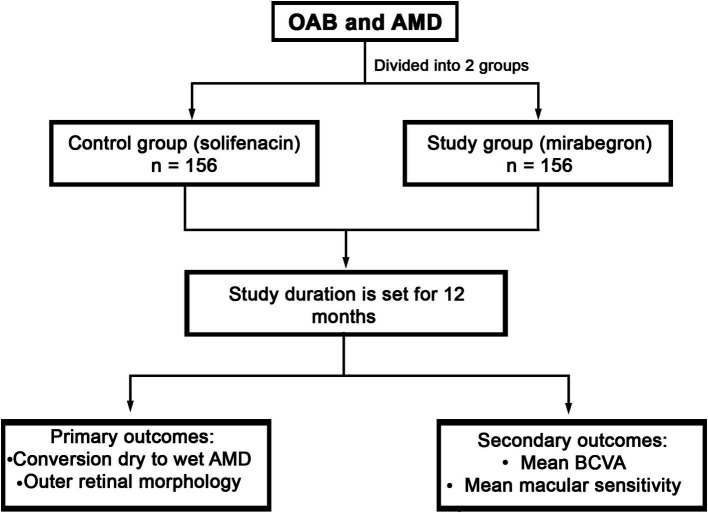 Figure 1
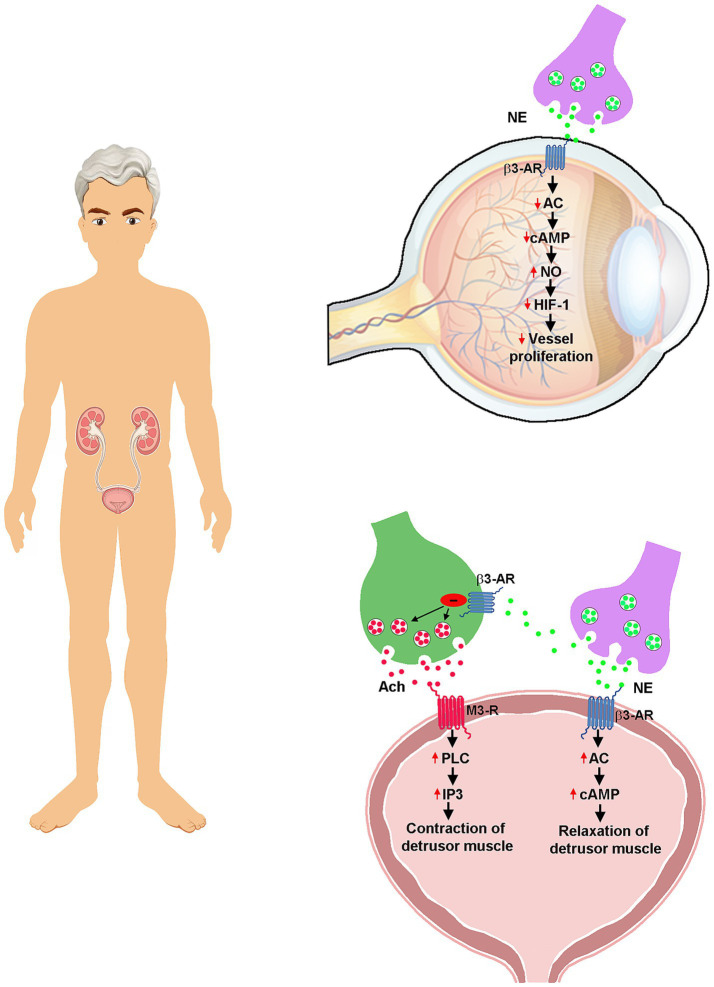 Figure 2
Peer Reviews
No public reviews on file for this paper yet. If you reviewed it on a platform where reviews are public (OpenReview, ICLR, NeurIPS, ICML), you can paste yours below so the community can read it here.
Videos
No videos yet. Explain this paper in a talk, walkthrough, or lecture? Add one.
Taxonomy
TopicsUrinary Bladder and Prostate Research · Retinal Diseases and Treatments · Chronic Kidney Disease and Diabetes