LDL receptor-independent mechanisms of proprotein convertase subtilisin/kexin type 9 in cardiovascular pathophysiology
Hang Su, Xunan Guo, Qiang Li, Xiaohang Yuan, Xiaolong Wu, Zihan Zhao, Yi Kan, Yifan Yang, Zhaolin Fu, Zhenrui Qi, Guangyuan Song

TL;DR
This review explores how PCSK9 affects cardiovascular health beyond its role in cholesterol regulation, highlighting new therapeutic opportunities.
Contribution
The paper identifies non-LDLR-dependent mechanisms of PCSK9 in cardiovascular disease and discusses implications for future therapies.
Findings
PCSK9 contributes to vascular inflammation, atherosclerosis, and calcific aortic valve disease independently of LDLR.
Pharmacological inhibition of PCSK9 shows an efficacy gap compared to genetic deficiency, suggesting additional mechanisms at play.
Next-generation therapies targeting PCSK9 may offer broader cardiovascular benefits beyond lipid lowering.
Abstract
Proprotein convertase subtilisin/kexin type 9 (PCSK9) is a pivotal regulator of lipid metabolism and a validated therapeutic target in cardiovascular disease (CVD). While its canonical role in mediating low-density lipoprotein receptor (LDLR) degradation underpins its cholesterol-lowering effects, emerging evidence highlights diverse LDLR-independent actions that contribute to cardiovascular pathology. PCSK9 exerts pro-inflammatory, pro-atherosclerotic, pro-thrombotic, and cardiotoxic effects and promotes valvular calcification—thereby influencing vascular, myocardial, and structural heart disease beyond lipid regulation. This review delineates these non-canonical mechanisms, emphasizing PCSK9's roles in vascular inflammation, atherosclerosis, thrombosis, regulated cardiomyocyte death, and calcific aortic valve disease (CAVD). We also address key unresolved questions regarding the…
Genes, proteins, chemicals, diseases, species, mutations and cell lines named across the full text — each resolved to its canonical identifier and authoritative record.
Click any figure to enlarge with its caption.
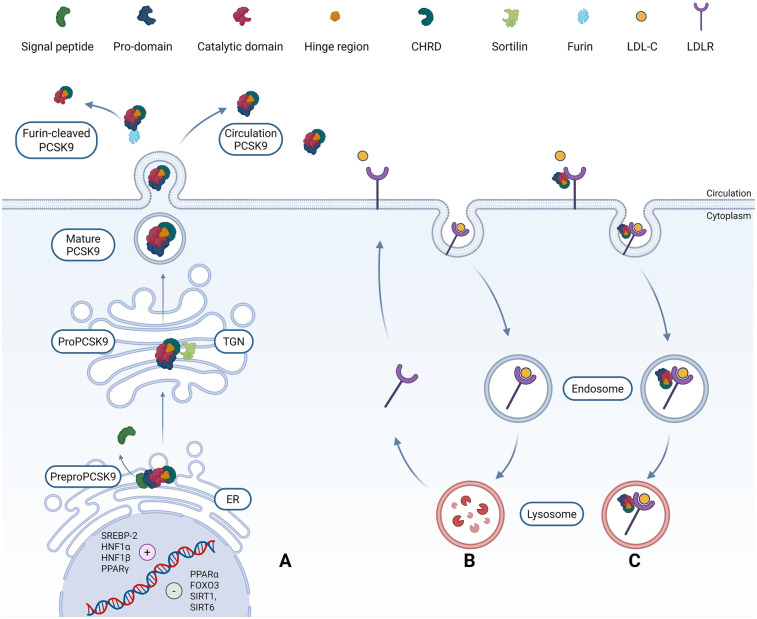 Figure 1
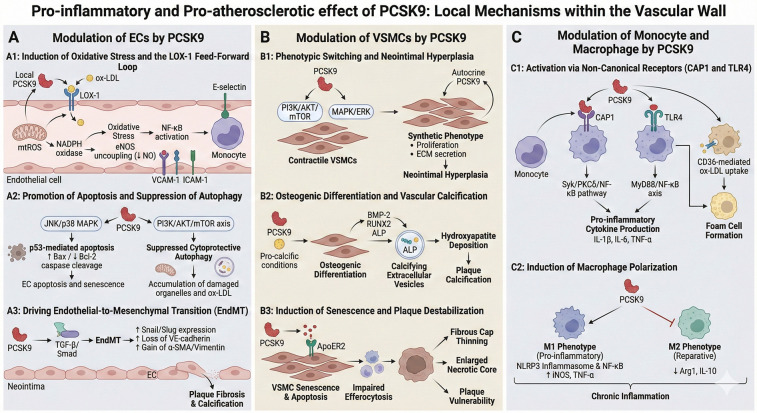 Figure 2
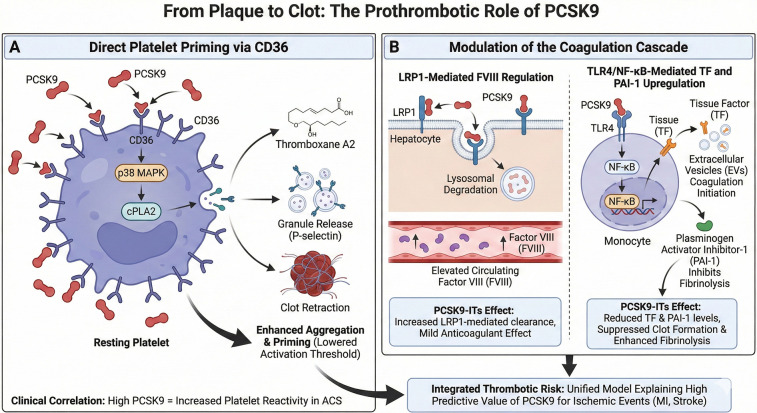 Figure 3
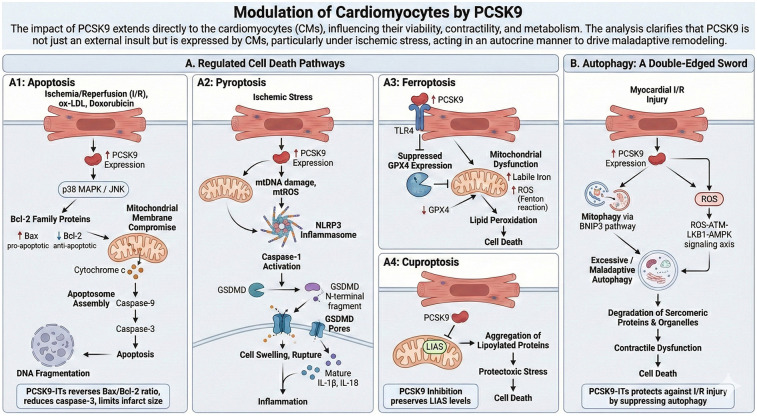 Figure 4
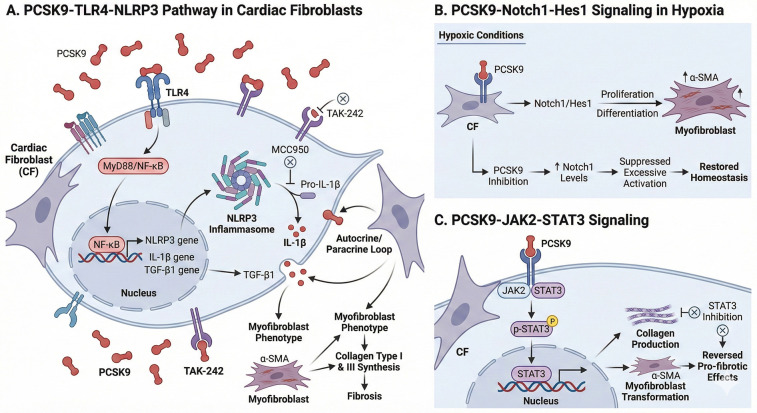 Figure 5
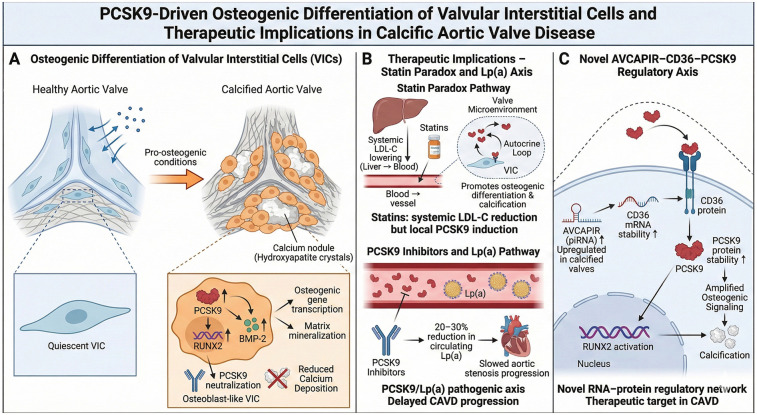 Figure 6
Peer Reviews
No public reviews on file for this paper yet. If you reviewed it on a platform where reviews are public (OpenReview, ICLR, NeurIPS, ICML), you can paste yours below so the community can read it here.
Videos
No videos yet. Explain this paper in a talk, walkthrough, or lecture? Add one.
Taxonomy
TopicsLipoproteins and Cardiovascular Health · Protease and Inhibitor Mechanisms · Coronary Interventions and Diagnostics