Testing for hereditary cancer genes in men: a missed opportunity for cancer prevention
Calan Szmyd, Madison LaFleur, Ashley Cantu-Weinstein, Jingwen Zhang, Nicholas Sun, Youbao Sha, Jessica L. Saben, Adam C. ElNaggar, Minetta C. Liu, Sheetal Parmar, Vivienne Souter

TL;DR
Men are underrepresented in hereditary cancer testing but show higher test positivity rates, highlighting the need for better screening and awareness in primary care.
Contribution
The study reveals disparities in hereditary cancer testing practices and outcomes between men and women.
Findings
Men made up only 5% of hereditary cancer testing cases but had higher odds of testing positive for pathogenic variants.
Men were older at testing and more likely to have a personal cancer history compared to women.
Testing for men was more frequently ordered by primary care or specialty clinics rather than genetics clinics.
Abstract
Genetic testing for inherited cancer risk syndromes can inform targeted surveillance and intervention, but testing for male patients is inadequately addressed by medical literature and clinical guidelines despite having higher cancer-related mortality and morbidity than women. Here, we evaluate characteristics and hereditary cancer testing practices and outcomes in men compared to women. This retrospective study analyzed hereditary cancer testing data from a commercial laboratory between 06/2020–08/2023. Outcomes assessed included demographics, personal and family cancer histories, ordering clinic type, gene panel size, test results (pathogenic/likely pathogenic, or negative), and the frequency of clinically actionable variants based on National Comprehensive Cancer Network and other guidelines. Comparisons between men and women were analyzed using odds ratios from Fisher’s exact test…
Genes, proteins, chemicals, diseases, species, mutations and cell lines named across the full text — each resolved to its canonical identifier and authoritative record.
Click any figure to enlarge with its caption.
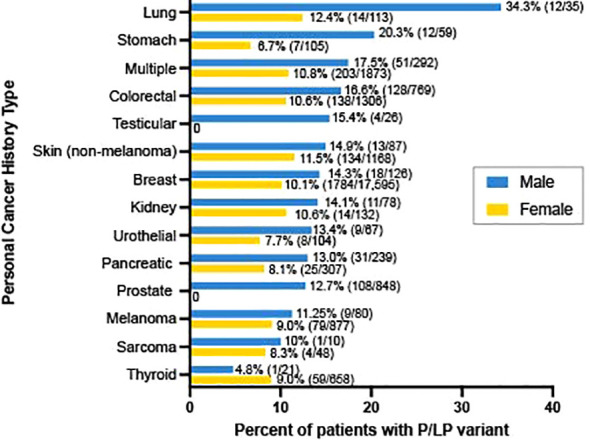 Figure 1
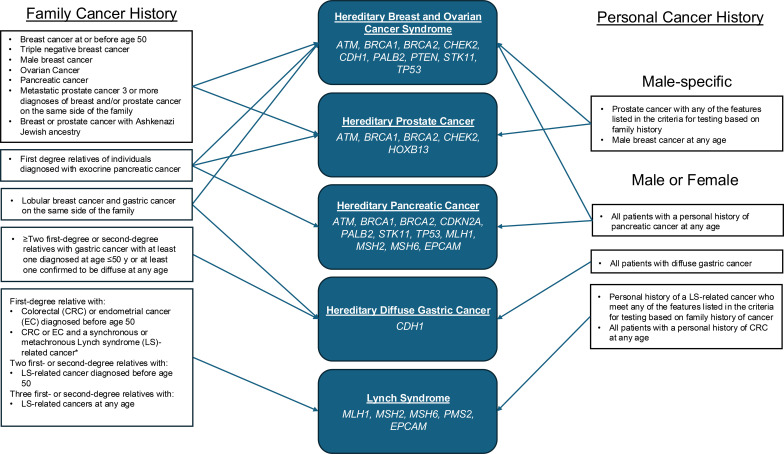 Figure 2
Peer Reviews
No public reviews on file for this paper yet. If you reviewed it on a platform where reviews are public (OpenReview, ICLR, NeurIPS, ICML), you can paste yours below so the community can read it here.
Videos
No videos yet. Explain this paper in a talk, walkthrough, or lecture? Add one.
Taxonomy
TopicsBRCA gene mutations in cancer · Genetic factors in colorectal cancer · Male Breast Health Studies