Effect of distraction length on the morphology of knee cartilage in a rat model of femoral distraction osteogenesis
Caifeng Wu, Yuanxin Chen, Yanshi Liu, Lian Tang, Xiaoheng Ding, Aihemaitijiang Yusufu, Kai Liu

TL;DR
This study shows that excessive femoral distraction in rats causes knee cartilage degeneration and osteoarthritis-like changes due to inflammation and bone remodeling.
Contribution
The study identifies a threshold for femoral distraction beyond which knee joint damage becomes irreversible, linking it to specific molecular pathways.
Findings
20 mm distraction caused severe cartilage erosion and subchondral sclerosis, unlike 10 mm distraction.
Group B showed elevated catabolic markers (IL-1β, MMP-13, RANKL) and reduced anabolic markers (COL-II, SOX9, OPG).
Excessive distraction triggers sterile inflammation and osteochondral uncoupling via IL-1β/MMP-13 and OPG/RANKL pathways.
Abstract
This study investigated the dose-dependent impact of femoral distraction length on knee joint integrity and characterized the molecular mechanisms driving cartilage degeneration in a rat distraction osteogenesis (DO) model. Thirty-six Sprague-Dawley rats underwent femoral DO and were randomly assigned to three groups: Control (5 mm), Group A (10 mm), and Group B (20 mm). Following a consolidation phase, knee joint morphology and subchondral bone microstructure were evaluated using digital radiography and micro-computed tomography. Histological assessment included H&E, Safranin O-Fast Green, and Masson’s trichrome staining. Furthermore, immunohistochemical analysis quantified the expression of catabolic (IL-1β, MMP-13, RANKL) and anabolic (COL-II, SOX9, OPG) biomarkers in the articular cartilage and subchondral bone. Radiographic and histological findings demonstrated successful…
Genes, proteins, chemicals, diseases, species, mutations and cell lines named across the full text — each resolved to its canonical identifier and authoritative record.
Click any figure to enlarge with its caption.
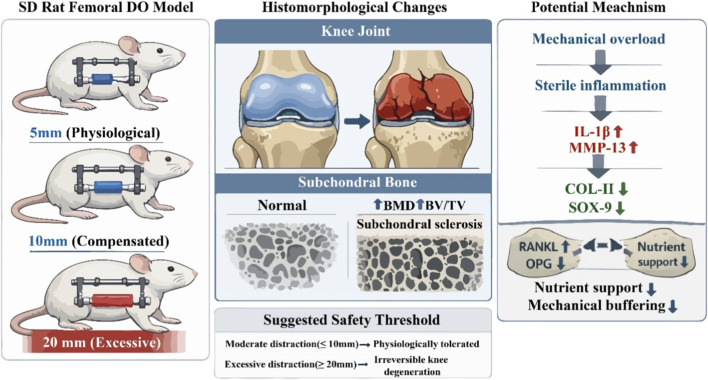 Figure 1
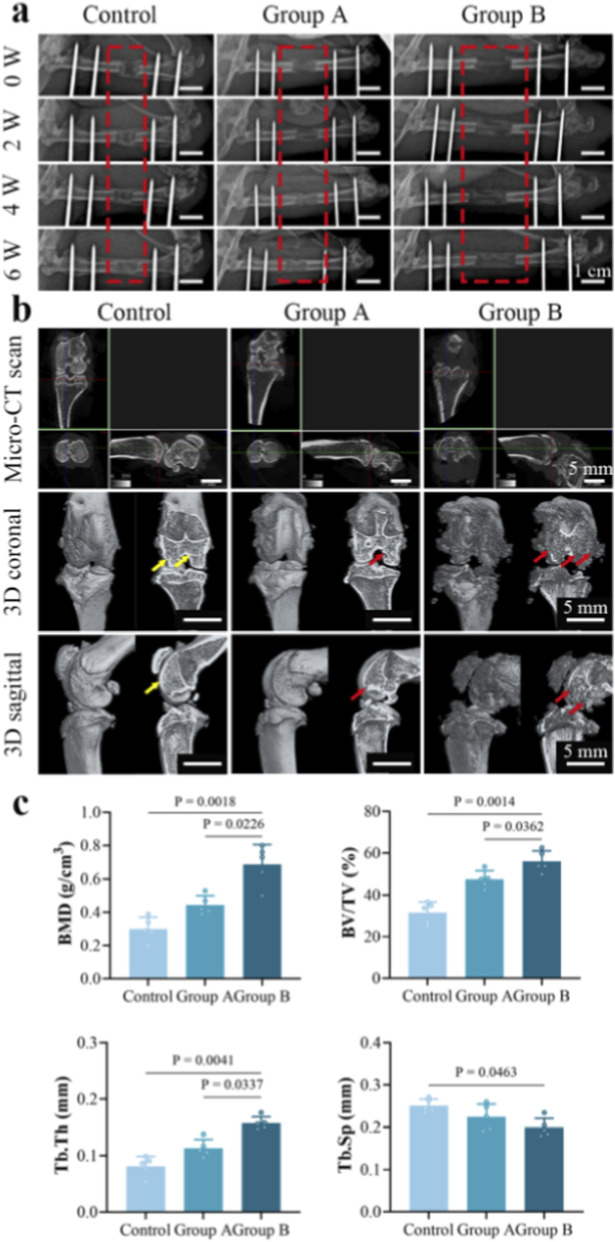 Figure 2
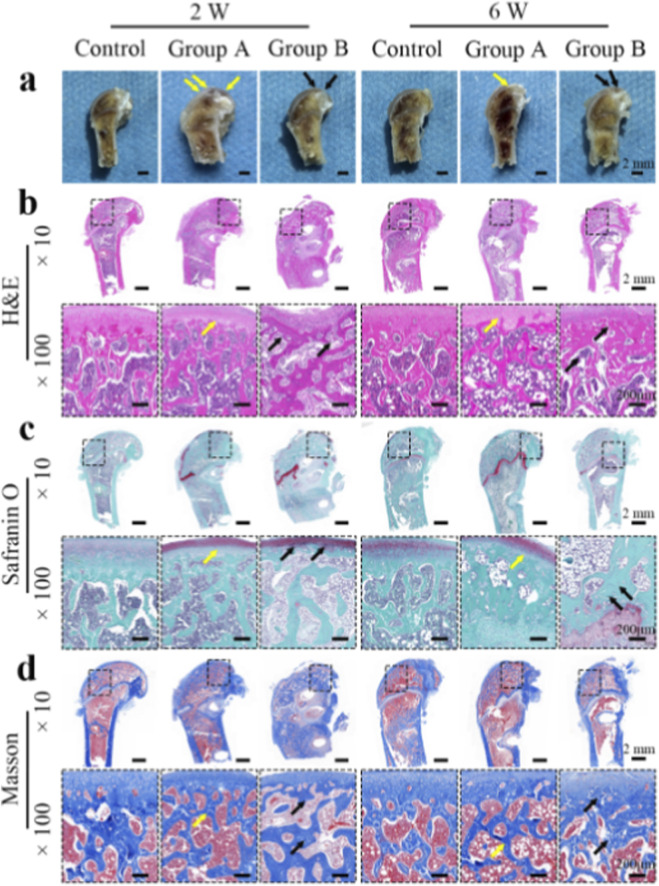 Figure 3
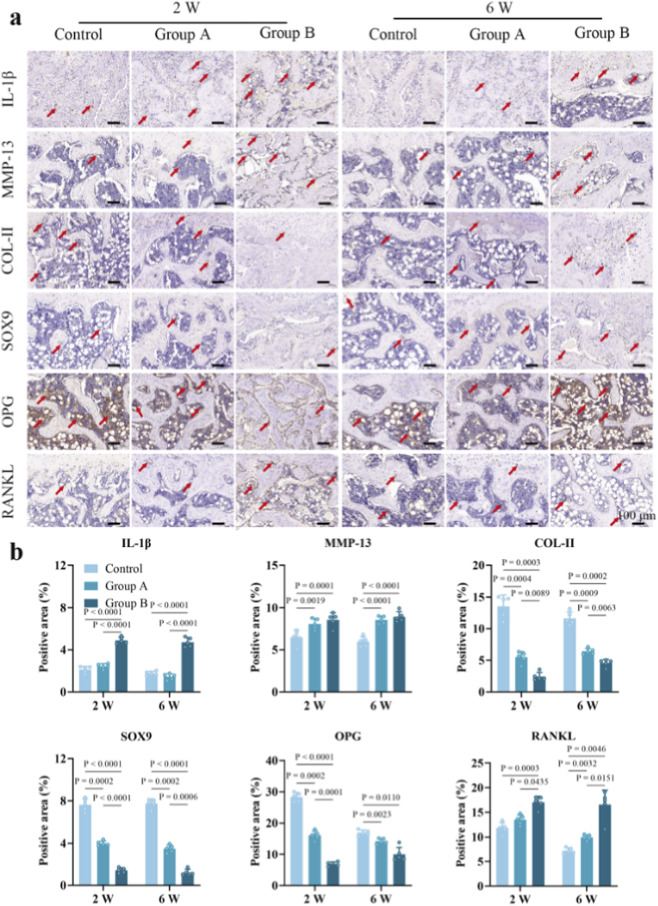 Figure 4
Peer Reviews
No public reviews on file for this paper yet. If you reviewed it on a platform where reviews are public (OpenReview, ICLR, NeurIPS, ICML), you can paste yours below so the community can read it here.
Videos
No videos yet. Explain this paper in a talk, walkthrough, or lecture? Add one.
Taxonomy
TopicsBone fractures and treatments · Osteoarthritis Treatment and Mechanisms · Neurogenetic and Muscular Disorders Research