The ovulation trigger method affects gonadotropin concentrations and gonadotropin receptor expression during final oocyte maturation in women
Liv La Cour Poulsen, Malene Louise Johannsen, Marie Louise Grøndahl, Marie Louise Wissing, Claus Yding Andersen

TL;DR
This study compares how two ovulation triggers affect hormone levels and receptor activity during the final stages of egg maturation in women undergoing fertility treatment.
Contribution
The study reveals the distinct temporal dynamics of gonadotropin and receptor expression when using GnRHa versus hCG as ovulation triggers.
Findings
GnRHa causes a rapid and sustained increase in LH and FSH in plasma and follicular fluid, with FSHR and LHR expression peaking early.
hCG enters the follicle later and does not provide an FSH component, coinciding with reduced LHR expression.
GnRHa may lead to better oocyte maturation outcomes due to its more physiologic hormone surge and receptor timing.
Abstract
Human chorionic gonadotropin (hCG) and gonadotropin-releasing hormone agonist (GnRHa) are widely used for final maturation of follicles in fertility treatment, yet the detailed dynamics of follicle stimulating hormone (FSH), luteinizing hormone (LH)/hCG and their receptor expression (i.e. FSHR and LHR) during the ovulatory process remain insufficiently characterized. This prospective, single-center study included 50 women undergoing ovarian stimulation during 2016-2018. Each participant contributed one follicle aspirated at T = 0,12,17 or 32h after trigger administration (0.5 mg GnRHa (buserelin) or 6,500 IU hCG) and a second follicle aspirated at oocyte pickup (T = 36h). Follicular fluid (FF) and plasma were analyzed for gonadotropins, and granulosa cells for FSHR and LHR transcript levels. GnRHa triggered a rapid endogenous surge in plasma: LH peaked at ≈120–140 IU/L at 12h and…
Genes, proteins, chemicals, diseases, species, mutations and cell lines named across the full text — each resolved to its canonical identifier and authoritative record.
Click any figure to enlarge with its caption.
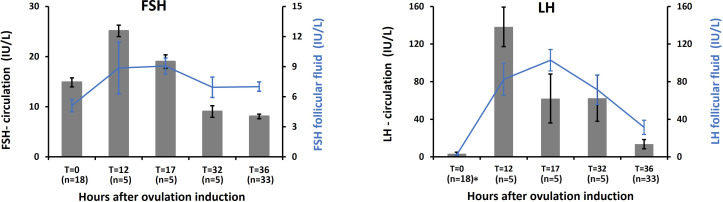 Figure 1
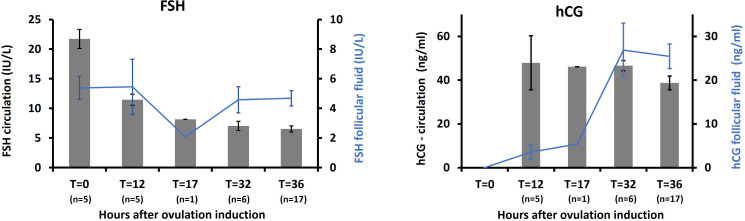 Figure 2
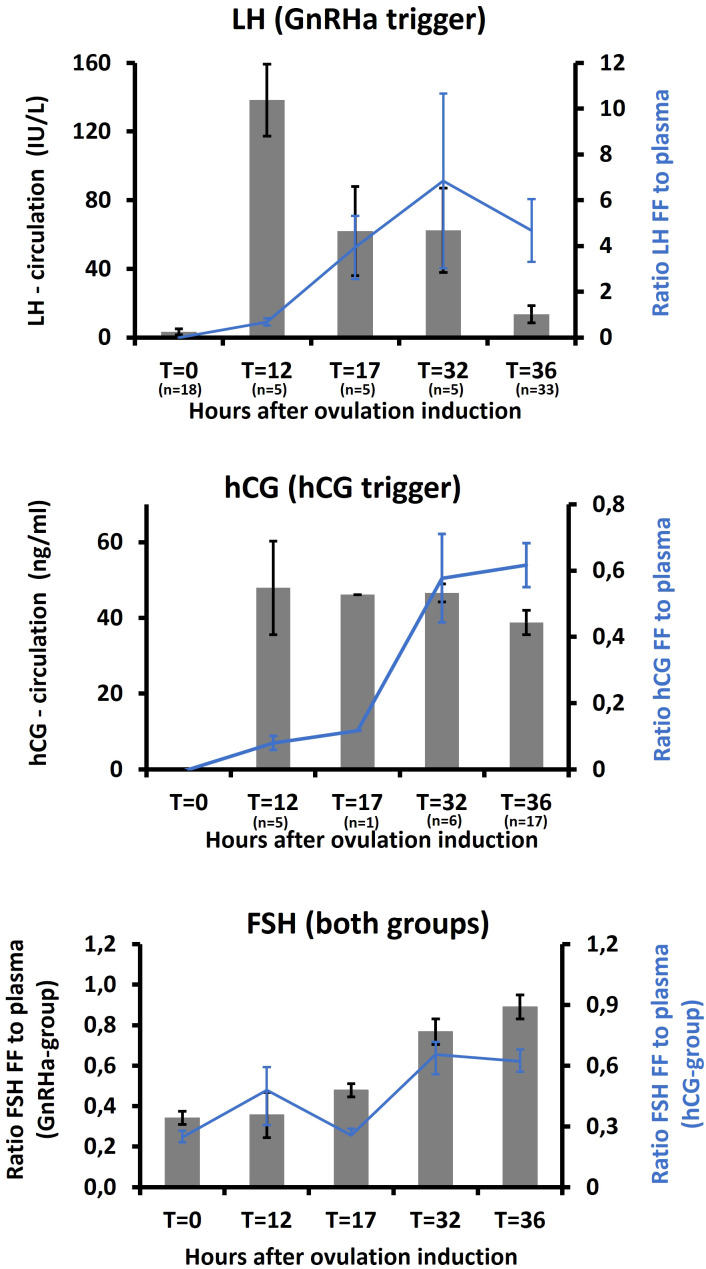 Figure 3
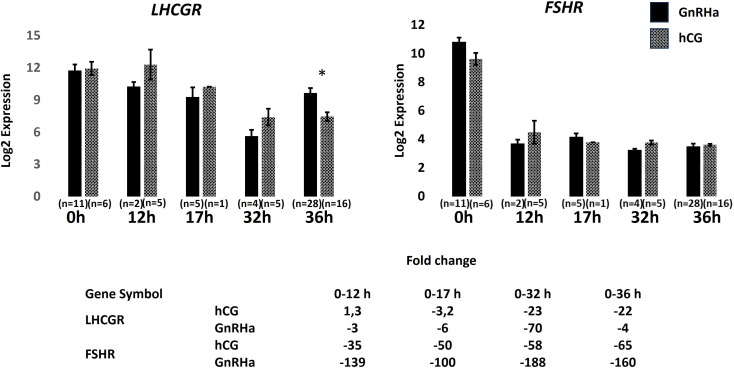 Figure 4
Peer Reviews
No public reviews on file for this paper yet. If you reviewed it on a platform where reviews are public (OpenReview, ICLR, NeurIPS, ICML), you can paste yours below so the community can read it here.
Videos
No videos yet. Explain this paper in a talk, walkthrough, or lecture? Add one.
Taxonomy
TopicsOvarian function and disorders · Reproductive Biology and Fertility · Hypothalamic control of reproductive hormones