Absent the pre-B cell receptor checkpoint, the B-1a immunoglobulin CDR-H3 repertoire normalizes by convergent selection
Lucas Tostes Costa Vaz, Tessa Blackburn, Ada Elgavish, Andre Macedo Vale, Peter D. Burrows, Harry W. Schroeder, Mohamed Khass

TL;DR
The study shows that without a specific immune checkpoint, B-1a cells still develop a similar antibody repertoire through natural selection.
Contribution
The study reveals convergent selection in B-1a cells compensates for the absence of a preBCR checkpoint.
Findings
Absence of preBCR selection leads to differences in gene segment usage and nucleotide sequences in B-1a, B-1b, and B-2 CDR-H3s.
At the amino acid level, B-1a CDR-H3 repertoires partially converge with wild-type sequences, especially with tyrosine selection.
This convergence does not restore original VDJ architecture and is less evident in B-1b and B-2 cells.
Abstract
Peritoneal cavity (PerC) B cells arise via a specific set of ontogenetic and antigen-driven selection pressures. A large portion of the PerC B-1 population, including B-1a and B-1b cells, is fetal-derived and thus, due to a lack of N nucleotide addition, produces an immunoglobulin repertoire that is characteristically germline-encoded. While conventional B-2 cells depend on efficient pairing of surrogate light chain (SLC) and μ Heavy Chain (HC) to pass through the preBCR checkpoint, the extent to which the passage of the B-1 population through the preBCR checkpoint affects the composition of its repertoire has remained an open question. In this work, we used mice deficient in λ5, a key component of the SLC, to test whether the absence of preBCR selection would yield natural, germline encoded, PerC B-1 CDR-H3 repertoires similar to WT. And, if not, whether a more WT-like repertoire at…
Genes, proteins, chemicals, diseases, species, mutations and cell lines named across the full text — each resolved to its canonical identifier and authoritative record.
Click any figure to enlarge with its caption.
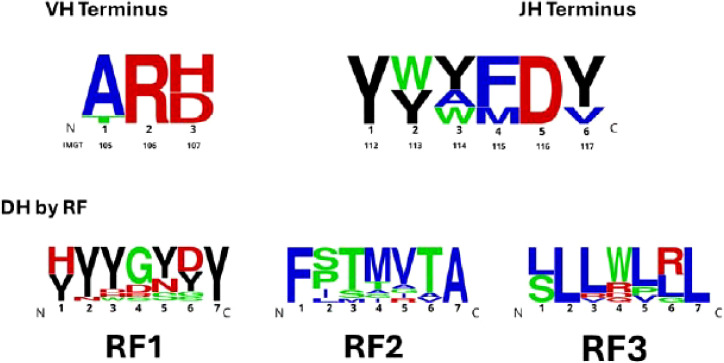 Figure 1
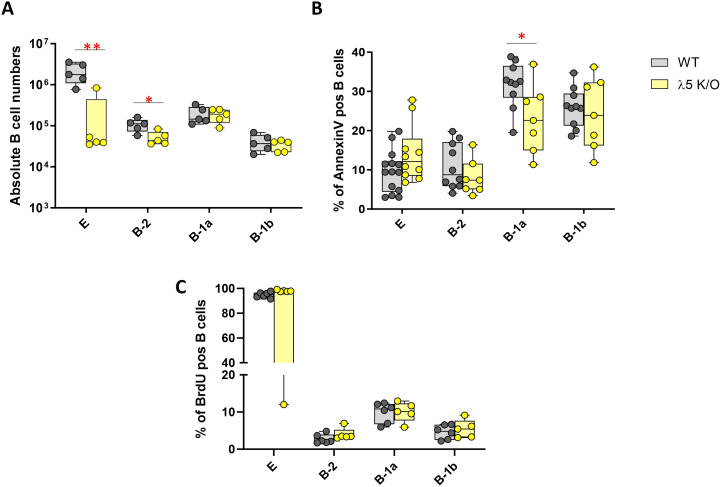 Figure 2
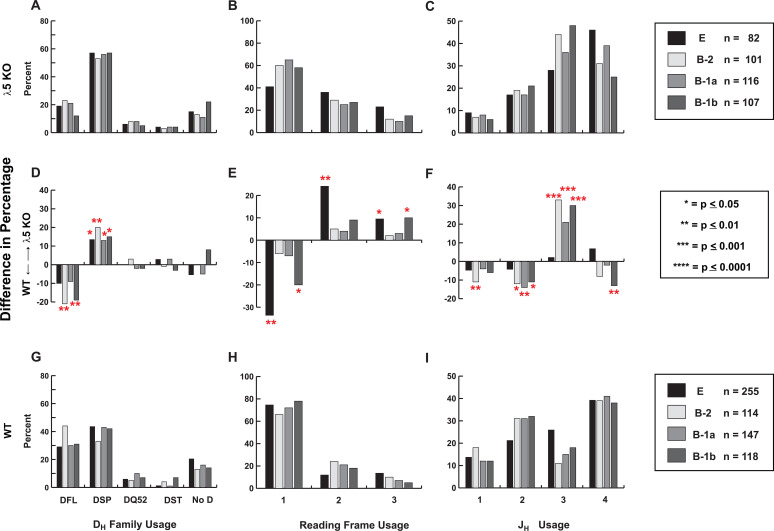 Figure 3
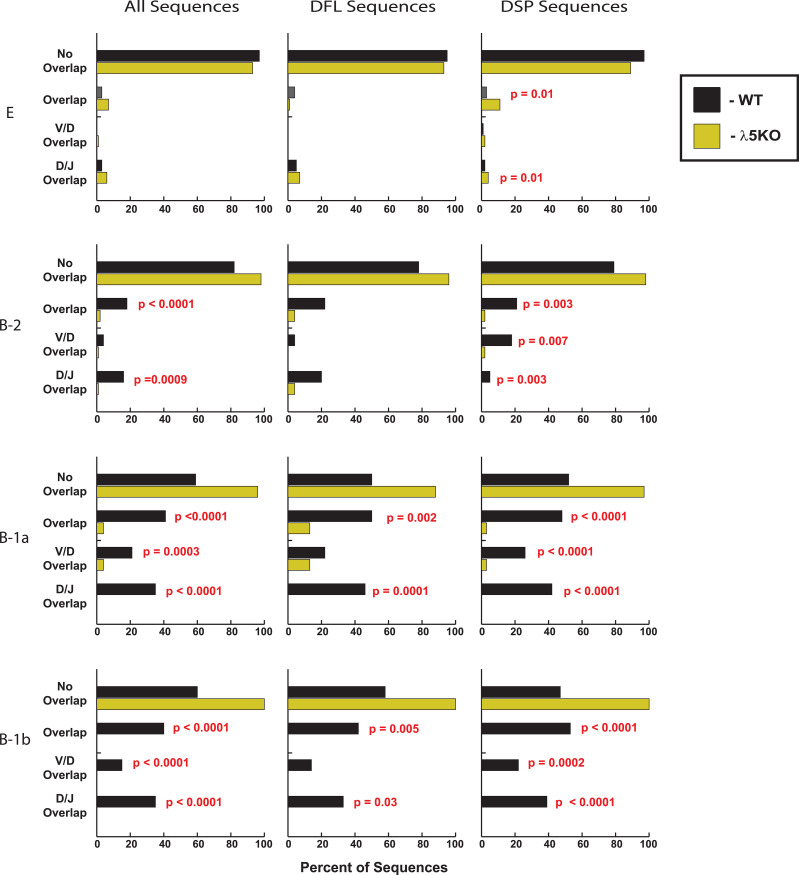 Figure 4
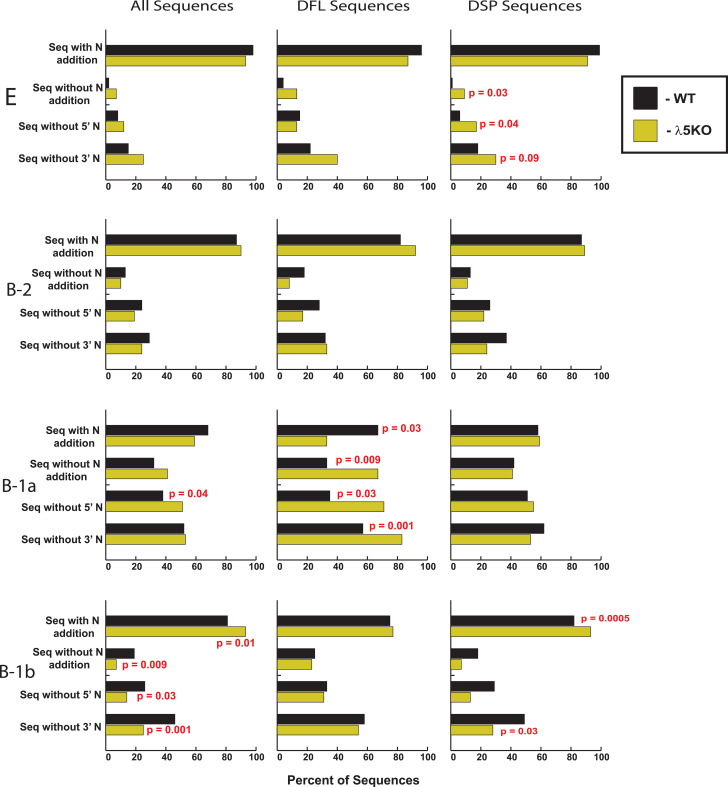 Figure 5
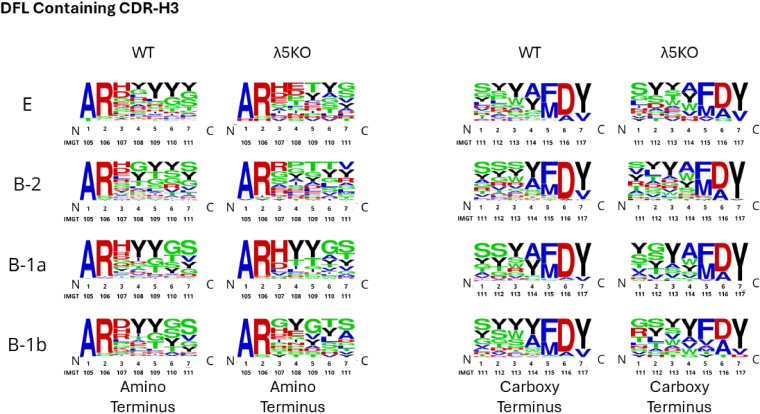 Figure 6
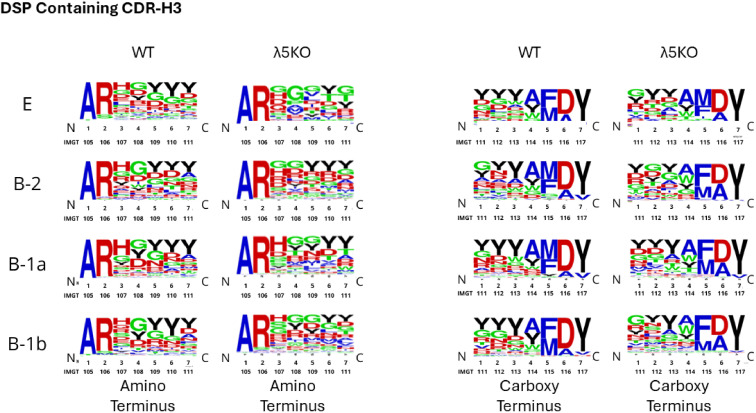 Figure 7
Peer Reviews
No public reviews on file for this paper yet. If you reviewed it on a platform where reviews are public (OpenReview, ICLR, NeurIPS, ICML), you can paste yours below so the community can read it here.
Videos
No videos yet. Explain this paper in a talk, walkthrough, or lecture? Add one.
Taxonomy
TopicsT-cell and B-cell Immunology · Monoclonal and Polyclonal Antibodies Research · Blood groups and transfusion