Machine learning approach to determine the diagnostic value and predictive factors of PET/CT in FUO and IUO patients
Sule Ceylan, Bahadir Ceylan, Oktay Olmuscelik, Tansel Cakir

TL;DR
This study uses machine learning to predict which patients with unexplained fever or inflammation will benefit most from PET/CT scans.
Contribution
The study introduces machine learning models to guide PET/CT use in diagnosing complex cases of fever and inflammation.
Findings
Machine learning models like MLP and Logistic Regression effectively predicted PET/CT usefulness in FUO/IUO patients.
Lower procalcitonin and higher lymphocyte levels were linked to increased PET/CT benefit according to model analysis.
The study identified clinical factors that could help tailor diagnostic approaches for unexplained fever and inflammation.
Abstract
This study aimed to identify the clinical and laboratory variables determining the true diagnostic contribution of FDG-PET/CT in patients with fever of unknown origin (FUO) or inflammation of unknown origin (IUO), and to develop machine learning models capable of predicting which patients are most likely to benefit from PET/CT imaging. A retrospective cohort of patients aged over 18 years who underwent FDG-PET/CT for FUO/IUO evaluation was analyzed. Machine learning algorithms—including Extreme Gradient Boosting (XGBoost), linear and radial basis function Support Vector Machines, Multilayer Perceptron (MLP), k-Nearest Neighbors (KNN), Random Forest, Decision Tree, Logistic Regression (LR), and Naïve Bayes (NB)—were trained to predict true positive and true negative PET/CT results. Feature selection was performed using the PowerSHAP method. Model performance was compared using area…
Genes, proteins, chemicals, diseases, species, mutations and cell lines named across the full text — each resolved to its canonical identifier and authoritative record.
Click any figure to enlarge with its caption.
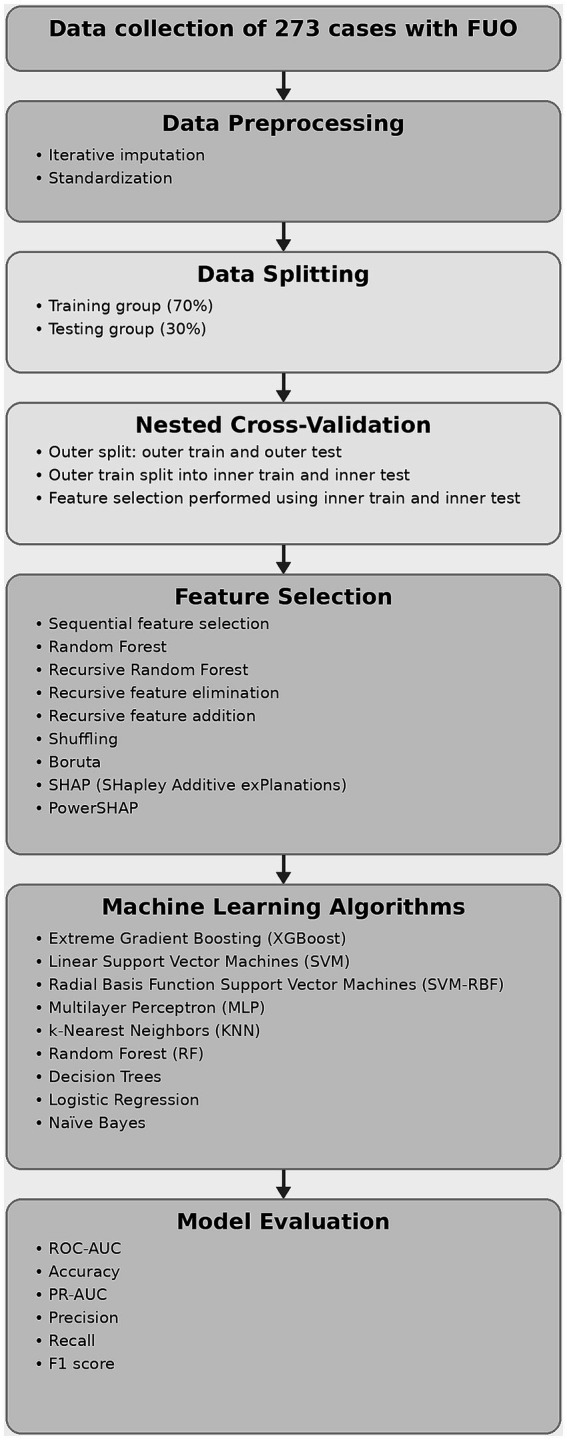 Figure 1
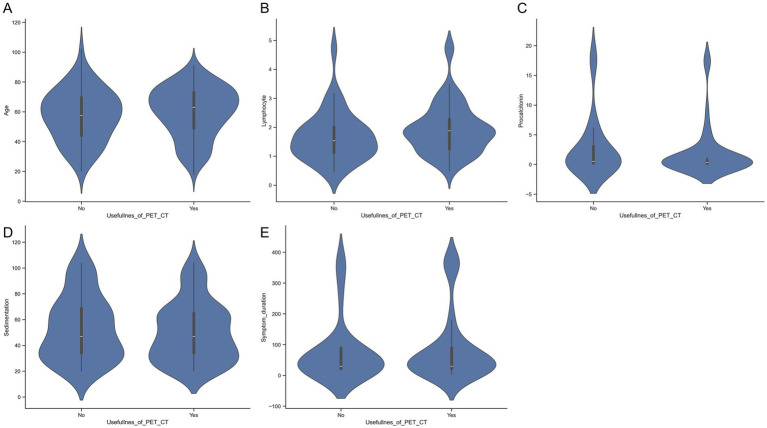 Figure 2
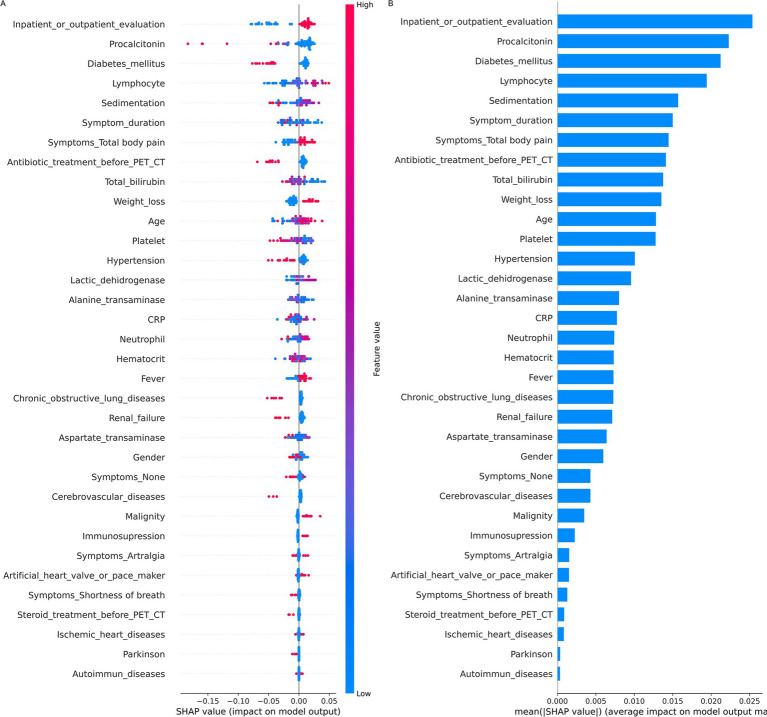 Figure 3
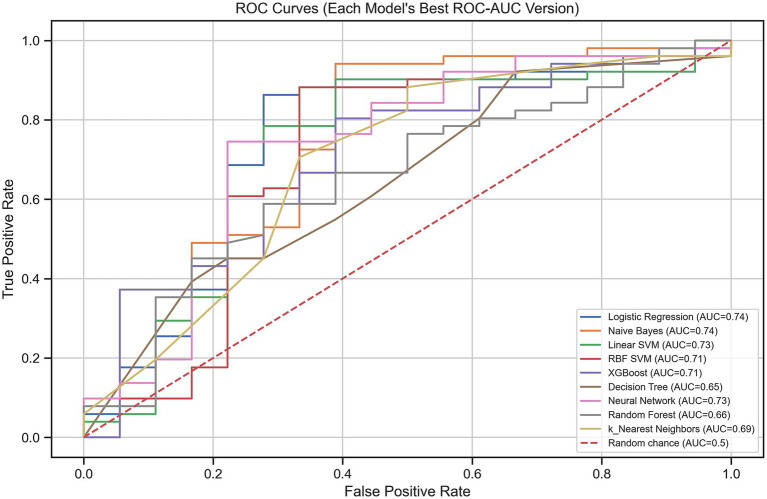 Figure 4
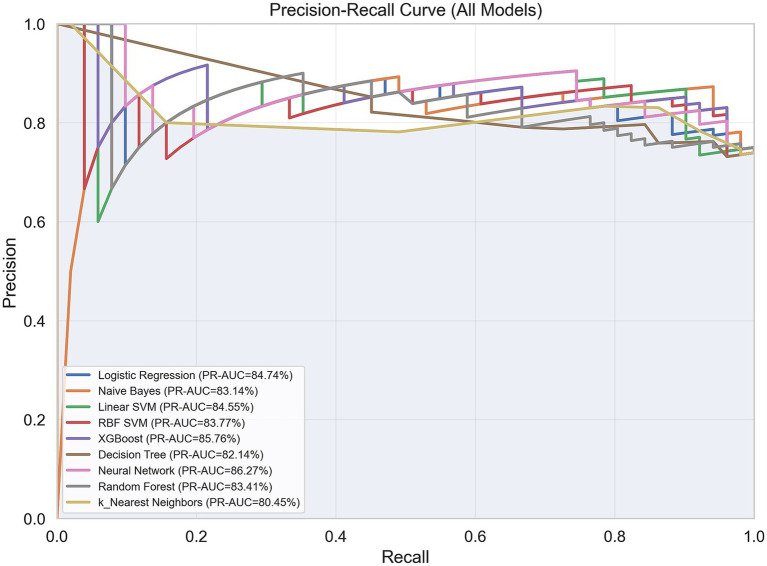 Figure 5
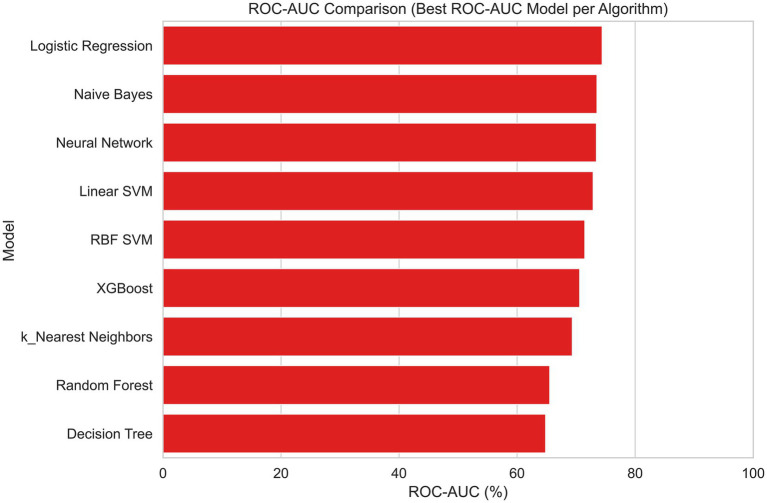 Figure 6
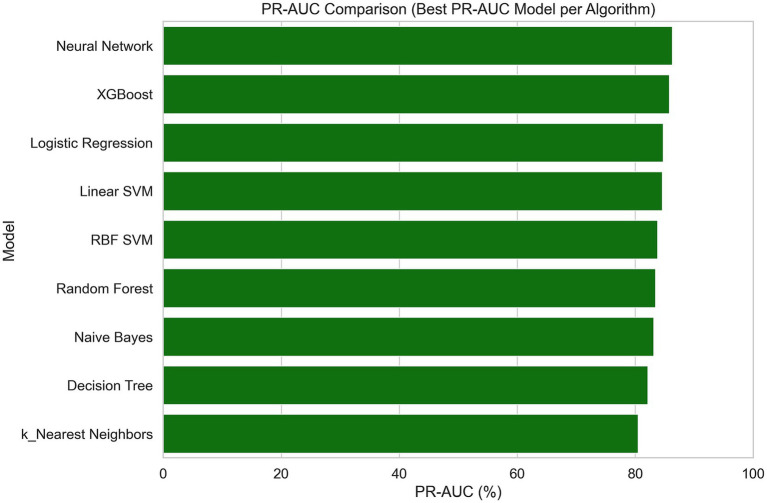 Figure 7
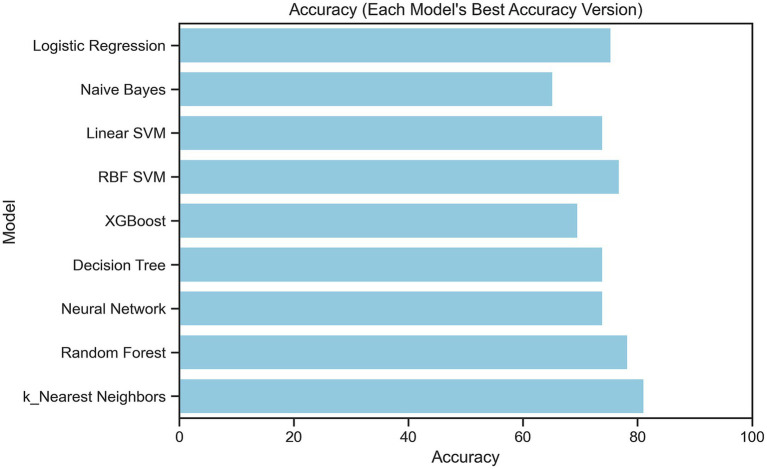 Figure 8
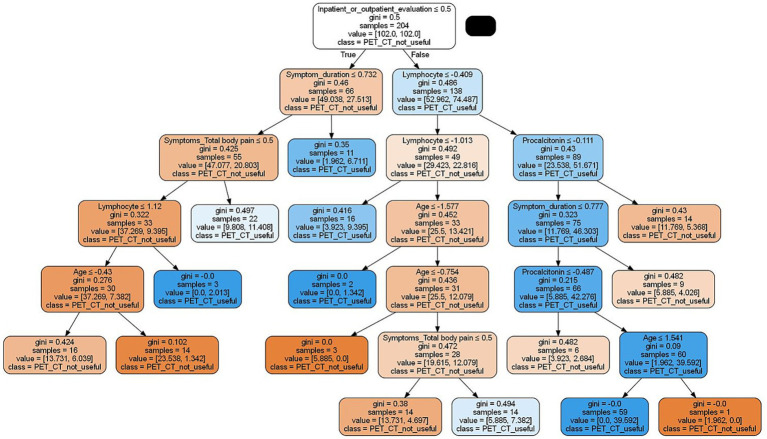 Figure 9
Peer Reviews
No public reviews on file for this paper yet. If you reviewed it on a platform where reviews are public (OpenReview, ICLR, NeurIPS, ICML), you can paste yours below so the community can read it here.
Videos
No videos yet. Explain this paper in a talk, walkthrough, or lecture? Add one.
Taxonomy
TopicsHematological disorders and diagnostics · Inflammatory Biomarkers in Disease Prognosis · Dermatological and COVID-19 studies