Transperitoneal versus retroperitoneal approach does not alter arterial clamping strategy during robot-assisted partial nephrectomy: interim results from the multicentric PODRACING randomized controlled trial
Joris Vangeneugden, Saar Vermijs, Peter De Kuyper, Camille Berquin, Nicolaas Lumen, Victor Declerck, Frederic Baekelandt, Christophe Ghysel, Yannic Raskin, Bernard Bynens, Kenzo Mestdagh, Pieter De Backer, Pieter De Visschere, Charlotte Debbaut, Charles Van Praet

TL;DR
This study finds that the surgical approach used in robot-assisted kidney surgery does not affect the clamping strategy or complication rates, allowing both methods to be used interchangeably.
Contribution
The study demonstrates that the transperitoneal and retroperitoneal approaches yield similar outcomes in clamping strategy and safety during robot-assisted partial nephrectomy.
Findings
Selective clamping was used in 68% of cases and was equally common in both surgical approaches.
Total operative time was significantly longer for the transperitoneal approach compared to the retroperitoneal approach.
Intraoperative and early postoperative complications were rare and similar between the two approaches.
Abstract
Two anatomical approaches can be used to access a kidney tumor —and the associated renal hilum— during robot-assisted partial nephrectomy (RAPN): the transperitoneal (TP) and retroperitoneal (RP) approaches. Herein, we investigate whether the surgical approach has an impact on the performed clamping strategy: selective clamping (SC) vs main-artery clamping (MAC) and if a planned clamping strategy is performed equally accurate in both approaches. Furthermore, we look at total operative time and the occurrence of intraoperative and early postoperative complications in both approaches. Data from the interim analysis of the multicenter PODRACING randomized controlled trial (NCT06536439) was used, where patients undergo RAPN with or without a 3D perfusion zone (3DPZ) model. The study was approved by the Belgian Federal Agency for Medicines and Health Products (CIV-23-11-044854). TP surgery…
Genes, proteins, chemicals, diseases, species, mutations and cell lines named across the full text — each resolved to its canonical identifier and authoritative record.
Click any figure to enlarge with its caption.
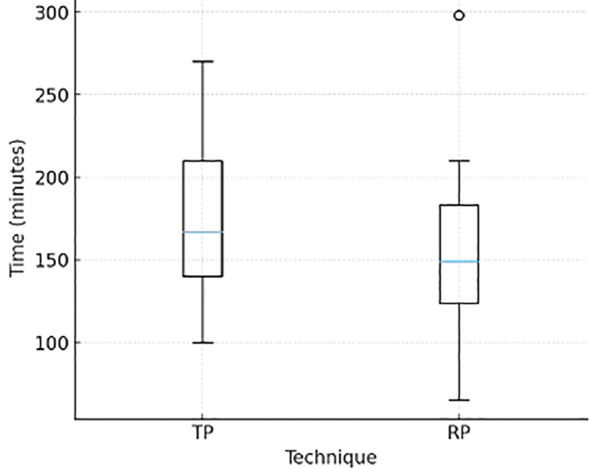 Figure 1
Peer Reviews
No public reviews on file for this paper yet. If you reviewed it on a platform where reviews are public (OpenReview, ICLR, NeurIPS, ICML), you can paste yours below so the community can read it here.
Videos
No videos yet. Explain this paper in a talk, walkthrough, or lecture? Add one.
Taxonomy
TopicsRenal cell carcinoma treatment · Minimally Invasive Surgical Techniques · Surgical Simulation and Training