Altered lipid peroxidation, perineuronal net and oligodendrocyte markers in the frontal cortex of a dual-hit neurodevelopmental model support its relevance to schizophrenia
Victoria Esuaikoh, Sarah Ibegbulam, Alistair Cook, Bianca McFarland, Nora Nunnington, Ambalangoda Perera, Jingjing Feng, Jennifer A. Cale, Madeleine V. King

TL;DR
A dual-hit model of early brain disruption and social stress in rats shows changes in brain markers linked to schizophrenia, supporting its use for studying the disease and testing new treatments.
Contribution
The study demonstrates that the PCP-Iso model exhibits specific alterations in lipid peroxidation, PNNs, and oligodendrocyte markers relevant to schizophrenia.
Findings
Both isolation and PCP-Iso models showed impaired memory and reduced PNN density in the orbitofrontal cortex.
PCP-Iso uniquely showed PNN thinning, 4-HNE upregulation, and CNPase downregulation in orbitofrontal regions.
SV2A expression remained unchanged in PCP-Iso, aligning with findings in early schizophrenia.
Abstract
The pathogenesis of schizophrenia begins in early neurodevelopment and leads to an array of frontal cortical deficits. They include redox dysregulation, white matter perturbation, loss of perineuronal nets (PNNs) and reduced synaptic density. It is therefore highly desirable that preclinical models used to understand disease, select drug targets and evaluate novel therapeutics encompass similar changes. One approach to improved preclinical modeling incorporates dual-hit neurodevelopmental interventions, like neonatal administration of phencyclidine (PCP, to disrupt development of glutamatergic circuitry) then post-weaning isolation (Iso, to mimic adolescent social stress). We recently showed that rats exposed to PCP-Iso develop GABAergic and inflammatory changes in the frontal cortex, and the current study expands on this by comparing changes to additional cellular and extracellular…
Genes, proteins, chemicals, diseases, species, mutations and cell lines named across the full text — each resolved to its canonical identifier and authoritative record.
Click any figure to enlarge with its caption.
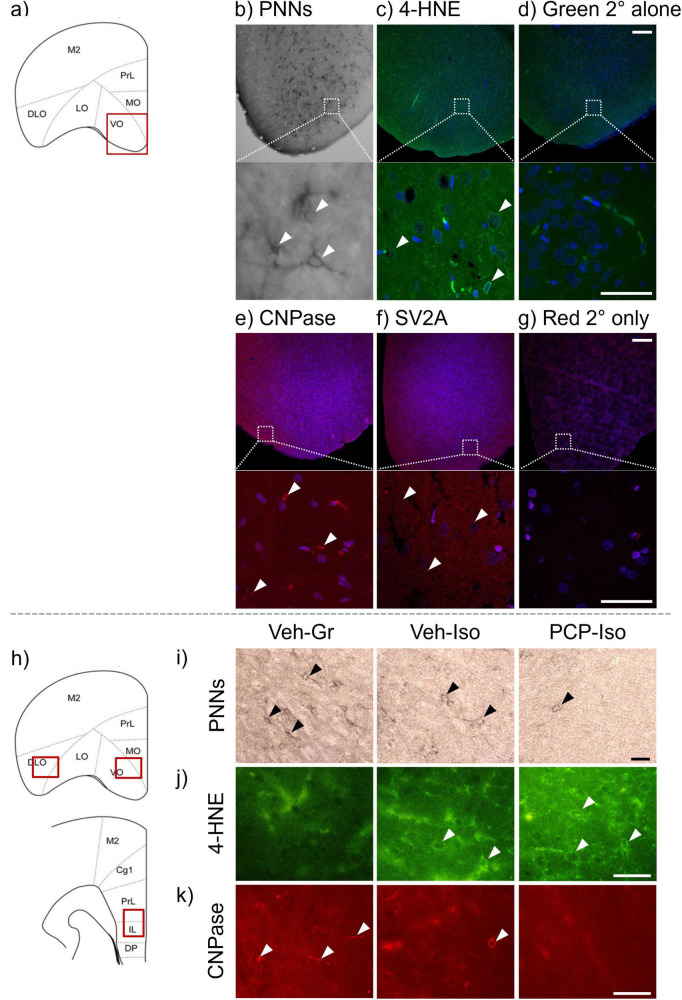 Figure 1
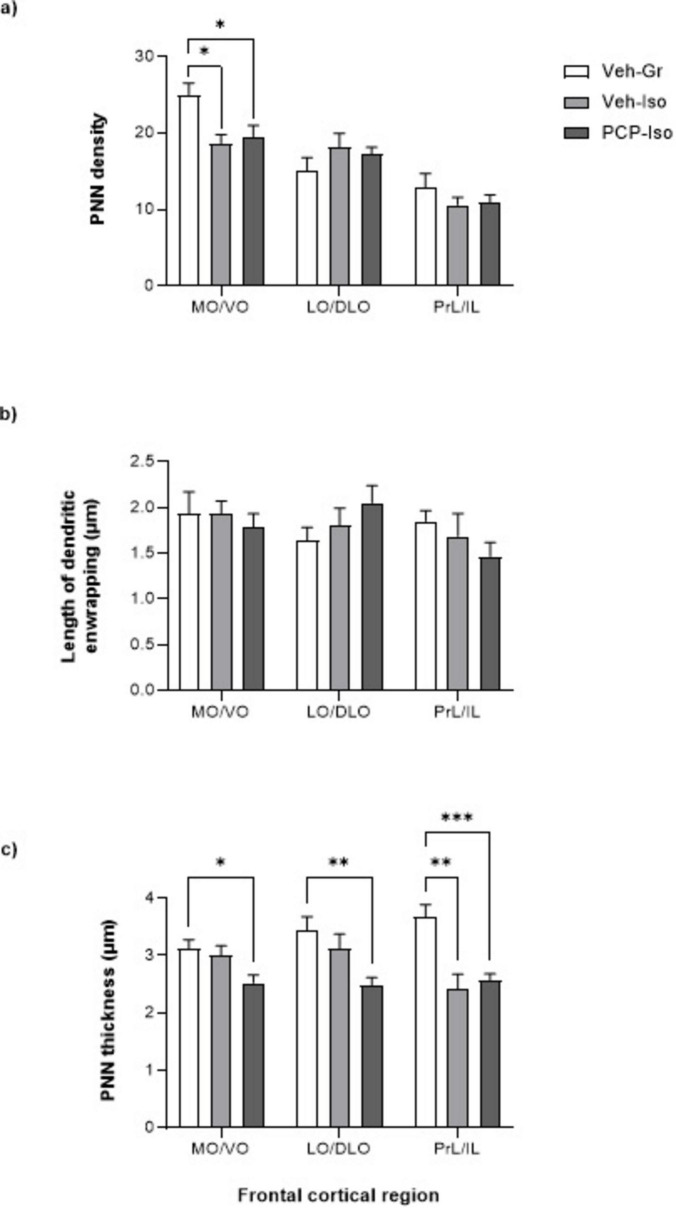 Figure 2
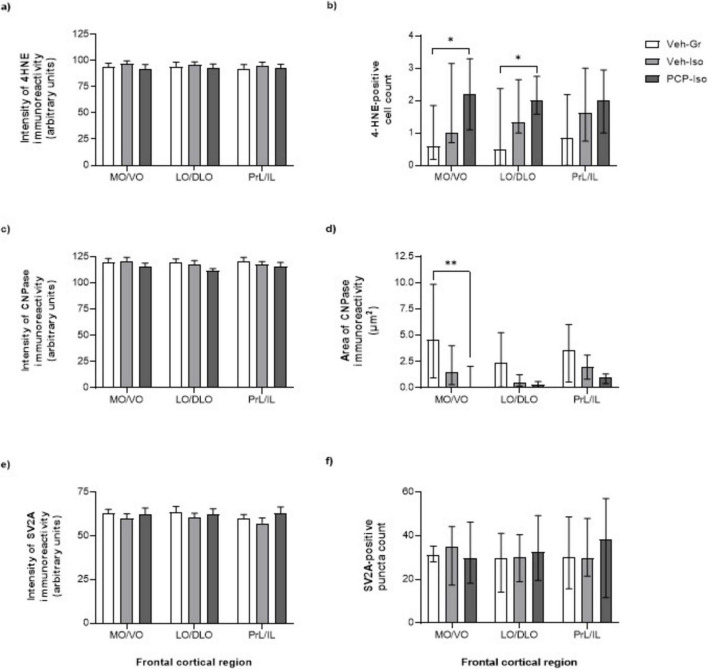 Figure 3
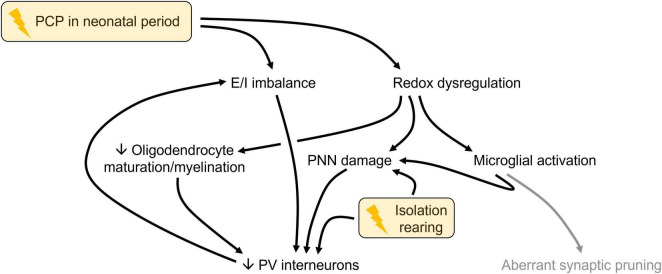 Figure 4
Peer Reviews
No public reviews on file for this paper yet. If you reviewed it on a platform where reviews are public (OpenReview, ICLR, NeurIPS, ICML), you can paste yours below so the community can read it here.
Videos
No videos yet. Explain this paper in a talk, walkthrough, or lecture? Add one.
Taxonomy
TopicsTryptophan and brain disorders · Neurogenesis and neuroplasticity mechanisms · Neuroscience and Neuropharmacology Research