A model combining nocturnal baseline impedance, post-reflux swallow-induced peristaltic wave, and acid exposure time enhances prediction of proton pump inhibitor response for extraesophageal symptoms in a Chinese population
Rong Wang, Gengzhao Guo, Jianzhen Li, Yongxiu Lin, Dazhou Li, Linfu Zheng, Gang Liu, Yulong Li, Wen Wang

TL;DR
This study shows that combining specific impedance and swallow metrics improves predicting proton pump inhibitor response in Chinese patients with extraesophageal GERD symptoms.
Contribution
A novel combined model using MNBI, PSPW index, and AET improves PPI response prediction in extraesophageal GERD patients.
Findings
MNBI, PSPW index, and AET are independent predictors of PPI response in extraesophageal GERD.
Combining MNBI and PSPW index significantly improves prediction accuracy in patients with normal AET.
The combined model outperforms individual parameters in predicting PPI response.
Abstract
Gastroesophageal reflux disease(GERD) with extraoesophageal symptoms tends to respond poorly to proton pump inhibitors (PPIs). This study aimed to evaluate the role of mean nocturnal baseline impedance (MNBI) and post-reflux swallow-induced peristaltic wave (PSPW) index in predicting PPIs response among GERD patients with extraoesophageal symptoms. We investigated the predictive significance of clinical, endoscopic, and pre-treatment 24-h impedance-pH monitoring data in determining PPIs response, evaluating both the individual and combined predictive capacities of MNBI and PSPW index. A total of 92 Chinese patients were analyzed, revealing pathological MNBI (p = 0.013, OR = 4.217, 95%CI: 1.359–13.089), PSPW index (p = 0.015, OR = 4.026, 95%CI: 1.308–12.396), AET (p = 0.017, OR = 4.246, 95%CI: 1.290–13.982), and typical GERD symptoms (p = 0.040, OR = 3.467, 95%CI: 1.057–11.374) as…
Genes, proteins, chemicals, diseases, species, mutations and cell lines named across the full text — each resolved to its canonical identifier and authoritative record.
Click any figure to enlarge with its caption.
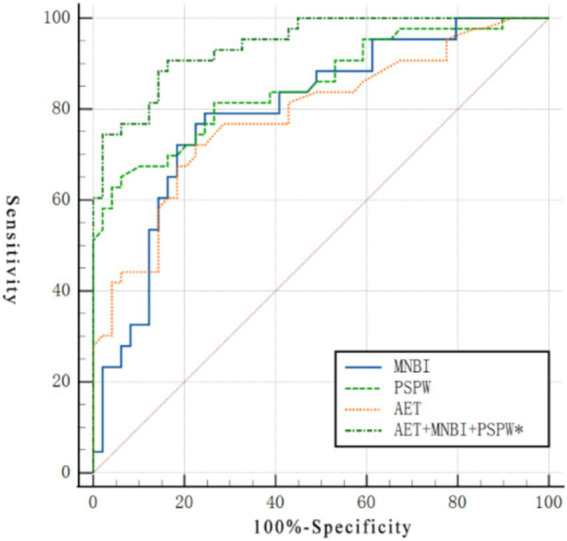 Figure 1
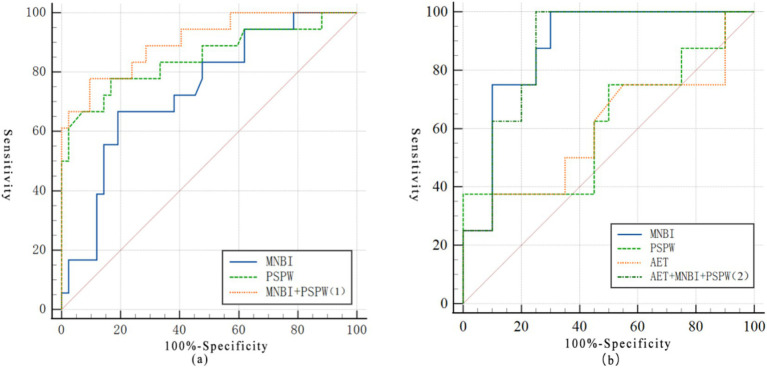 Figure 2
Peer Reviews
No public reviews on file for this paper yet. If you reviewed it on a platform where reviews are public (OpenReview, ICLR, NeurIPS, ICML), you can paste yours below so the community can read it here.
Videos
No videos yet. Explain this paper in a talk, walkthrough, or lecture? Add one.
Taxonomy
TopicsGastroesophageal reflux and treatments · Gastrointestinal motility and disorders · Helicobacter pylori-related gastroenterology studies