Anomalous Systemic Arterial Supply to the Basal Segments with an Aneurysmal Aberrant Artery Showing Advanced Wall Fragility: A Case Report and Literature Review
Shun Yorimori, Shigeki Suzuki, Kenta Shida, Kosuke Sugino, Takahiro Suzuki, Yu Okubo, Hirofumi Haida, Kyohei Masai, Kaoru Kaseda, Yutaka Kurebayashi, Kenichi Hashizume, Hideyuki Shimizu, Keisuke Asakura

TL;DR
A rare case of anomalous systemic arterial supply to the lungs was safely treated with a two-step approach involving TEVAR and lobectomy, preventing potential rupture.
Contribution
This is the first reported case of ASABS with aneurysmal aberrant artery where histopathological findings confirmed rupture risk and TEVAR-first strategy was successfully applied.
Findings
TEVAR-first strategy enabled safe pulmonary resection in ASABS with aneurysmal aberrant artery.
Histopathology confirmed aneurysmal degeneration and increased rupture risk in the aberrant artery.
Postoperative imaging confirmed no complications like endoleak or stump aneurysm.
Abstract
Anomalous systemic arterial supply to the basal segments (ASABS) is a rare congenital pulmonary anomaly. Considering the associated complications of pulmonary hypertension or hemoptysis, surgical lung resection is recommended. However, there is a lack of standardized surgical management guidelines. We report a case of ASABS with an aneurysmal aberrant artery, in which imaging findings suggested an increased risk of rupture. Thoracic endovascular aortic repair (TEVAR) was first performed to achieve inflow control; this strategy provided a secure setting for subsequent pulmonary resections. A 56-year-old woman presented with an abnormal chest shadow. Contrast-enhanced chest CT revealed an aberrant artery arising from the descending aorta supplying the left basal segment with an irregular aneurysm measuring 33 mm. Non-contrast chest CT demonstrated intraluminal hyperattenuation consistent…
Genes, proteins, chemicals, diseases, species, mutations and cell lines named across the full text — each resolved to its canonical identifier and authoritative record.
Click any figure to enlarge with its caption.
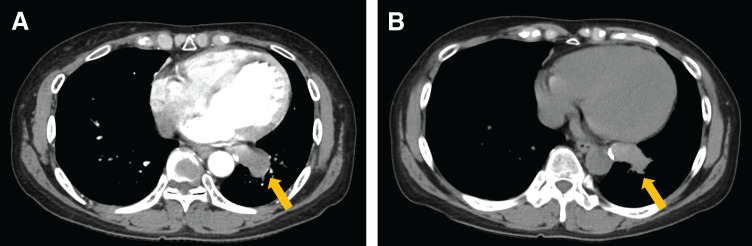 Figure 1
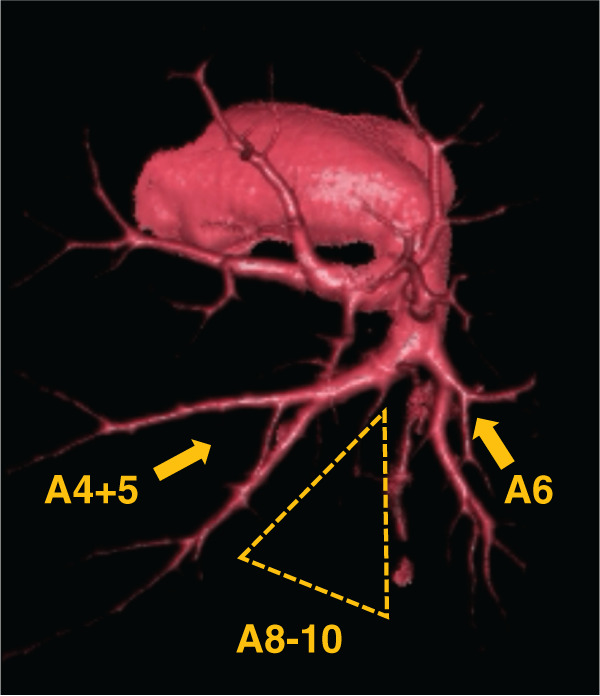 Figure 2
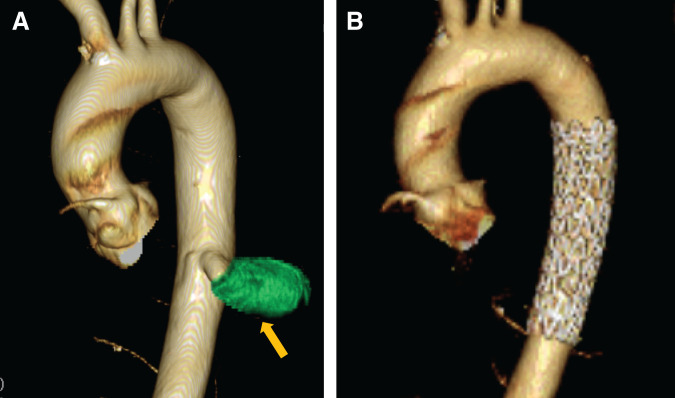 Figure 3
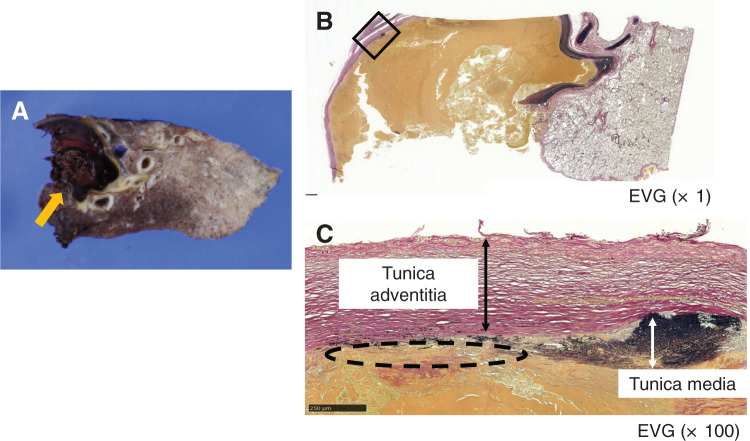 Figure 4
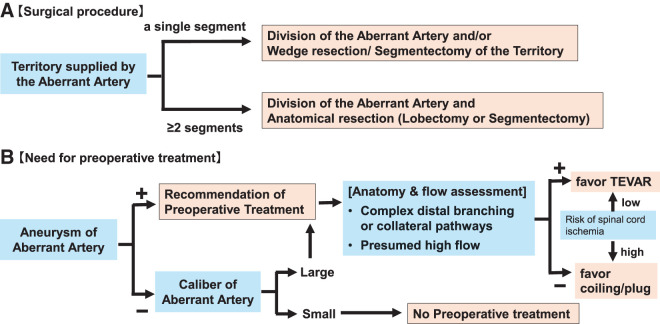 Figure 5
Peer Reviews
No public reviews on file for this paper yet. If you reviewed it on a platform where reviews are public (OpenReview, ICLR, NeurIPS, ICML), you can paste yours below so the community can read it here.
Videos
No videos yet. Explain this paper in a talk, walkthrough, or lecture? Add one.
Taxonomy
TopicsCongenital Diaphragmatic Hernia Studies · Vascular Anomalies and Treatments · Congenital Heart Disease Studies