Minimally Invasive Extirpation of an Eden Type II Dumbbell-Shaped Mediastinal Tumor Using a Posterior and Uniportal Thoracoscopic Approach without Changing the Patient’s Position: A Case Report
Takao Ishimura, Yoshifumi Sano, Seiji Shigekawa, Nozomi Takahashi, Masashi Takeda, Takahito Sugihara, Yosuke Kiriyama, Yu Mori, Nobuhiko Sakao, Shinji Otani, Hironori Izutani

TL;DR
A new minimally invasive surgical technique was used to remove a complex chest tumor without repositioning the patient, resulting in faster recovery and good outcomes.
Contribution
A single-stage, minimally invasive approach combining posterior and uniportal thoracoscopic surgery for Eden type II dumbbell-shaped schwannomas is introduced.
Findings
The tumor was successfully removed en bloc without patient repositioning.
The patient had an uneventful recovery and no recurrence at 6 months.
The approach reduced surgical trauma and improved cosmetic outcomes.
Abstract
Dumbbell-shaped posterior mediastinal tumors, most commonly schwannomas, sometimes extend through the intervertebral foramen into the spinal canal and often require a combined posterior and thoracic approach. Although complete resection is essential, reducing surgical invasiveness remains an important clinical priority. We report a case of an Eden type II dumbbell-shaped schwannoma that was successfully resected using a minimally invasive single-stage approach combining posterior surgery and uniportal thoracoscopic surgery, performed entirely in the prone position without intraoperative repositioning. A 55-year-old man presented with intermittent anterior chest and back pain. Imaging revealed a 20-mm, dumbbell-shaped tumor at the left T9 intervertebral foramen with suspected intradural extension. A single-stage combined posterior and thoracoscopic resection was performed without…
Genes, proteins, chemicals, diseases, species, mutations and cell lines named across the full text — each resolved to its canonical identifier and authoritative record.
Click any figure to enlarge with its caption.
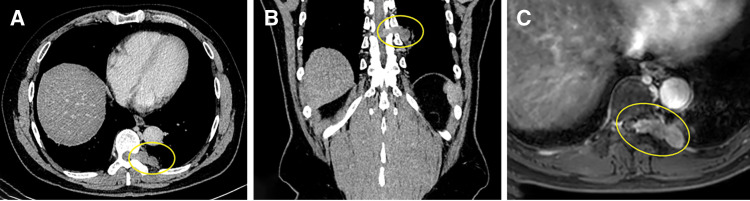 Figure 1
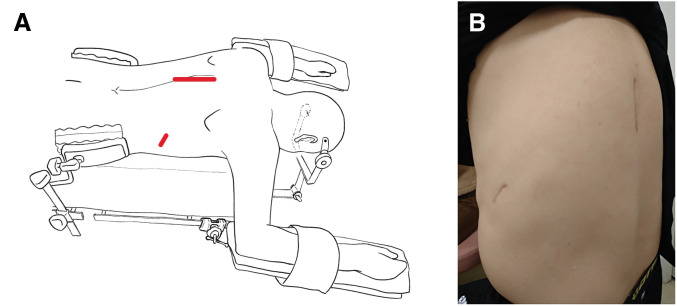 Figure 2
 Figure 3
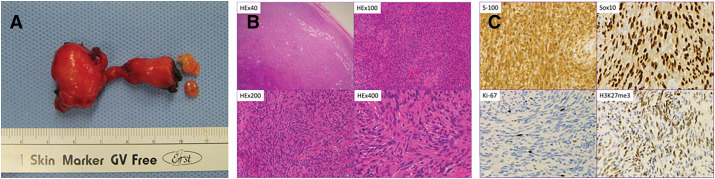 Figure 4
Peer Reviews
No public reviews on file for this paper yet. If you reviewed it on a platform where reviews are public (OpenReview, ICLR, NeurIPS, ICML), you can paste yours below so the community can read it here.
Videos
No videos yet. Explain this paper in a talk, walkthrough, or lecture? Add one.
Taxonomy
TopicsNeurofibromatosis and Schwannoma Cases · Myasthenia Gravis and Thymoma · Bone Tumor Diagnosis and Treatments