Anti‐Cancer Effect of a New 5‐FU Derivative Containing Triazole‐Bearing Mannose (5‐FUD‐MAN) Against Human Breast Cancer Cells Through LC3B‐Mediated Cell Death
Ebru Şanci, Azada Aliyeva, Buket Bakan, Mustafa Özkaraca, Erkan Halay, Kadir Ay, Tamer Karayildirim, N. Ulku Karabay Yavasoglu

TL;DR
A new 5-FU derivative with a triazole-mannose compound shows selective cancer cell death in breast cancer cells with less toxicity to healthy cells.
Contribution
A modified 5-FU derivative with enhanced selectivity and reduced toxicity for breast cancer treatment is introduced.
Findings
5-FUD-Man showed selective cytotoxicity in MCF-7 cells with minimal effects on healthy MCF-10A cells.
5-FUD-Man activated apoptosis, autophagy (LC3B), and stress pathways more strongly than 5-FU in MCF-7 cells.
The modification with triazole-mannose enhances therapeutic efficacy and targeting in breast cancer cells.
Abstract
Breast cancer remains one of the most common malignancies affecting women worldwide. Despite the effectiveness of traditional chemotherapeutic agents such as 5‐fluorouracil (5‐FU), their lack of selectivity often results in damage to healthy tissues, leading to undesirable adverse effects. The aim of this study was to modify 5‐FU with mannose containing 1,2,3‐triazole compound to reduce its toxic effect, and to investigate the anticancer properties of the resulting 5‐FU derivative (5‐FUD‐Man) in ER‐positive MCF‐7 breast cancer cells. Our results demonstrated that while 5‐FU caused significant cytotoxicity in both cancerous and healthy cells, 5‐FUD‐Man showed selective cytotoxicity, with minimal effects on MCF‐10A cells. Furthermore, immunofluorescence staining results indicated that 5‐FUD‐Man was more strongly activated apoptosis (Caspase‐3, AIF), autophagy‐mediated (LC3B), and…
Genes, proteins, chemicals, diseases, species, mutations and cell lines named across the full text — each resolved to its canonical identifier and authoritative record.
Click any figure to enlarge with its caption.
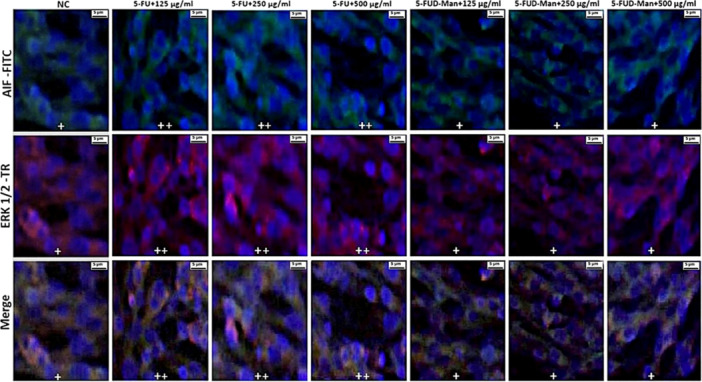 Figure 1
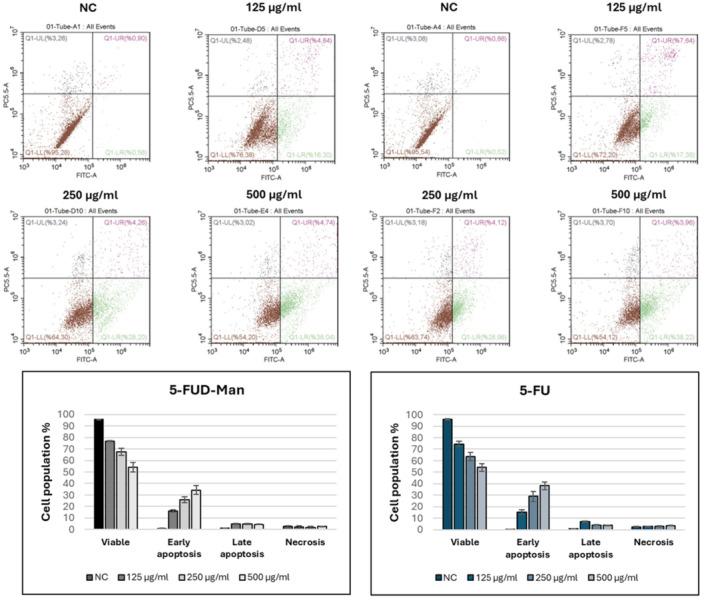 Figure 2
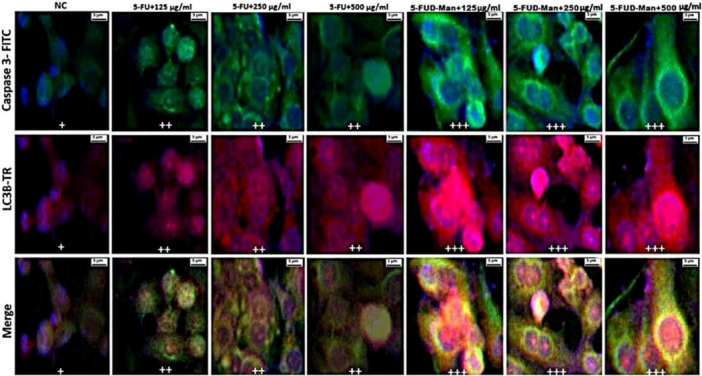 Figure 3
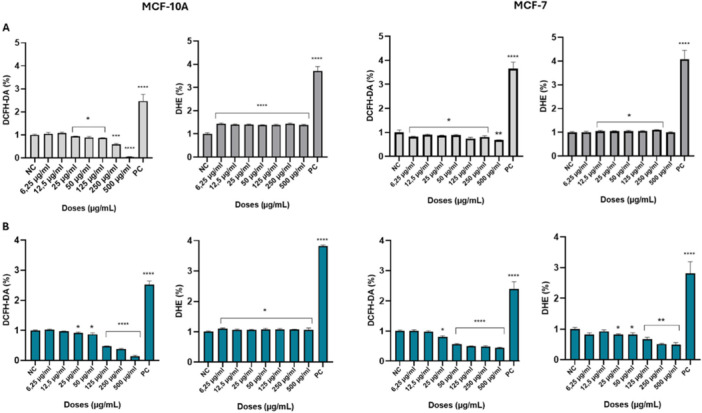 Figure 4
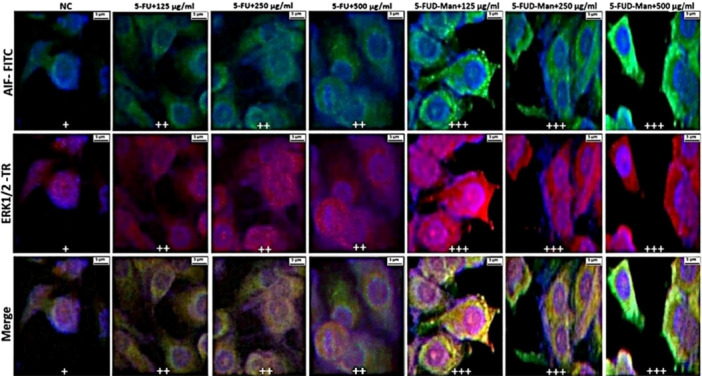 Figure 5
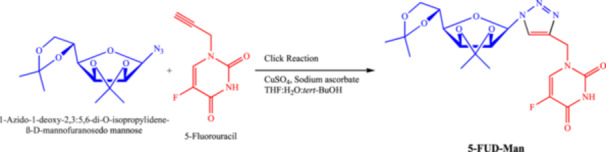 Figure 6
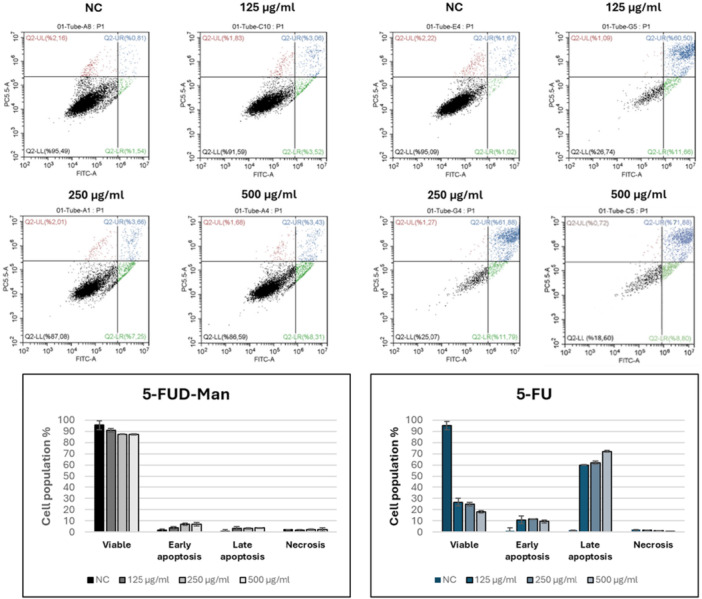 Figure 7
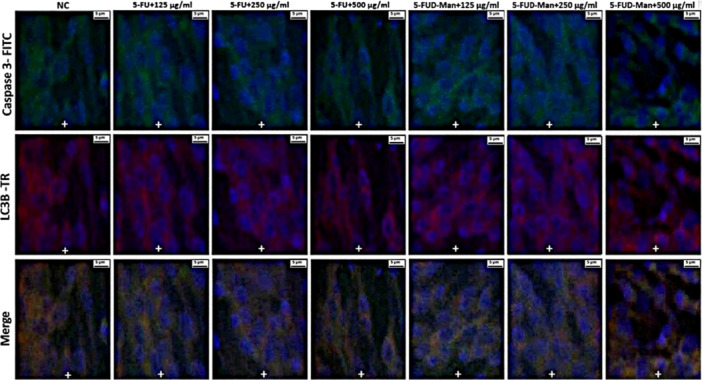 Figure 8
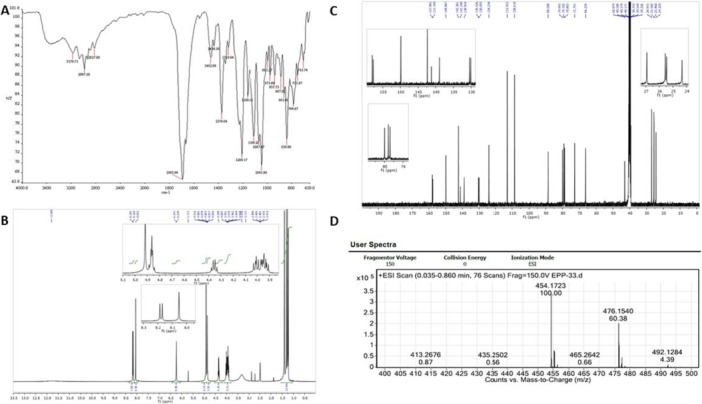 Figure 9
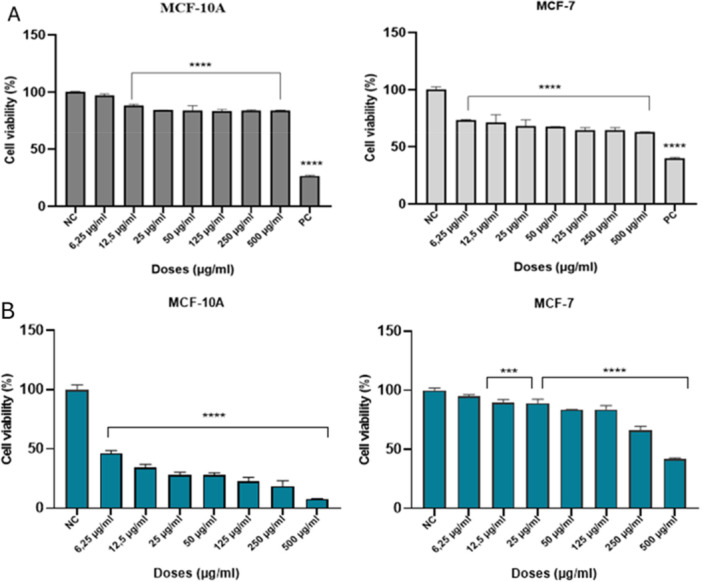 Figure 10
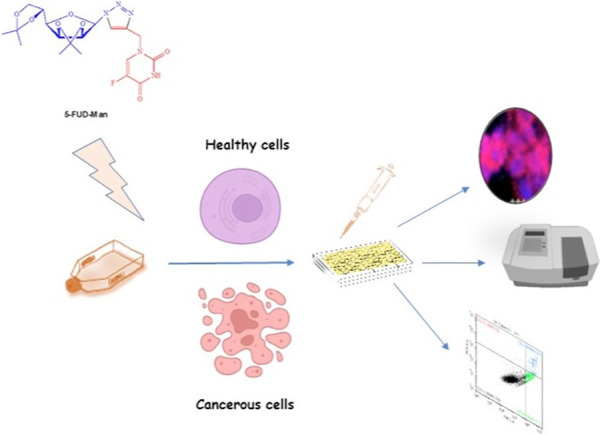 Figure 11
Peer Reviews
No public reviews on file for this paper yet. If you reviewed it on a platform where reviews are public (OpenReview, ICLR, NeurIPS, ICML), you can paste yours below so the community can read it here.
Videos
No videos yet. Explain this paper in a talk, walkthrough, or lecture? Add one.
Taxonomy
TopicsClick Chemistry and Applications · Cancer Research and Treatments · Nanoplatforms for cancer theranostics