Fournier’s Gangrene in a Young, Morbidly Obese Patient Without Diabetes
Thomas S Varghese, Julie M Riley, Jack Campbell

TL;DR
A young, morbidly obese patient without diabetes developed Fournier’s gangrene and recovered after aggressive treatment, highlighting obesity as a risk factor.
Contribution
This case emphasizes obesity as an independent risk factor for Fournier’s gangrene, independent of diabetes or immunodeficiency.
Findings
A morbidly obese patient without diabetes developed Fournier’s gangrene.
Aggressive surgical debridement and antibiotics led to full recovery.
Obesity is identified as a significant risk factor for FG in young patients.
Abstract
Fournier’s gangrene (FG) is a rapidly progressive form of necrotizing fasciitis involving the external genitalia, perineum, and perianal region. We present a case of FG in a morbidly obese patient (BMI > 40) without a known history of diabetes, malignancy, or immunodeficiency. The patient was treated with aggressive surgical debridement, broad-spectrum antibiotics, and early closure, achieving full recovery. This case highlights obesity as an independent risk factor for FG, which has significant ramifications for the future, given obesity rates in young Americans.
Genes, proteins, chemicals, diseases, species, mutations and cell lines named across the full text — each resolved to its canonical identifier and authoritative record.
Click any figure to enlarge with its caption.
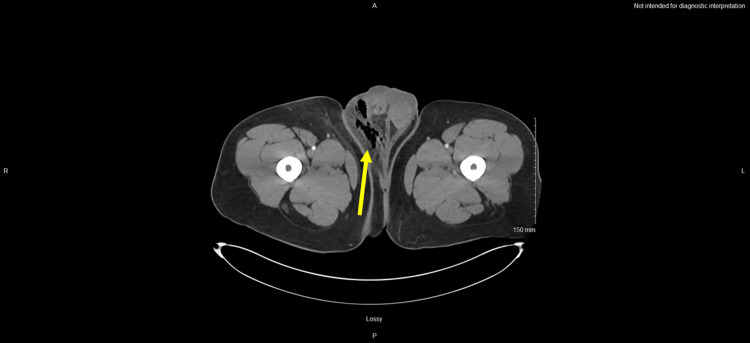 Figure 1
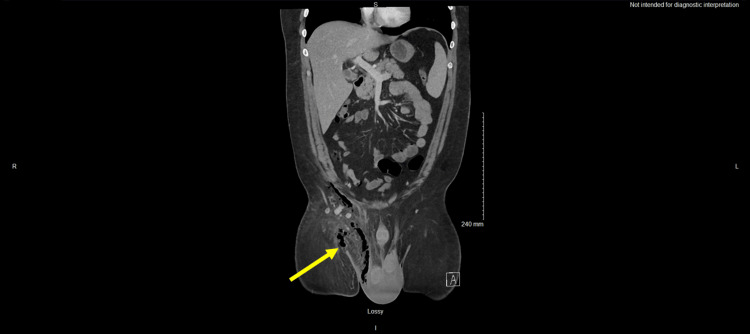 Figure 2
Peer Reviews
No public reviews on file for this paper yet. If you reviewed it on a platform where reviews are public (OpenReview, ICLR, NeurIPS, ICML), you can paste yours below so the community can read it here.
Videos
No videos yet. Explain this paper in a talk, walkthrough, or lecture? Add one.
Taxonomy
TopicsStreptococcal Infections and Treatments · Hidradenitis Suppurativa and Treatments · Anorectal Disease Treatments and Outcomes