Evaluation of Orthostatic Hypotension in Patients With Idiopathic Parkinson’s Disease Utilizing the Head-Up Tilt Test
B B V Ramanan, Suresh C Thirunavukarasu, Devi Varadharaj, Durai Arumugam, Jayasri Poyyadhappan, Nivethini Natarajan, Sigilipalli Vijaykumar

TL;DR
This study finds that 28% of Parkinson’s disease patients experience orthostatic hypotension, which worsens with disease progression and can be detected using a head-up tilt test.
Contribution
The study introduces the head-up tilt test as a more sensitive method for detecting orthostatic hypotension in Parkinson’s disease compared to static measures.
Findings
Orthostatic hypotension was present in 28% of idiopathic Parkinson’s disease patients.
Orthostatic hypotension strongly correlates with disease duration and motor severity (Hoehn and Yahr stage).
Head-up tilt test detected asymptomatic cases and proved more effective than static blood pressure measurements.
Abstract
Introduction: Parkinson’s disease (PD) is a neurodegenerative disorder, affecting individuals aged 60 and older, with rapidly increasing prevalence in aging populations, particularly in India. Apart from classical motor symptoms, nonmotor symptoms, particularly orthostatic hypotension (OH), significantly affect the quality of life, increasing the fall risk that contributes to increasing morbidity and mortality. This single-center, prospective, cross-sectional observational study evaluates OH, a key cardiovascular autonomic dysfunction, in idiopathic PD patients using the head-up tilt test (HUTT) to assess its prevalence and correlation with disease duration and severity. Conducted from July 2023 to June 2024 at the Department of Neurology, Indira Gandhi Government General Hospital and Post Graduate Institute, Puducherry, India, the study enrolled 114 patients diagnosed according to UK…
Genes, proteins, chemicals, diseases, species, mutations and cell lines named across the full text — each resolved to its canonical identifier and authoritative record.
Click any figure to enlarge with its caption.
 Figure 1
 Figure 2
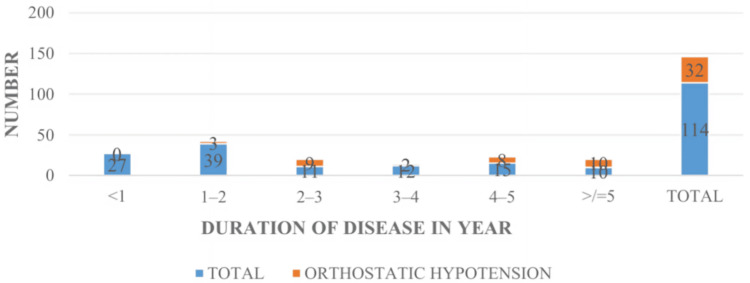 Figure 3
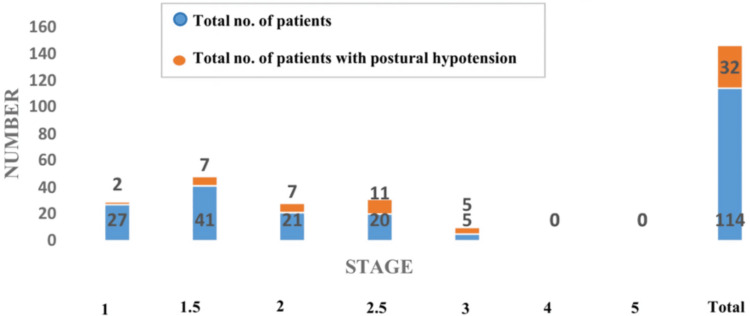 Figure 4
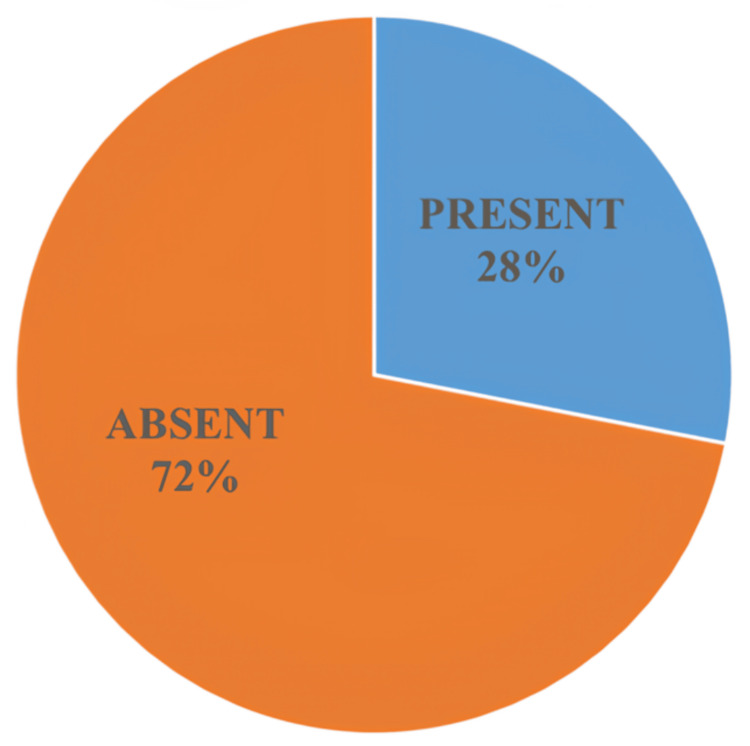 Figure 5
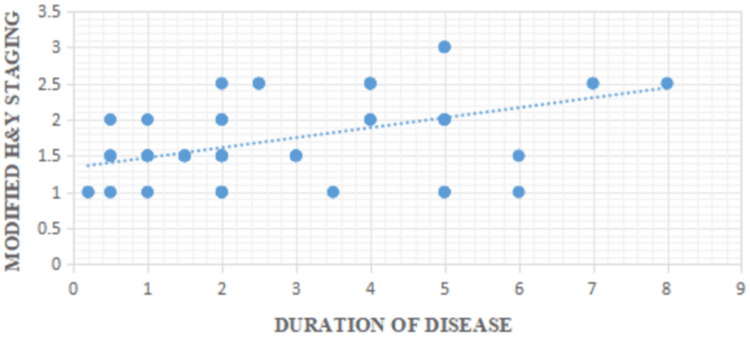 Figure 6
Peer Reviews
No public reviews on file for this paper yet. If you reviewed it on a platform where reviews are public (OpenReview, ICLR, NeurIPS, ICML), you can paste yours below so the community can read it here.
Videos
No videos yet. Explain this paper in a talk, walkthrough, or lecture? Add one.
Taxonomy
TopicsCardiovascular Syncope and Autonomic Disorders · Heart Rate Variability and Autonomic Control · Parkinson's Disease Mechanisms and Treatments