Several plant self‐incompatibility systems may be controlled by atypical receptor–ligand interactions
Zongcheng Lin, Maurice Bosch, Vernonica E. Franklin‐Tong

TL;DR
This paper reviews how some plants prevent self-fertilization using unusual receptor-ligand interactions in their self-incompatibility systems.
Contribution
The paper introduces the concept of atypical receptors (ATRs) in plant self-incompatibility systems, which differ from traditional receptors.
Findings
Several plant self-incompatibility systems use atypical receptors (ATRs) for pollen rejection.
Most self-incompatibility systems use cysteine-rich proteins as ligands, but only one known receptor is a receptor-like kinase.
The discovery of ATRs suggests they may be more widespread in plant communication systems.
Abstract
Self‐incompatibility (SI) is the single most important mechanism utilized by flowering plants to avoid self‐fertilization, thus preventing inbreeding and promoting outcrossing. Many plant SI systems are genetically controlled by a multi‐allelic S‐locus, containing two tightly linked genes that encode the female and male S‐determinants. When pollen lands on a “self” pistil, interaction between cognate female and male S‐determinants induces an SI signaling response, resulting in the failure of self‐fertilization. Here, we review currently known SI systems that utilize receptor–ligand interactions to control pollen rejection on the stigma surface. Although detailed molecular and cellular information is only known for the SI systems in the Brassicaceae and Papaveraceae, it is apparent that the S‐determinants of other SI systems (e.g., in the Poaceae and the Convolvulaceae) are likely to…
Genes, proteins, chemicals, diseases, species, mutations and cell lines named across the full text — each resolved to its canonical identifier and authoritative record.
Click any figure to enlarge with its caption.
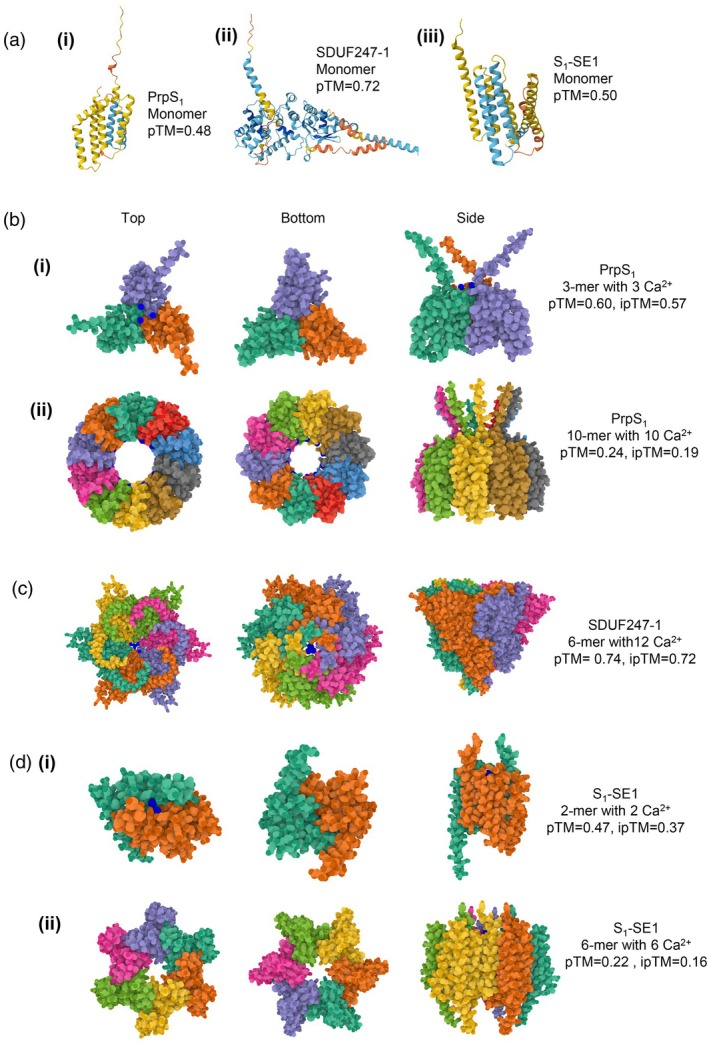 Figure 1
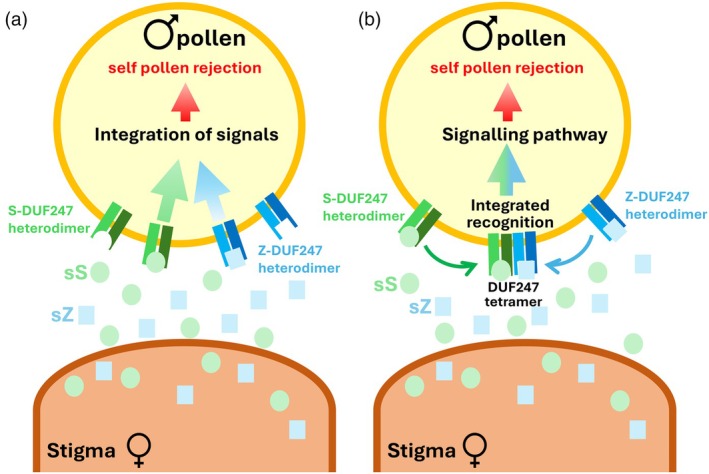 Figure 2
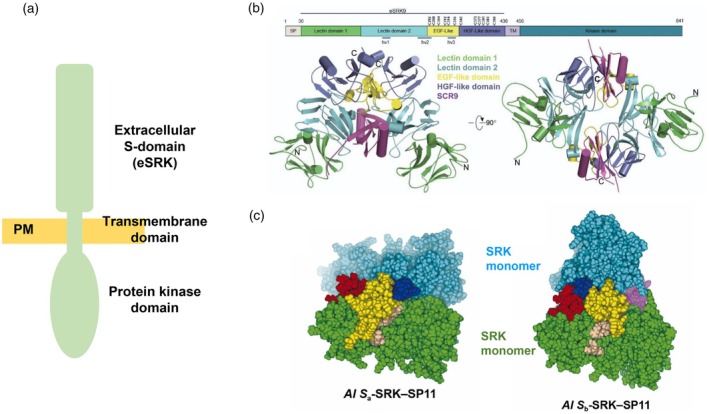 Figure 3
Peer Reviews
No public reviews on file for this paper yet. If you reviewed it on a platform where reviews are public (OpenReview, ICLR, NeurIPS, ICML), you can paste yours below so the community can read it here.
Videos
No videos yet. Explain this paper in a talk, walkthrough, or lecture? Add one.
Taxonomy
TopicsPlant Reproductive Biology · Plant Molecular Biology Research · Plant and animal studies