Temporal Patterns of Skin-Fixed Depth Electrodes During Stereotactic Electroencephalography Recording
Takayuki Kikuchi, Masahiro Sawada, Ai Demura, Yukihiro Yamao, Daisuke Yamada, Takeshi Yoshida, Katsuya Kobayashi, Akio Ikeda, Riki Matsumoto, Yoshiki Arakawa

TL;DR
This study compares how two methods of fixing brain electrodes affect their movement over time during epilepsy evaluations.
Contribution
The study provides a detailed analysis of temporal dislocation patterns in skin-fixed SEEG electrodes compared to anchor bolt fixation.
Findings
Skin-fixed electrodes showed significantly more longitudinal migration (4.34 mm) compared to anchor bolts (0.16 mm).
Electrode migration was most pronounced during bilateral implantation procedures.
Lateral displacement averaged 0.87 mm in the skin fixation group with no migration-related complications observed.
Abstract
Introduction: Stereotactic electroencephalography (SEEG) is increasingly used to evaluate patients with refractory epilepsy. While anchor bolts are widely used for depth electrode fixation, their lack of insurance coverage or technical limitations may necessitate alternative methods, such as fixation to the skin. Few studies have investigated how fixation methods affect electrode dislocation during recording. Methods: To clarify the time-dependent pattern of skin-fixed electrode dislocation, depth electrode dislocation during recording was evaluated in 41 electrodes from four patients with anchor bolt fixation and 66 electrodes from five patients with skin fixation. Results: Twenty-nine electrodes in the anchor bolt group and 45 electrodes in the skin fixation group were targeted to the anterior temporal or perisylvian regions. The mean cumulative migration in longitudinal direction…
Genes, proteins, chemicals, diseases, species, mutations and cell lines named across the full text — each resolved to its canonical identifier and authoritative record.
Click any figure to enlarge with its caption.
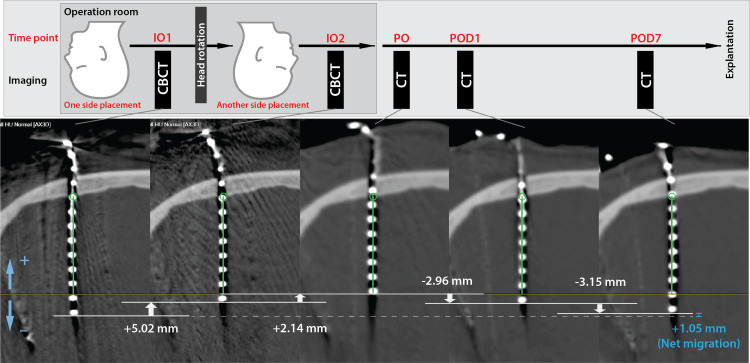 Figure 1
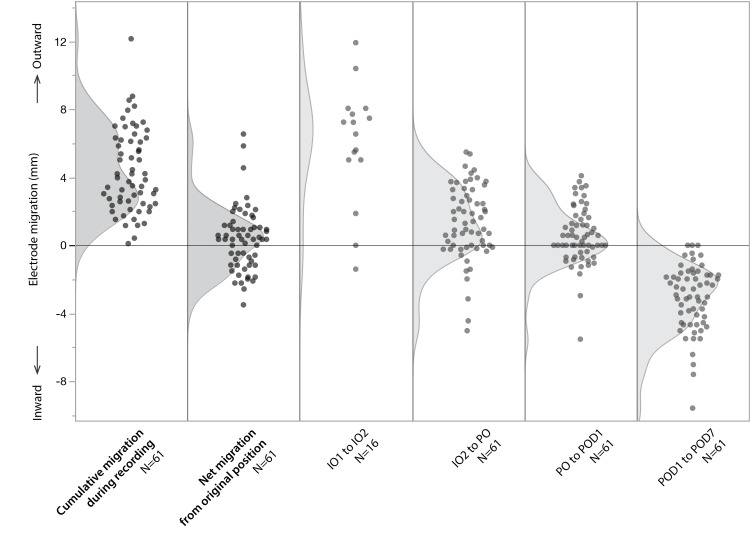 Figure 2
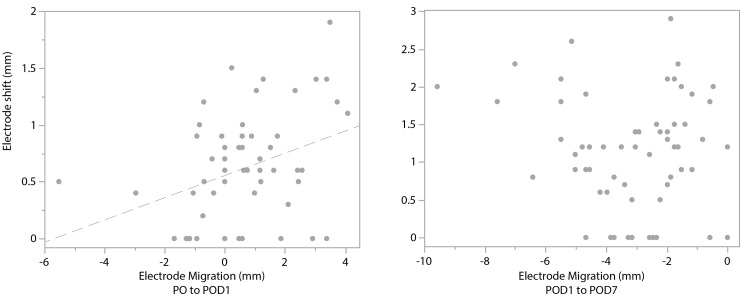 Figure 3
Peer Reviews
No public reviews on file for this paper yet. If you reviewed it on a platform where reviews are public (OpenReview, ICLR, NeurIPS, ICML), you can paste yours below so the community can read it here.
Videos
No videos yet. Explain this paper in a talk, walkthrough, or lecture? Add one.
Taxonomy
TopicsNeuroscience and Neural Engineering · EEG and Brain-Computer Interfaces · Neurological disorders and treatments