Validation of the Korean Movement Culture Perception (KMCP) Scale Using the Rasch Model: Evidence from Korean and Chinese Populations
Hye-Ryeon Kim, Eunhye Jo, Xuanshang Jin, So-Eun Lee, Chang-Hwan Choi, Nurul Akqmie Badrul Hisham, Renata Czekalska

TL;DR
This study validates a scale to measure perceptions of Korean movement culture, like K-pop dance and Taekwondo, among Korean and Chinese participants.
Contribution
The study provides empirical validation of the KMCP scale using the Rasch model and identifies culturally biased items.
Findings
The KMCP scale showed high internal consistency and adequate model fit for most items.
Five items exhibited differential item functioning based on nationality, indicating cultural bias.
Item difficulty was clustered in the middle, limiting the scale's ability to measure diverse perception levels.
Abstract
This study validates the Korean Movement Culture Perception (KMCP) scale, a tool designed to assess Korea's 'Movement Culture' (e.g., K-pop dance, Taekwondo), a key element of the 'Shin Hallyu' (New Korean Wave) characterized by participatory consumption. Using the Rasch model, this study analysed the validity of the scale among 1,240 participants from Korea and China, a major market for Hallyu. Participants responded to the 21-item KMCP scale, which comprises three sub-factors ('Korean attractiveness,' 'correct knowledge information,' and 'content diversification'), using a five-point Likert scale. The scale demonstrated high internal consistency (Cronbach’s α = .954), and all 21 items showed an adequate model fit (Infit range: 0.86–1.11), confirming its overall construct validity. However, the item-person map revealed that item difficulty was clustered in the middle, indicating a…
Click any figure to enlarge with its caption.
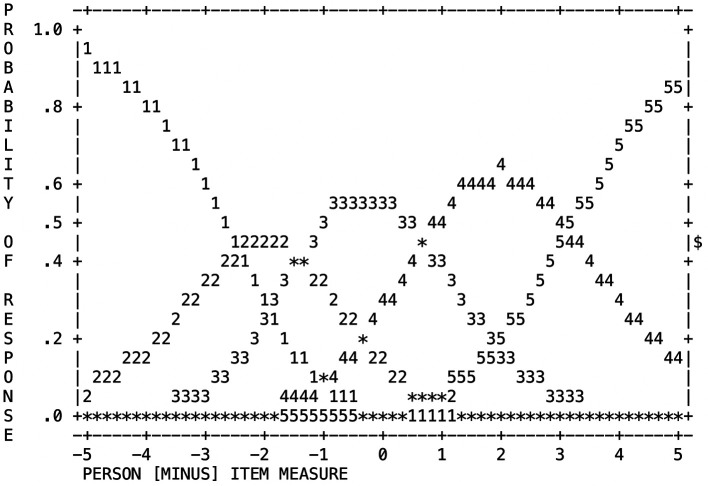 Figure 1
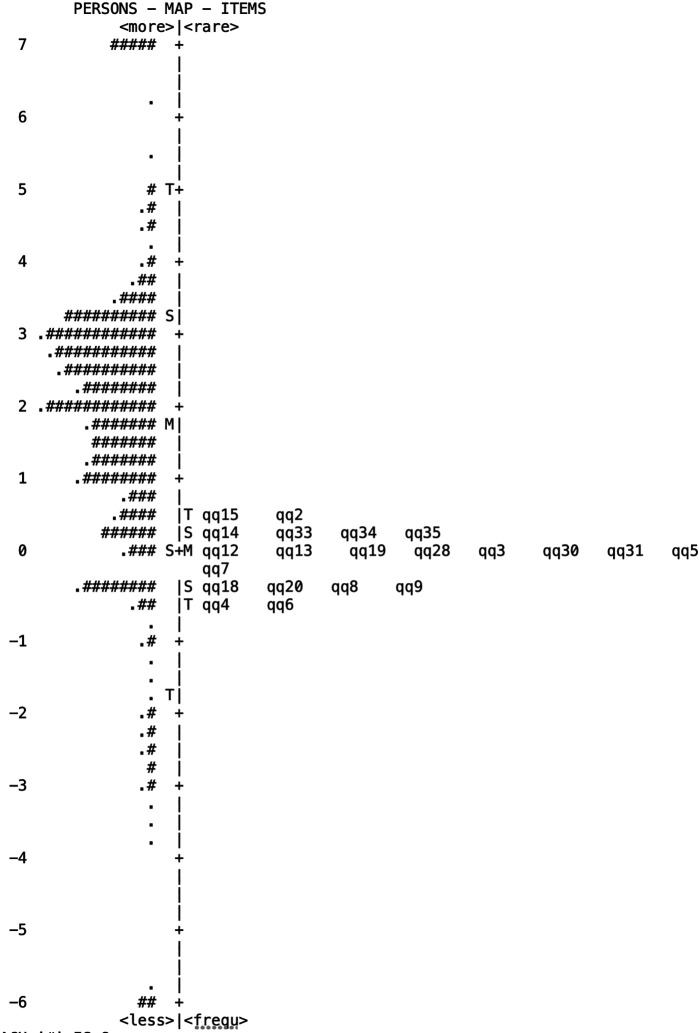 Figure 2
Peer Reviews
No public reviews on file for this paper yet. If you reviewed it on a platform where reviews are public (OpenReview, ICLR, NeurIPS, ICML), you can paste yours below so the community can read it here.
Videos
No videos yet. Explain this paper in a talk, walkthrough, or lecture? Add one.
Taxonomy
TopicsMartial Arts: Techniques, Psychology, and Education · Diversity and Impact of Dance · Flow Experience in Various Fields