Artificial intelligence in orthopedic trauma surgery: a scoping review of current applications and research gaps
Lennard M. Wurm, Wolfgang Ertel, Dominik Laue

TL;DR
This review explores how artificial intelligence is being used in orthopedic trauma surgery, finding that while AI shows promise, most studies are at an early stage and lack real-world validation.
Contribution
The study provides a comprehensive scoping review of AI applications in orthopedic trauma surgery, highlighting research gaps and the need for better validation and implementation strategies.
Findings
Most AI studies in orthopedic trauma are retrospective and use deep learning for fracture detection.
Only a small fraction of AI models have been externally validated or implemented in clinical practice.
Diagnostic AI models show high accuracy, but prognostic models have moderate-to-high performance.
Abstract
Artificial intelligence (AI) is rapidly transforming clinical decision-making, yet its role in orthopedic trauma surgery remains fragmented and unevenly validated in clinical practise. We conducted a PRISMA-SCR–compliant scoping review using a systematic search of the Semantic Scholar, OpenAlex and PubMed corpus via Elicit (497 records). Studies were eligible if they applied AI or machine-learning methods to traumatic orthopedic conditions, included ≥ 10 human subjects, reported quantitative performance metrics, and represented original research. After title/abstract and full-text screening, 146 studies were included. Data on study characteristics, AI methodology, clinical application, validation strategy, performance metrics, explainability and translational maturity were synthesized descriptively. Research output increased sharply after 2017, with 52% of all studies published since…
Genes, proteins, chemicals, diseases, species, mutations and cell lines named across the full text — each resolved to its canonical identifier and authoritative record.
Click any figure to enlarge with its caption.
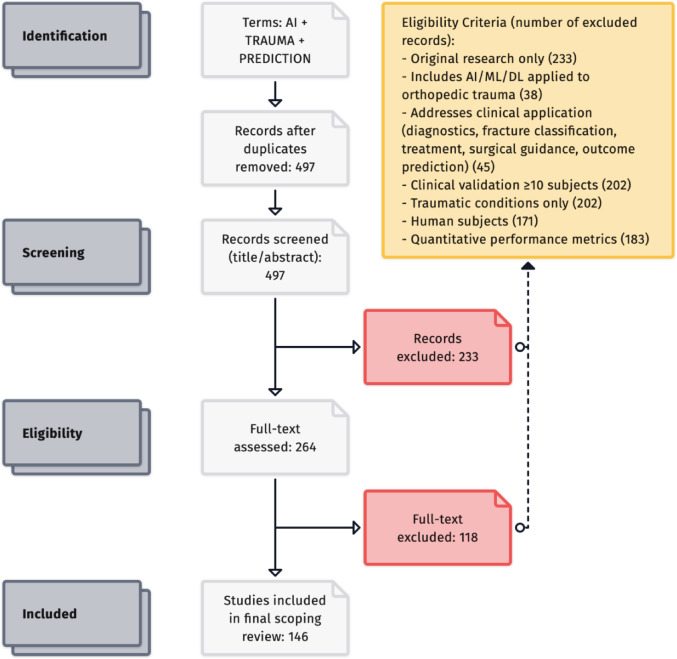 Figure 1
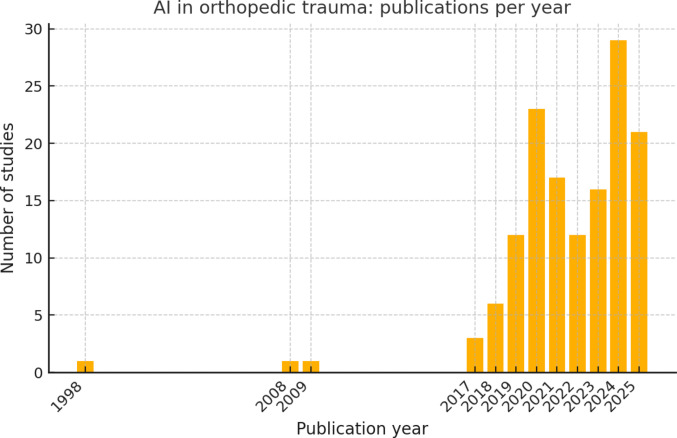 Figure 2
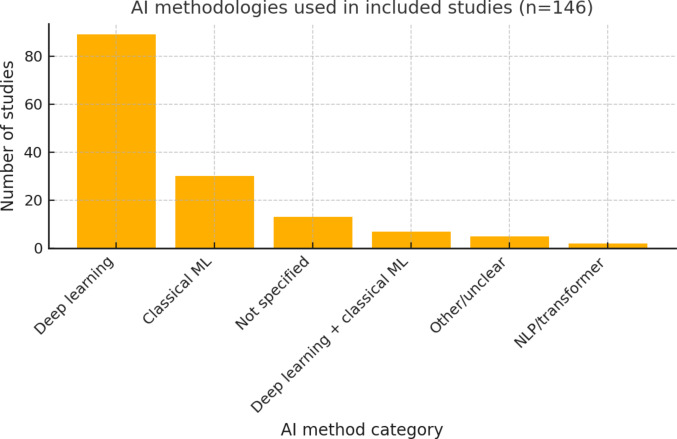 Figure 3
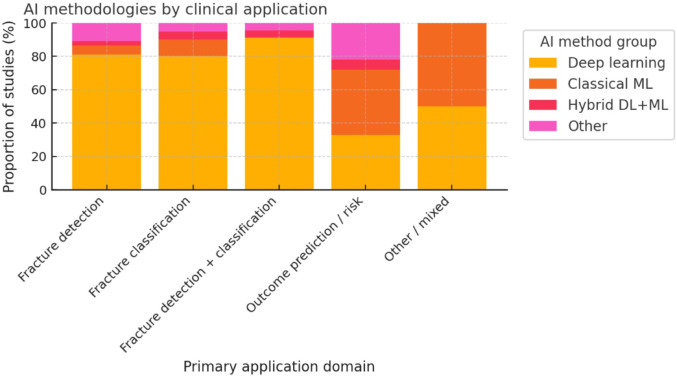 Figure 4
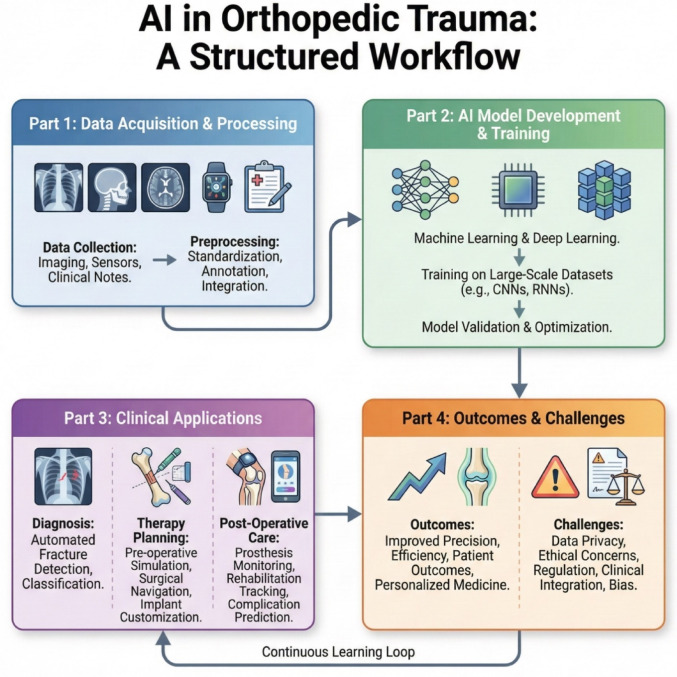 Figure 5
Peer Reviews
No public reviews on file for this paper yet. If you reviewed it on a platform where reviews are public (OpenReview, ICLR, NeurIPS, ICML), you can paste yours below so the community can read it here.
Videos
No videos yet. Explain this paper in a talk, walkthrough, or lecture? Add one.
Taxonomy
TopicsArtificial Intelligence in Healthcare and Education · Bone fractures and treatments · Medical Imaging and Analysis