Substrate-field-modulated remote-van der Waals hybrid epitaxy in transition metal dichalcogenide heterostructures
Lia Saptini Handriani, Suhee Jang, Yelim Kim, Hyuncheol Yun, Dae Yeop Jeong, Hyeonsu Park, Zhe Gao, Jae-il Jang, Won Il Park

TL;DR
This paper explores how to control the growth of 2D material layers for better optoelectronics by understanding how substrates and van der Waals forces influence their structure.
Contribution
The study introduces a new mechanism called 'remote-van der Waals hybrid epitaxy' for controlled vertical growth of 2D heterostructures.
Findings
Vertical overgrowth occurs in a narrow thickness window of 1–3 layers.
Substrate polarity and defect chemistry strongly influence nucleation density.
vdW coupling governs in-plane crystallographic registry for both stacking orders.
Abstract
Two-dimensional (2D) transition-metal dichalcogenide (TMDC) heterostructures are promising for next-generation optoelectronics, yet the mechanisms controlling their vertical heteroepitaxy remain poorly understood. Here, we systematically investigate metal–organic chemical vapor deposition growth of MoS2/WS2 and WS2/MoS2 vertical heterostructures across varying interlayer thicknesses (monolayer to multilayer) and substrates (Si, SiO2 and c-sapphire). We identify a substrate-field-modulated “remote–van der Waals (vdW) hybrid epitaxy” regime, in which vertical overgrowth is confined to a narrow thickness window (~ 1–3 layers), with nucleation density strongly influenced by substrate polarity and defect chemistry. High-resolution STEM reveals that, in the regions where vertical growth occurs, the in-plane crystallographic registry is primarily governed by vdW coupling to the 2D template,…
Genes, proteins, chemicals, diseases, species, mutations and cell lines named across the full text — each resolved to its canonical identifier and authoritative record.
Click any figure to enlarge with its caption.
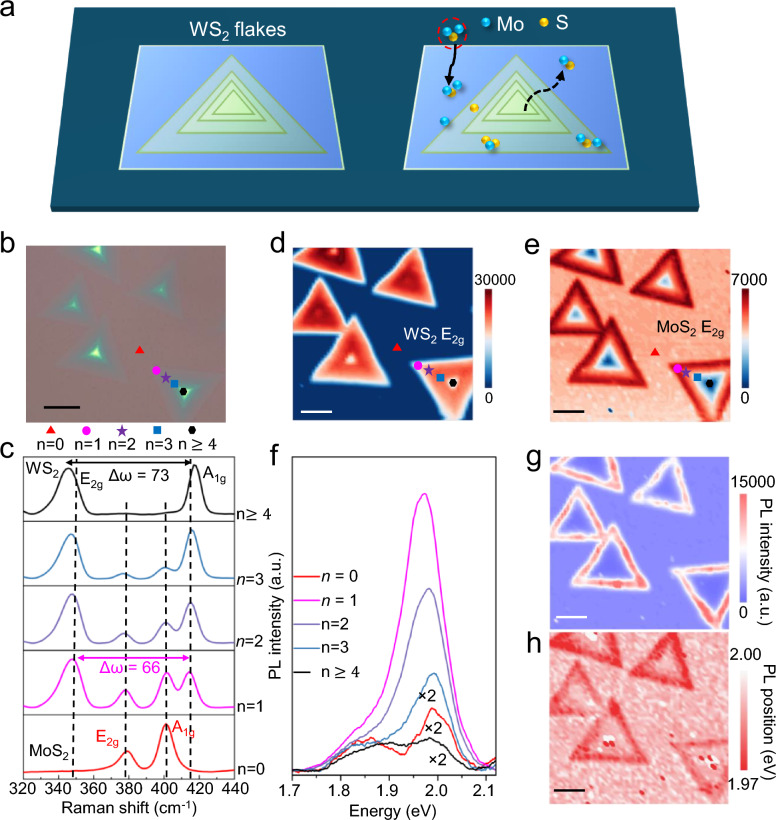 Figure 1
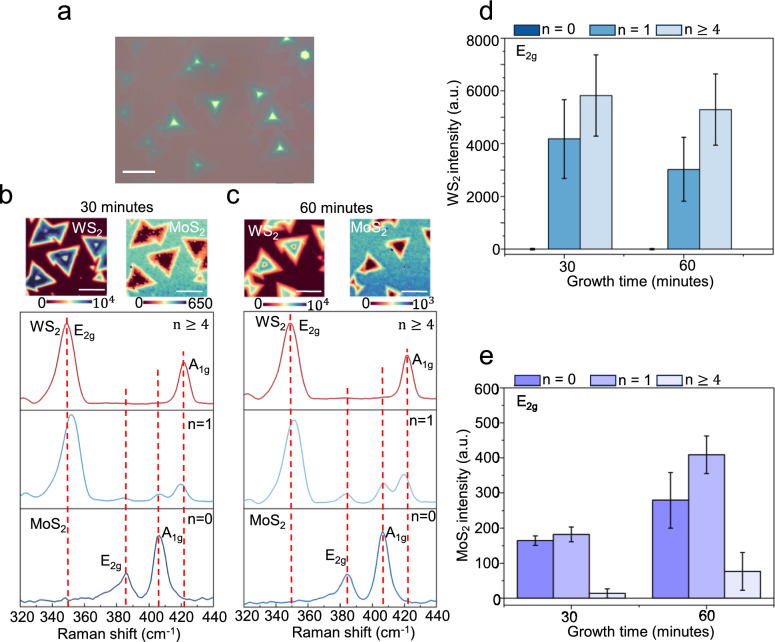 Figure 2
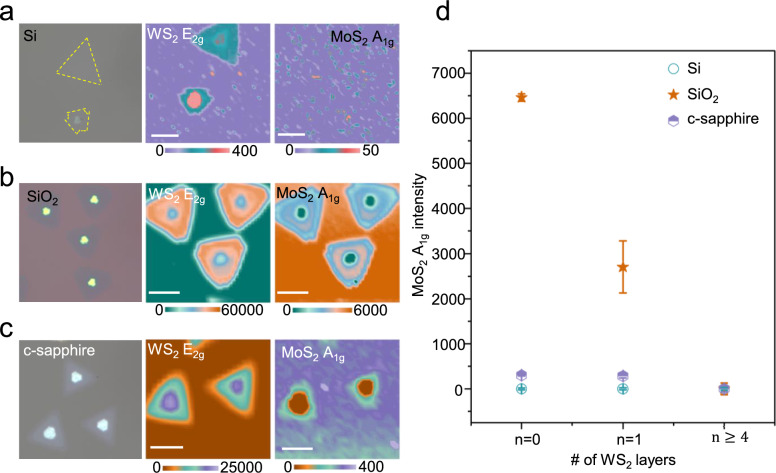 Figure 3
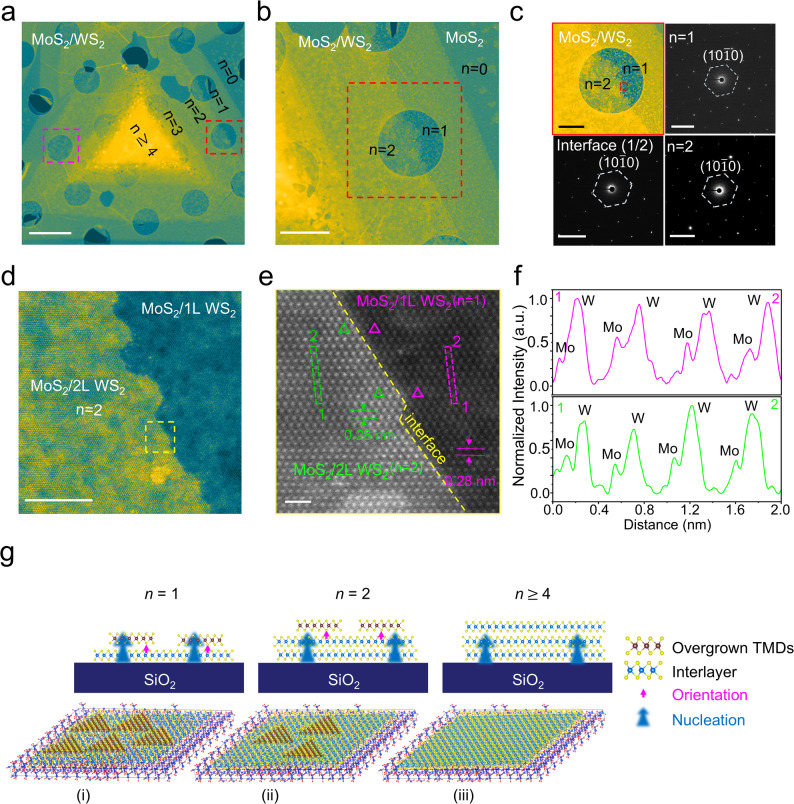 Figure 4
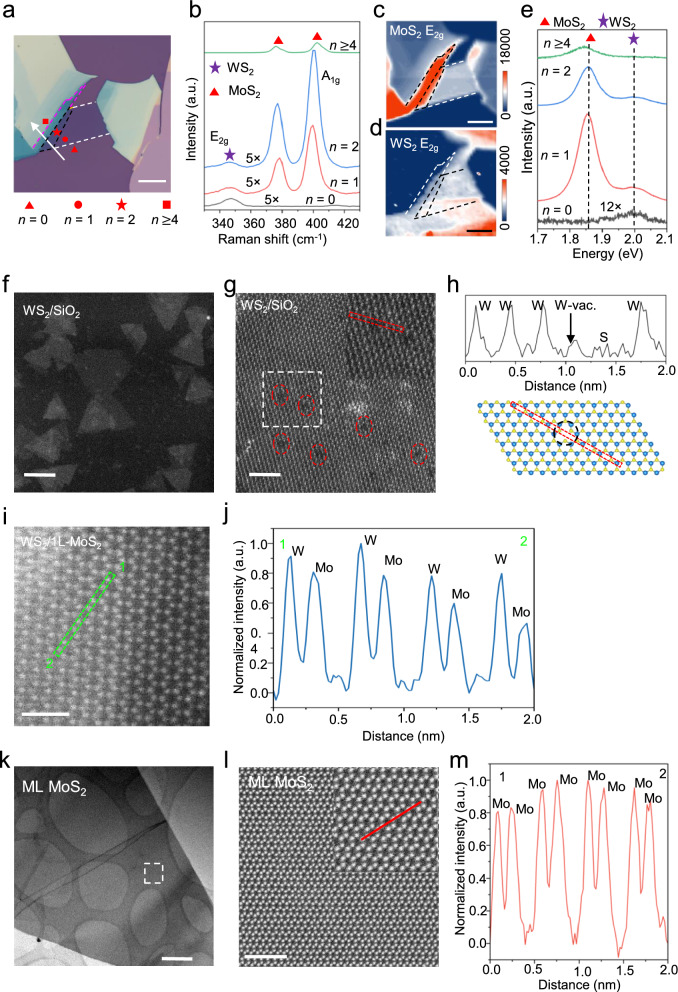 Figure 5
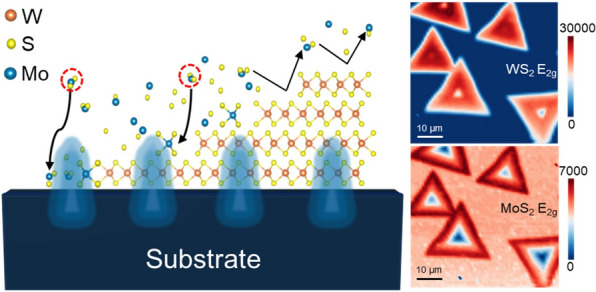 Figure 6
Peer Reviews
No public reviews on file for this paper yet. If you reviewed it on a platform where reviews are public (OpenReview, ICLR, NeurIPS, ICML), you can paste yours below so the community can read it here.
Videos
No videos yet. Explain this paper in a talk, walkthrough, or lecture? Add one.
Taxonomy
Topics2D Materials and Applications · Graphene research and applications · Solar-Powered Water Purification Methods