Cysteine Pegylation of a Mutant L-asparaginase Affords Enhanced Activity and Thermostability. A Comparative Study Against N-terminal Conjugation
Rafael B. Ferraro, Guilherme R. Benevides, Jheniffer Rabelo, Flaviana da Silva Chaves, Grace Veronica Ruiz-Lara, Gustavo Carretero, Gisele Monteiro, Adalberto Pessoa-Junior, Attilio Converti, Steven Lynham, Paul F. Long, Carlota O. Rangel-Yagui

TL;DR
Researchers improved the L-asparaginase enzyme by pegylating a mutant version at a cysteine site, resulting in better activity and stability compared to N-terminal pegylation.
Contribution
The study introduces cysteine pegylation as a superior method for enhancing ASNase activity and thermostability compared to N-terminal conjugation.
Findings
Cys-PEG-ASNase showed higher specific activity than NT-PEG-ASNase.
Cysteine pegylation provided greater stabilization and increased aggregation upon thermo-inactivation.
Both pegylation methods improved enzyme thermostability and shelf-life.
Abstract
L-asparaginase (ASNase) is one of the most clinically relevant biopharmaceuticals but proteolysis impairs the enzyme half-life. ASNase P40S/S206C was developed to overcome proteolysis and in addition pegylation can be used to improve half-life and thermostability. Here Cys206 and N-terminal residues were explored as pegylation sites for a potential new biobetter. Optimal mono-pegylation of Cys (Cys-PEG-ASNase) provided similar yields compared to N-terminal mono-pegylation (NT-PEG-ASNase) but at lower PEG concentration. Specific activity was higher for Cys-PEG-ASNase than NT-PEG-ASNase. The role of pegylation site in activity was confirmed by activation energy (Ea) and enthalpy variation (ΔH70ºC) of the ASNase-catalysed reaction. Pegylation in both sites increased enzyme thermostability and consequently shelf-life stability. The variation of Gibbs free-energy of enzyme…
Genes, proteins, chemicals, diseases, species, mutations and cell lines named across the full text — each resolved to its canonical identifier and authoritative record.
Click any figure to enlarge with its caption.
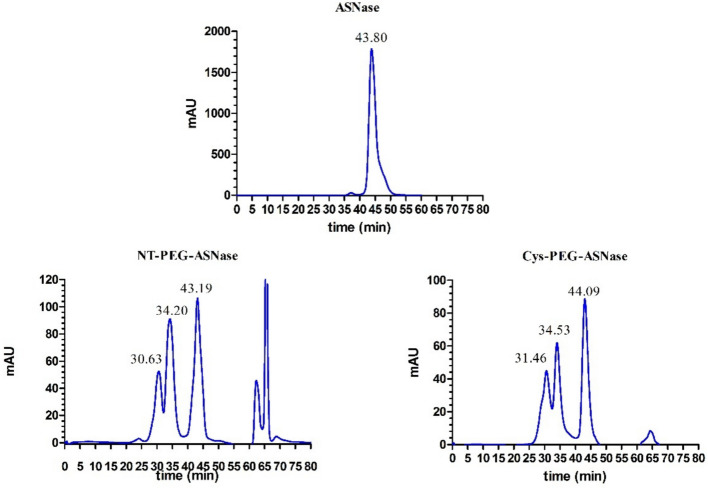 Figure 1
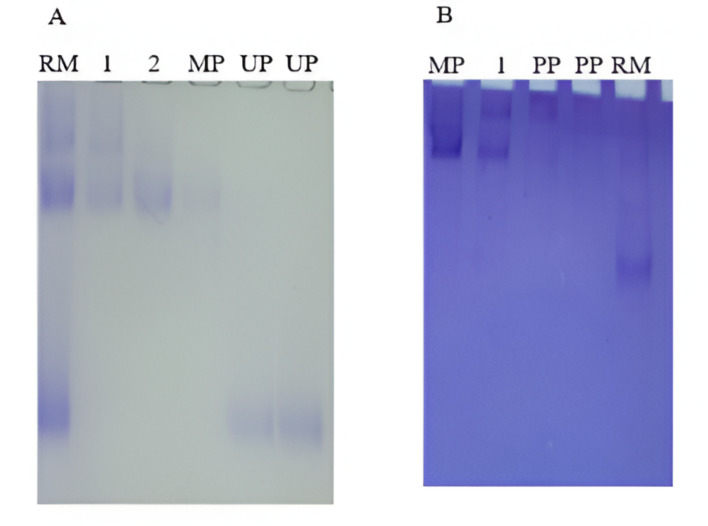 Figure 2
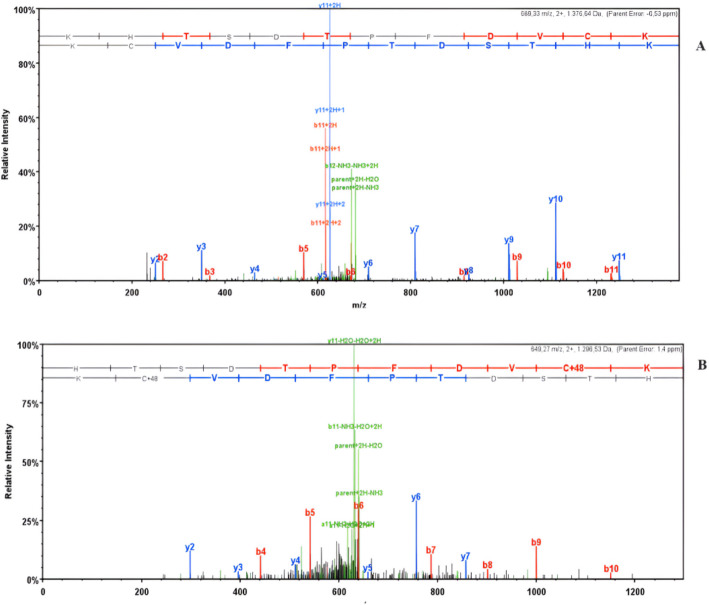 Figure 3
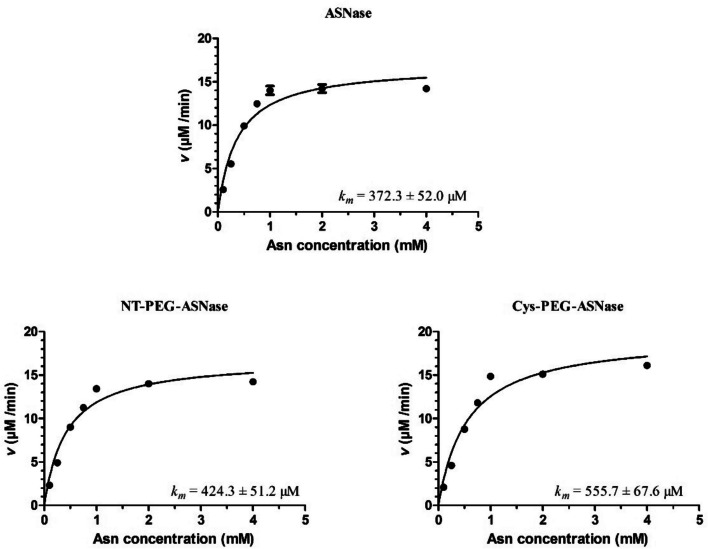 Figure 4
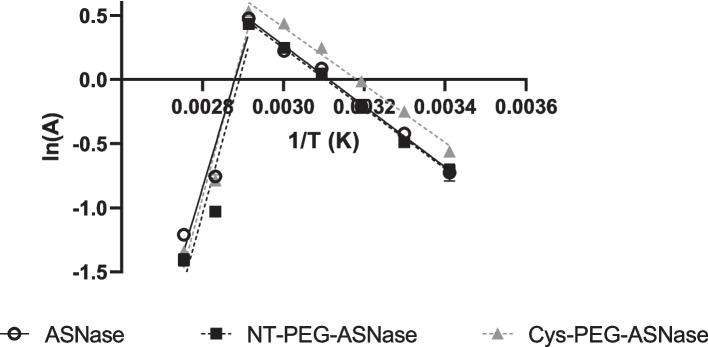 Figure 5
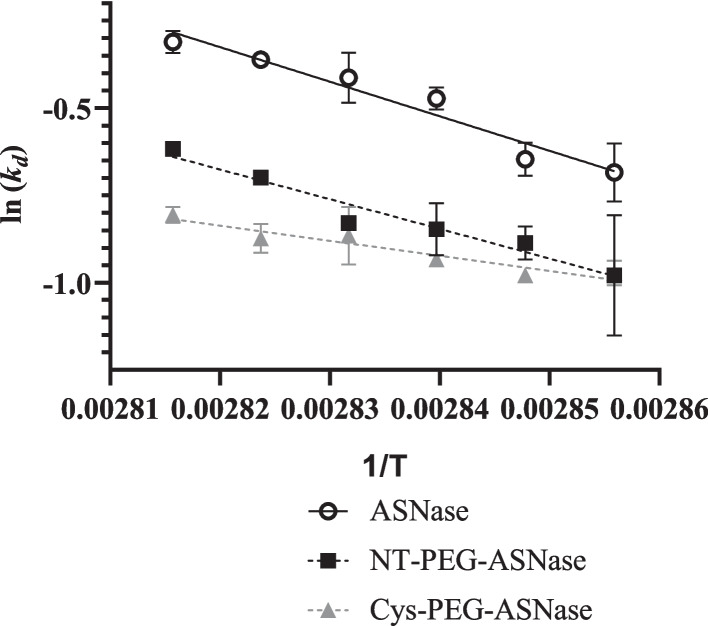 Figure 6
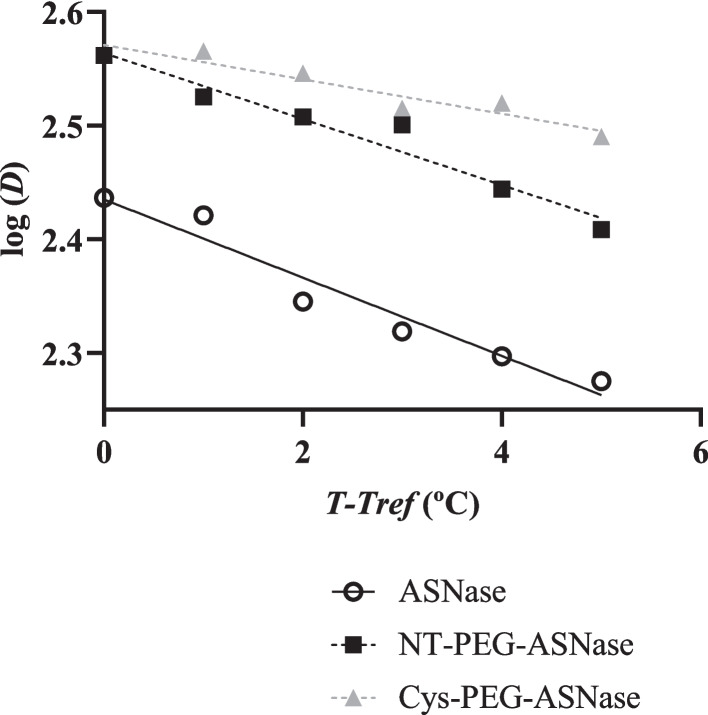 Figure 7
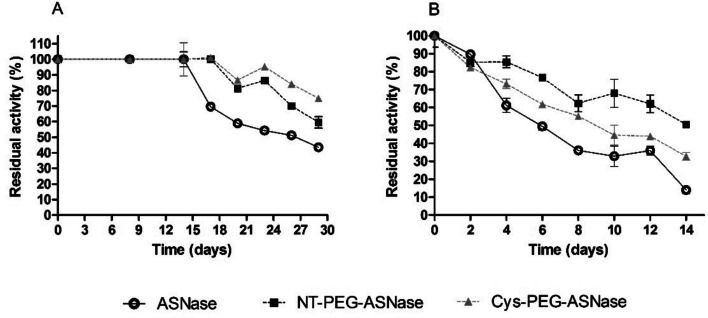 Figure 8
Peer Reviews
No public reviews on file for this paper yet. If you reviewed it on a platform where reviews are public (OpenReview, ICLR, NeurIPS, ICML), you can paste yours below so the community can read it here.
Videos
No videos yet. Explain this paper in a talk, walkthrough, or lecture? Add one.
Taxonomy
TopicsAcute Lymphoblastic Leukemia research · Biochemical and Molecular Research · Enzyme Production and Characterization