Why acetylcholinesterase inhibitors should be considered disease-modifying drugs for Alzheimer’s disease?
Giovanni Zuliani, Carlo Cervellati, Marco Zuin, Gloria Brombo

TL;DR
Acetylcholinesterase inhibitors may not only treat symptoms but also slow the progression of Alzheimer's disease by affecting multiple biological pathways.
Contribution
The paper argues that acetylcholinesterase inhibitors should be reclassified as disease-modifying drugs for Alzheimer’s disease based on accumulating clinical and preclinical evidence.
Findings
AChEI are associated with slower cognitive decline and reduced hippocampal atrophy in Alzheimer’s patients.
AChEI influence key AD mechanisms like amyloid-β toxicity, neuroinflammation, and synaptic dysfunction.
Long-term use of AChEI correlates with lower mortality and improved behavioral symptoms in dementia.
Abstract
Disease-modifying drugs (DMDs) are defined as treatments capable of altering the underlying course of a disease by slowing or modifying its biological progression rather than merely alleviating symptoms. In Alzheimer’s disease (AD), therapeutic options with proven disease-modifying effects remain limited, despite the recent approval of anti-amyloid monoclonal antibodies. Acetylcholinesterase inhibitors (AChEI), currently classified as symptomatic treatments, have accumulated a number of clinical and experimental evidence suggesting a broader role. Long-term clinical and observational studies indicate that AChEI are associated with slower cognitive and functional decline, reduced hippocampal atrophy, lower mortality rates, and improved behavioral and psychological symptoms of dementia. In parallel, preclinical and clinical data show that AChEI may influence multiple key pathogenic…
Genes, proteins, chemicals, diseases, species, mutations and cell lines named across the full text — each resolved to its canonical identifier and authoritative record.
Click any figure to enlarge with its caption.
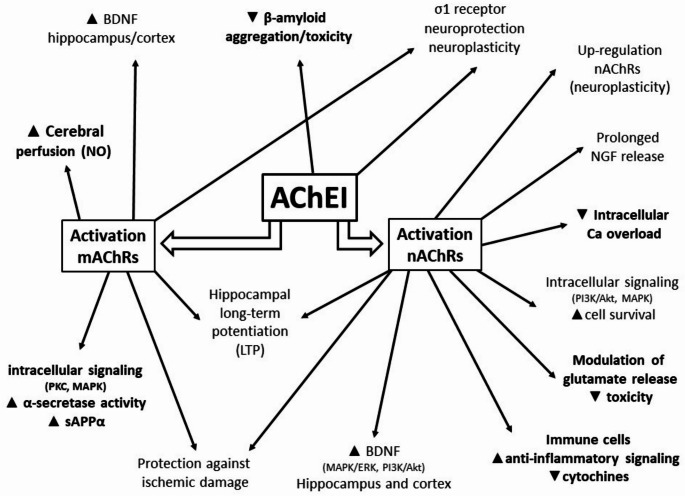 Figure 1
Peer Reviews
No public reviews on file for this paper yet. If you reviewed it on a platform where reviews are public (OpenReview, ICLR, NeurIPS, ICML), you can paste yours below so the community can read it here.
Videos
No videos yet. Explain this paper in a talk, walkthrough, or lecture? Add one.
Taxonomy
TopicsCholinesterase and Neurodegenerative Diseases · Chemical synthesis and alkaloids · Phosphodiesterase function and regulation