HSP90 inhibition potentiates oxidant-based antimelanoma action of novel thioquercetin derivatives by compromising AhR/CYP1A1 pathway
Wojciech Witkowski, Julia Słaby, Maciej Wnuk, Paulina Stec, Piotr Piotrowski, Michał Żebrowski, Martyna Cybularczyk-Cecotka, Anna Deręgowska, Nadezhda Romanchikova, Pawel Zayakin, Aija Linē, María Moros, Grzegorz Litwinienko, Anna Lewińska

TL;DR
New thioquercetin compounds show improved anticancer effects against melanoma when combined with HSP90 inhibitors, by increasing oxidative stress and disrupting detoxification pathways.
Contribution
Novel thioquercetin derivatives demonstrate enhanced antimelanoma activity when combined with HSP90 inhibition, revealing a new therapeutic strategy.
Findings
Thioquercetins induce apoptotic cell death in melanoma cells at low micromolar concentrations.
HSP90 inhibition enhances oxidative stress and impairs AhR/CYP1A1 detoxification pathways in melanoma cells.
Thioquercetin derivatives show senolytic activity against cisplatin-induced senescent melanoma cells.
Abstract
Quercetin, a plant-derived dietary flavonoid, has multifunctional biological activities, including anticancer action; however, its applications may be restricted due to limited bioavailability. Thus, novel synthetic quercetin derivatives (QDs) with improved properties and/or drug combinations should be designed and tested. In the present study, anticancer activity of fourteen newly synthesized QDs was investigated using four cellular models of melanoma, namely A375, MM370, G-361, and SH-4 cells. Thioquercetins (thioQ, thioQ(OAc)4, and thioQ(OAc)5), when used at low micromolar range, induced apoptotic cell death in melanoma cells compared to normal cells. Thioquercetins also reduced the population of spheroid-forming cells and suppressed the growth of A375 cells in 3D spheroid models. Thioquercetin-mediated antimelanoma action was potentiated upon heat shock protein 90 (HSP90)…
Genes, proteins, chemicals, diseases, species, mutations and cell lines named across the full text — each resolved to its canonical identifier and authoritative record.
Click any figure to enlarge with its caption.
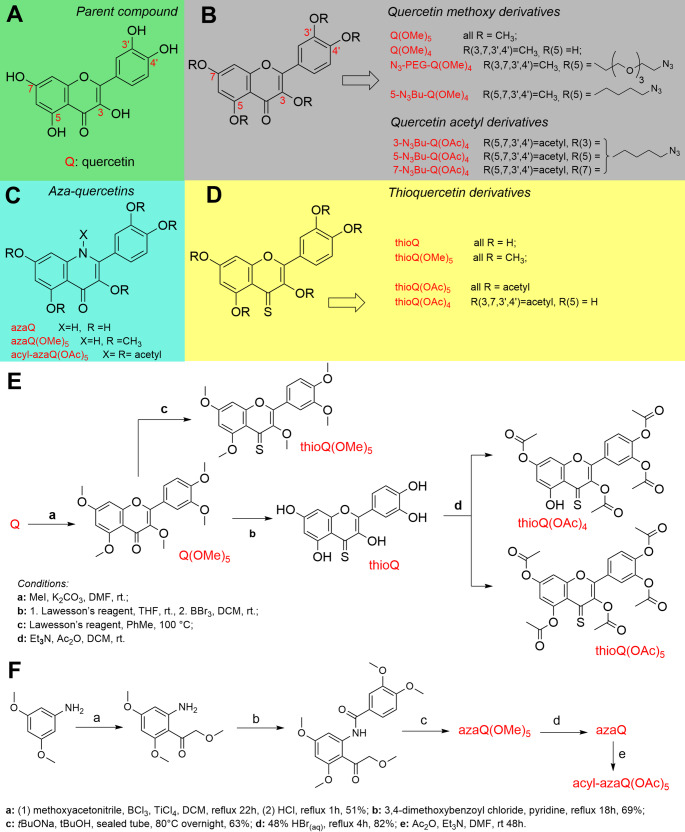 Figure 1
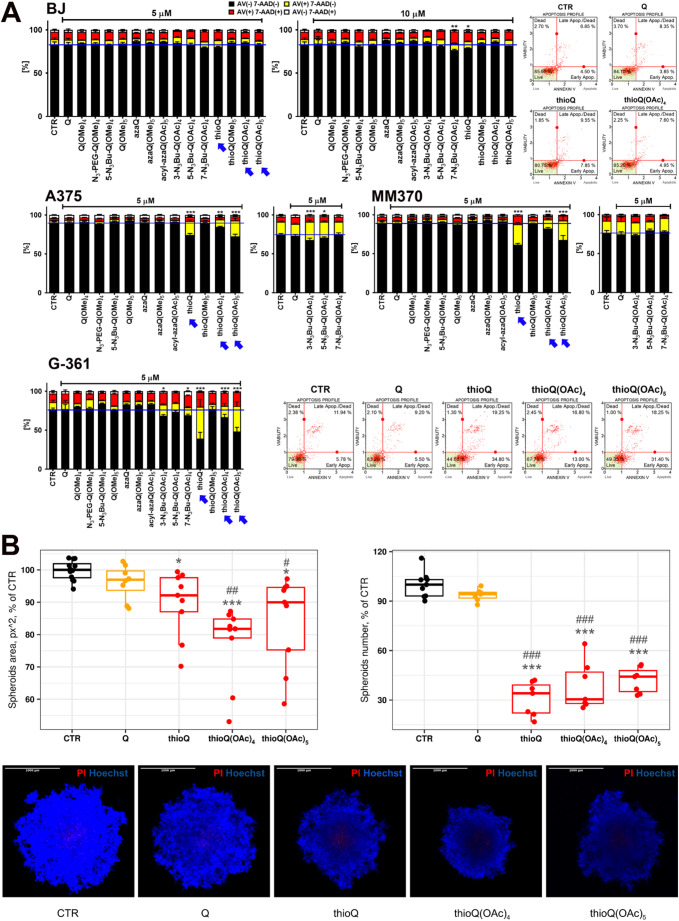 Figure 2
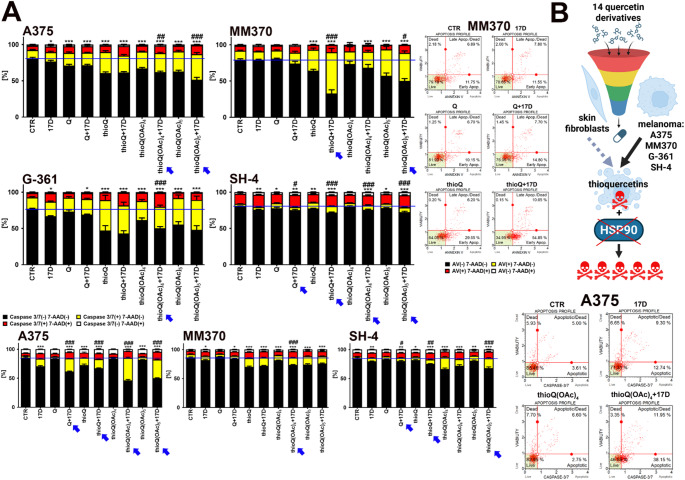 Figure 3
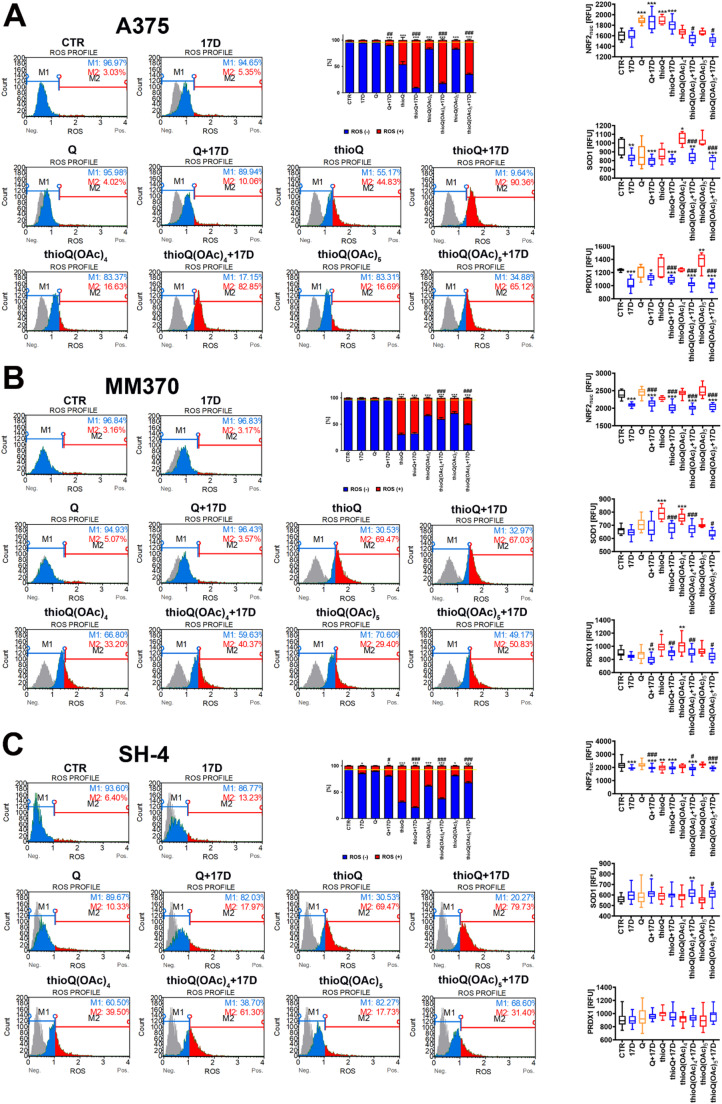 Figure 4
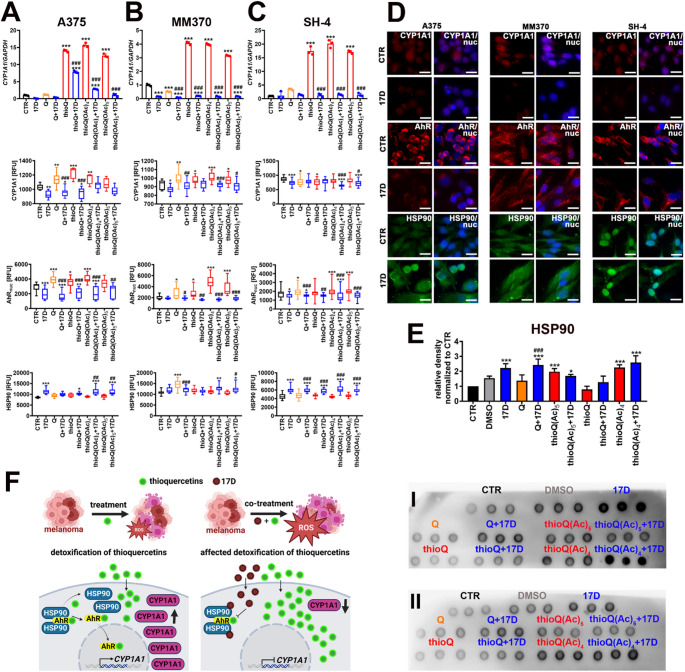 Figure 5
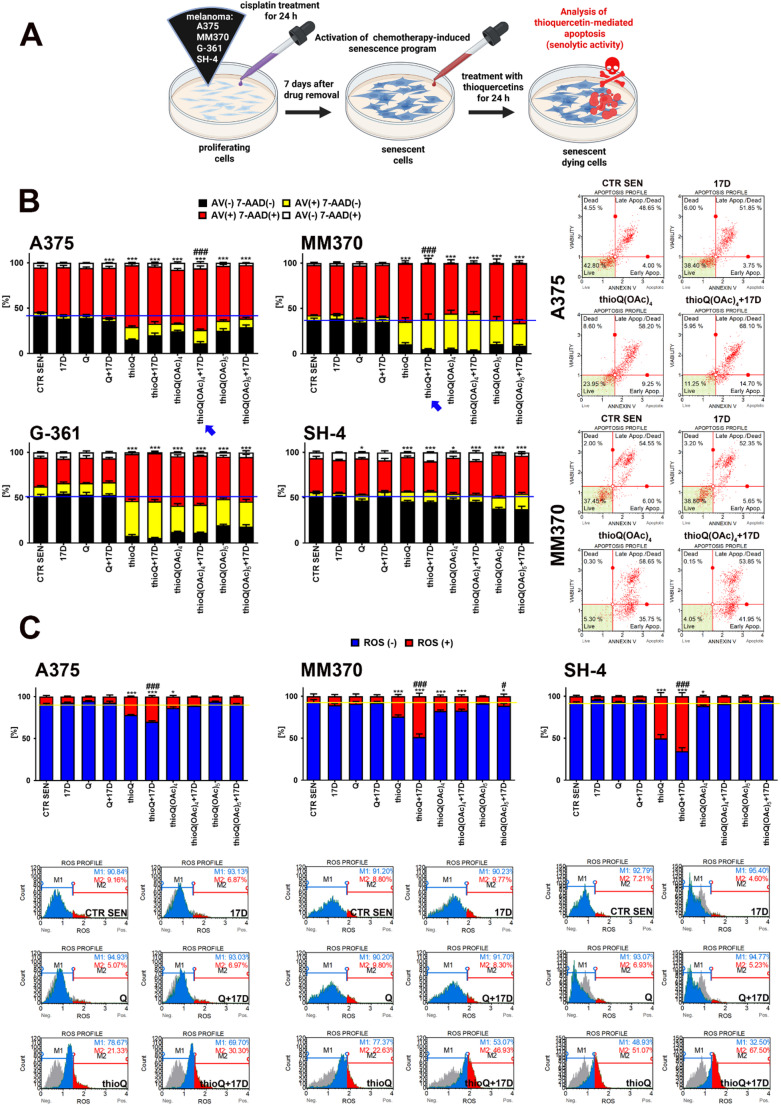 Figure 6
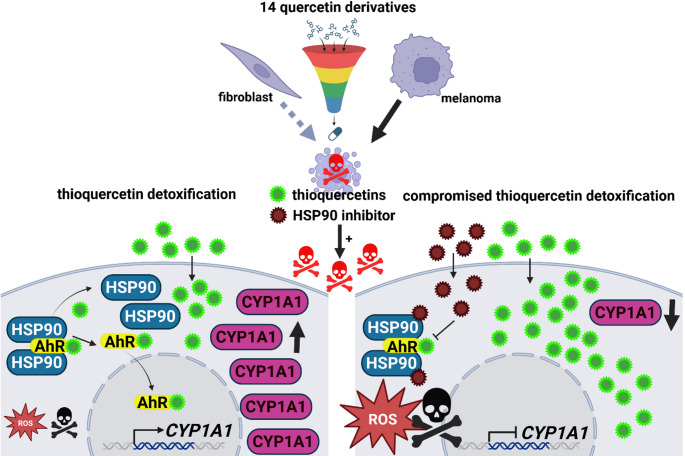 Figure 7
Peer Reviews
No public reviews on file for this paper yet. If you reviewed it on a platform where reviews are public (OpenReview, ICLR, NeurIPS, ICML), you can paste yours below so the community can read it here.
Videos
No videos yet. Explain this paper in a talk, walkthrough, or lecture? Add one.
Taxonomy
TopicsHeat shock proteins research · Melanoma and MAPK Pathways · Flavonoids in Medical Research