Intravenous versus subcutaneous immunoglobulin in patients with haematological malignancies: time-driven activity-based costing
Sara Carrillo de Albornoz, Helen Haysom, Allison Mo, Jessica Guglielmino, Terri Dunstan, Kylie Rushford, Amanda Ellison, Karinna Saxby, Dan Andrew, Angelene Jesurajah, Philomina Banahene, Erin Hu, Loo Sin Hoo, Dennis Petrie, Erica M. Wood, Alisa M. Higgins, Zoe K. McQuilten

TL;DR
This study compares the costs of two immunoglobulin administration methods for patients with blood cancers, finding that intravenous treatment is cheaper overall despite higher hospital costs.
Contribution
The study introduces a time-driven activity-based costing approach to compare IVIg and SCIg for haematological malignancies in Australia.
Findings
Annual IVIg product costs per patient were lower than SCIg due to higher SCIg doses.
Treating patients with IVIg was significantly less costly than SCIg when including product and administration costs.
SCIg had lower in-hospital administration costs but higher overall direct costs compared to IVIg.
Abstract
Prophylactic immunoglobulin (Ig) is used to prevent infections in patients with hypogammaglobulinaemia due to haematological malignancies (HM). Ig can be administered intravenously (IVIg) in hospital or self-administered subcutaneously (SCIg) at home, using different dosing regimens but with comparable effectiveness. In Australia, Ig product costs alone were AU$915.7 million in 2022/2023, 60% of the national blood budget. However, the total cost of IVIg and SCIg, including administration costs, remains uncertain. We conducted a prospective, time-driven, activity-based costing study to compare the costs of providing IVIg and SCIg to patients with HM from an Australian healthcare perspective. Ig product, consumables, equipment, and in-hospital costs were included. Analyses were conducted assuming full adherence and using (1) published prices for IVIg and SCIg, which excluded plasma…
Genes, proteins, chemicals, diseases, species, mutations and cell lines named across the full text — each resolved to its canonical identifier and authoritative record.
Click any figure to enlarge with its caption.
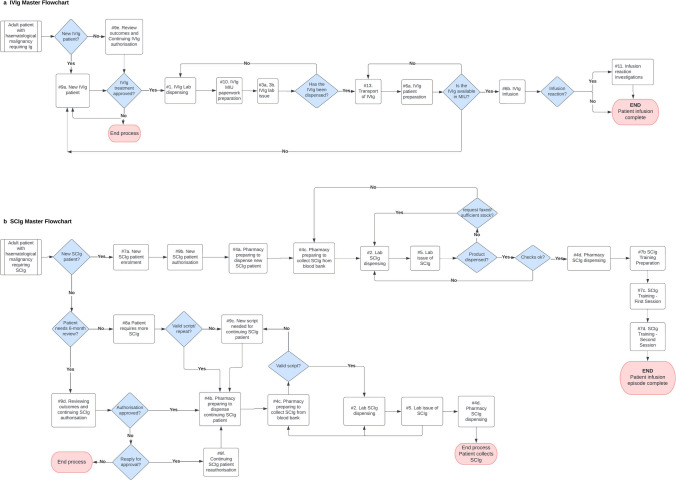 Figure 1
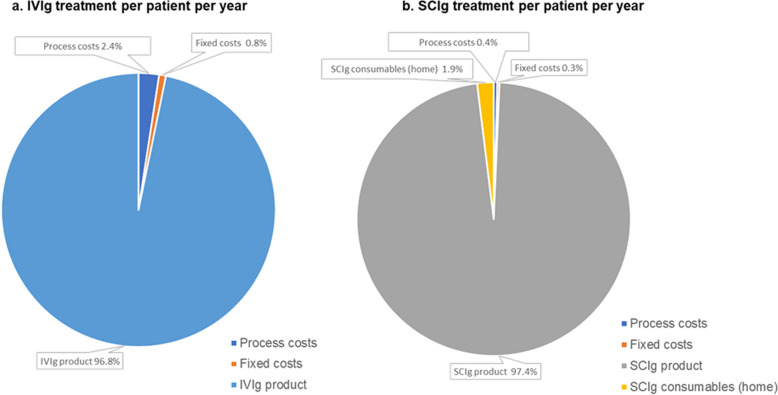 Figure 2
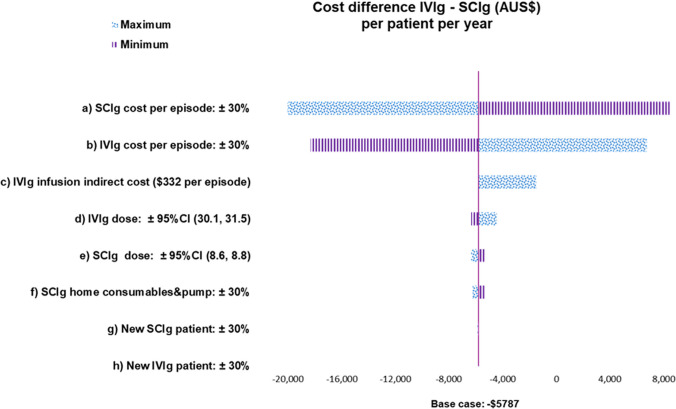 Figure 3
Peer Reviews
No public reviews on file for this paper yet. If you reviewed it on a platform where reviews are public (OpenReview, ICLR, NeurIPS, ICML), you can paste yours below so the community can read it here.
Videos
No videos yet. Explain this paper in a talk, walkthrough, or lecture? Add one.
Taxonomy
TopicsImmunodeficiency and Autoimmune Disorders · Hemophilia Treatment and Research · Platelet Disorders and Treatments