Astrocyte Proximity Protects Synapses From Human Amyloid‐Beta Induced Degeneration in a Mouse Ex Vivo Model of Early Alzheimer's Disease
Francesco Gobbo, Declan King, Jane Tulloch, Davide Gobbo, Calum Bonthron, Soraya Meftah, Caleb Stoddart‐Campbelton, Arisa Tamura, Jamie Rose, Colin Smith, Claire Durrant, Tara L. Spires‐Jones

TL;DR
Astrocytes protect synapses from damage caused by amyloid-beta in a mouse model of early Alzheimer's disease.
Contribution
This study demonstrates that astrocytes protect synapses from Aβ-induced degeneration through glutamate removal in an ex vivo Alzheimer's model.
Findings
Aβ-containing homogenate causes spine loss and increased synaptic calcium events in mouse brain slices.
Dendritic spines near astrocytic processes are more likely to survive Aβ exposure.
Astrocyte protection of synapses is partially mediated by glutamate transporter activity.
Abstract
Synapse loss is the strongest pathological correlate of cognitive decline in Alzheimer's disease (ad) and is most pronounced around amyloid plaque pathology in the brain. Although mechanisms remain incompletely understood, hyperactivity downstream of soluble amyloid beta (Aβ) is strongly implicated in synapse degeneration. Engulfment of synapses by reactive astrocytes was observed in end‐stage disease tissue, particularly around plaques. Due to astrocytes' role in synaptic modulation, we hypothesised that astrocytes could modulate synapse degeneration downstream of soluble Aβ earlier in disease pathogenesis. To test this, we challenged organotypic mouse brain slices with human ad brain homogenates containing Aβ. Changes in synaptic activity were detected 2 h after Aβ challenge, and spine loss was seen after 24 h. We observe that Aβ‐containing homogenate induces a significant loss of…
Genes, proteins, chemicals, diseases, species, mutations and cell lines named across the full text — each resolved to its canonical identifier and authoritative record.
Click any figure to enlarge with its caption.
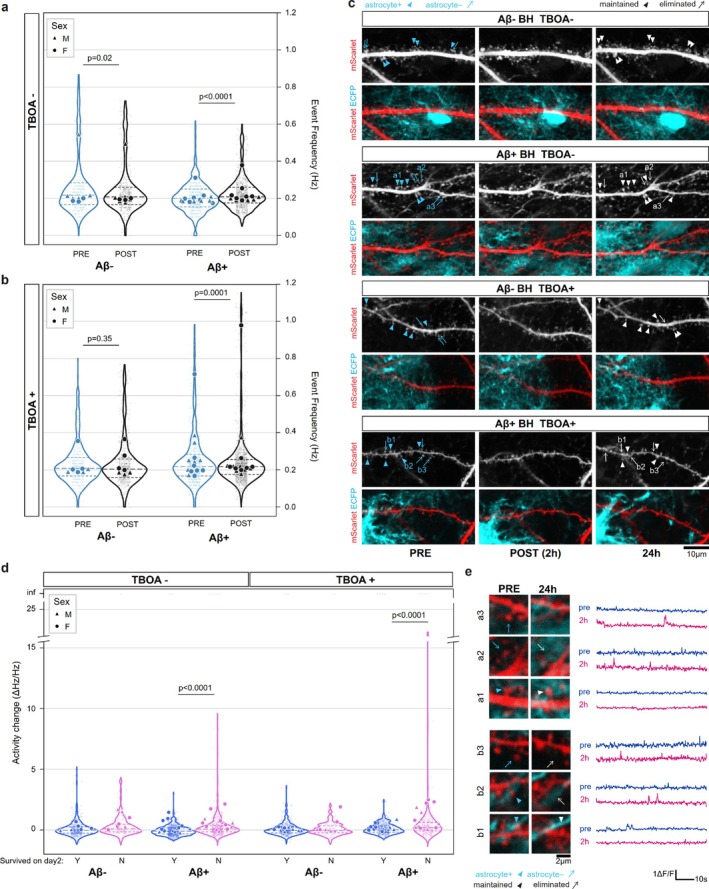 Figure 1
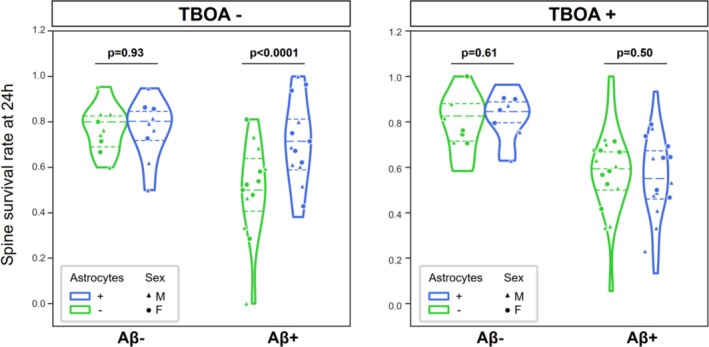 Figure 2
 Figure 3
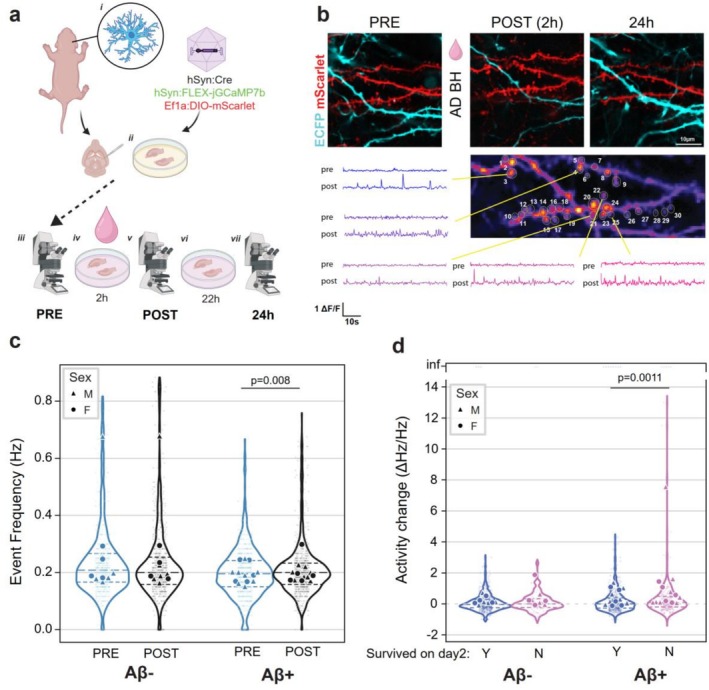 Figure 4
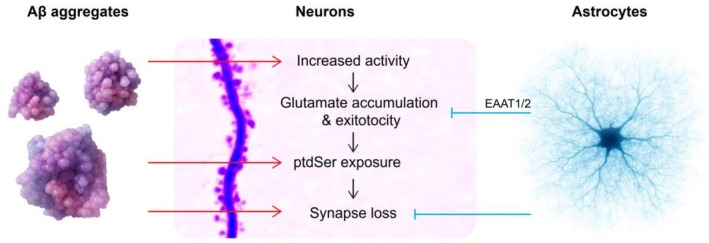 Figure 5
 Figure 6
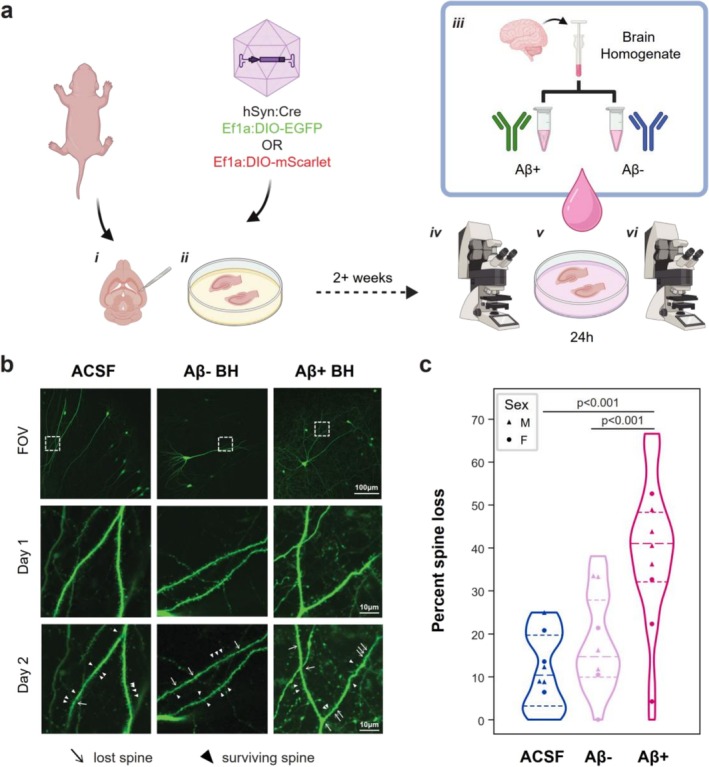 Figure 7
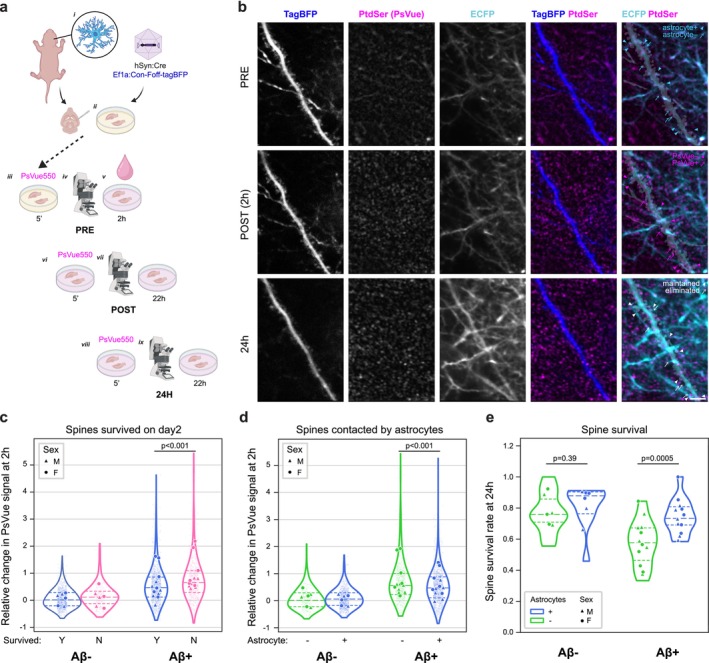 Figure 8
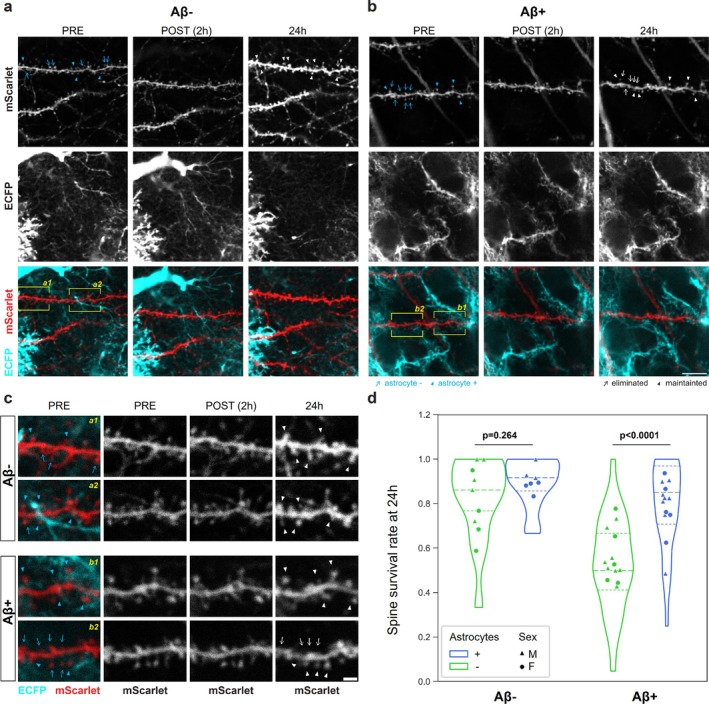 Figure 9
Peer Reviews
No public reviews on file for this paper yet. If you reviewed it on a platform where reviews are public (OpenReview, ICLR, NeurIPS, ICML), you can paste yours below so the community can read it here.
Videos
No videos yet. Explain this paper in a talk, walkthrough, or lecture? Add one.
Taxonomy
TopicsAlzheimer's disease research and treatments · Neuroscience and Neuropharmacology Research · Neurological Disease Mechanisms and Treatments