Maximal radial distance for predicting extraprostatic extension of prostate cancer: a histopathological-radiological study
Fabio Porões, Antoine Nobile, Lucien Widmer, Julian Vidal, Jana Di Vincenzo, Hugo Najberg, Frederic Fer, Audrey El Kaïm, Curzio Rüegg, Johannes M. Froehlich, Carolin Reischauer, Harriet C. Thoeny

TL;DR
This study introduces a new MRI-based parameter called maximal radial distance (maxRADD) to predict whether prostate cancer extends beyond the prostate gland, showing it is as accurate and more reliable than existing methods.
Contribution
The study introduces maxRADD as a novel MRI parameter for predicting extraprostatic extension of prostate cancer with high accuracy and reliability.
Findings
MaxRADD and maxCCL had similar accuracy in predicting extraprostatic extension (AUC of 0.92 vs. 0.91).
MaxRADD showed higher inter- and intra-reader reliability compared to maxCCL (ICC of 0.87 vs. 0.80).
MaxRADD values on MRI strongly correlated with histopathological measurements (Pearson r ≥ 0.7).
Abstract
There is a lack of a reliable parameter for accurate prediction of extraprostatic extension (EPE) of prostate cancer on MRI. We introduce a new parameter for predicting EPE on MRI: the maximal radial distance (maxRADD). It corresponds to the largest diameter of a prostate cancer focus (PCF) perpendicular to the contact with the prostate pseudocapsule. We compared accuracy and reliability of maxRADD with the previously proposed maximal capsular contact length (maxCCL). In a single-centre study, we retrospectively included all consecutive patients undergoing prostate MRI between October 2018 and December 2020, followed by radical prostatectomy. One uropathologist and four radiologists determined maxRADD and maxCCL for each PCF. Accuracy in predicting EPE was assessed using the area under the curve (AUC), with optimal sensitivity/specificity cutoffs determined by the Youden J index using…
Genes, proteins, chemicals, diseases, species, mutations and cell lines named across the full text — each resolved to its canonical identifier and authoritative record.
Click any figure to enlarge with its caption.
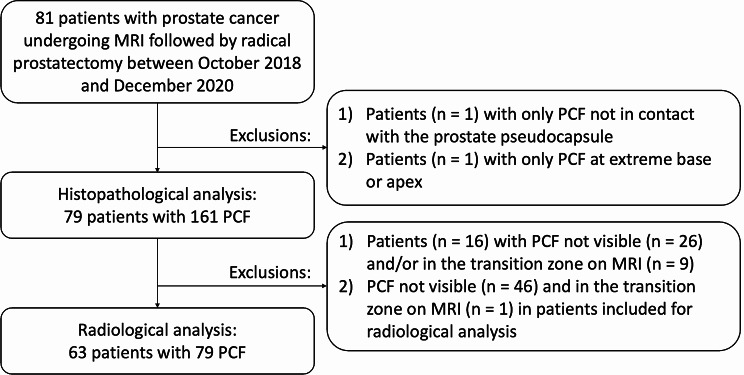 Figure 1
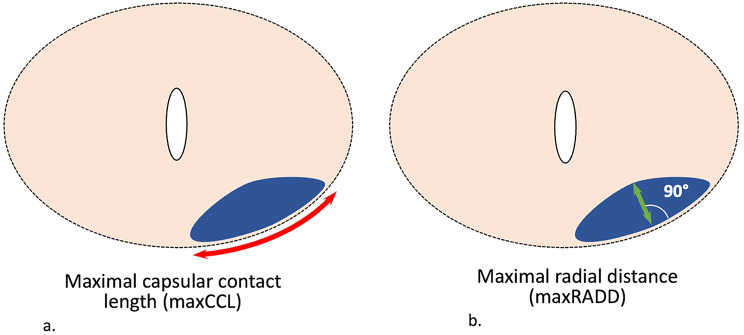 Figure 2
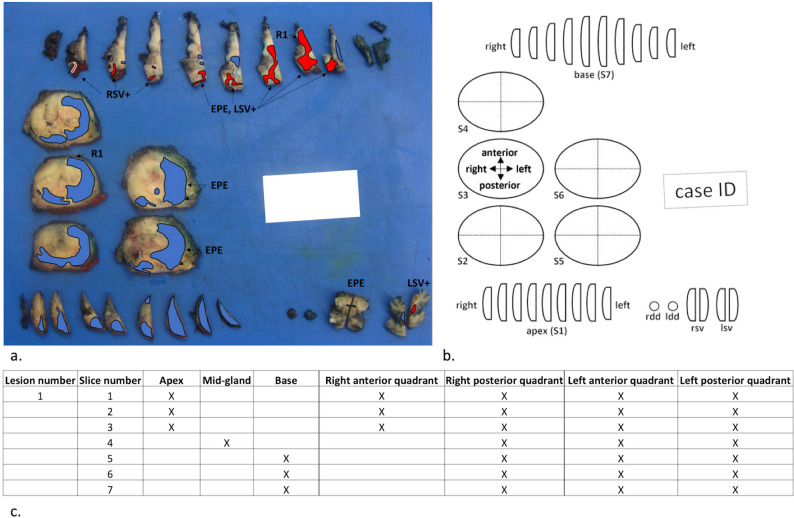 Figure 3
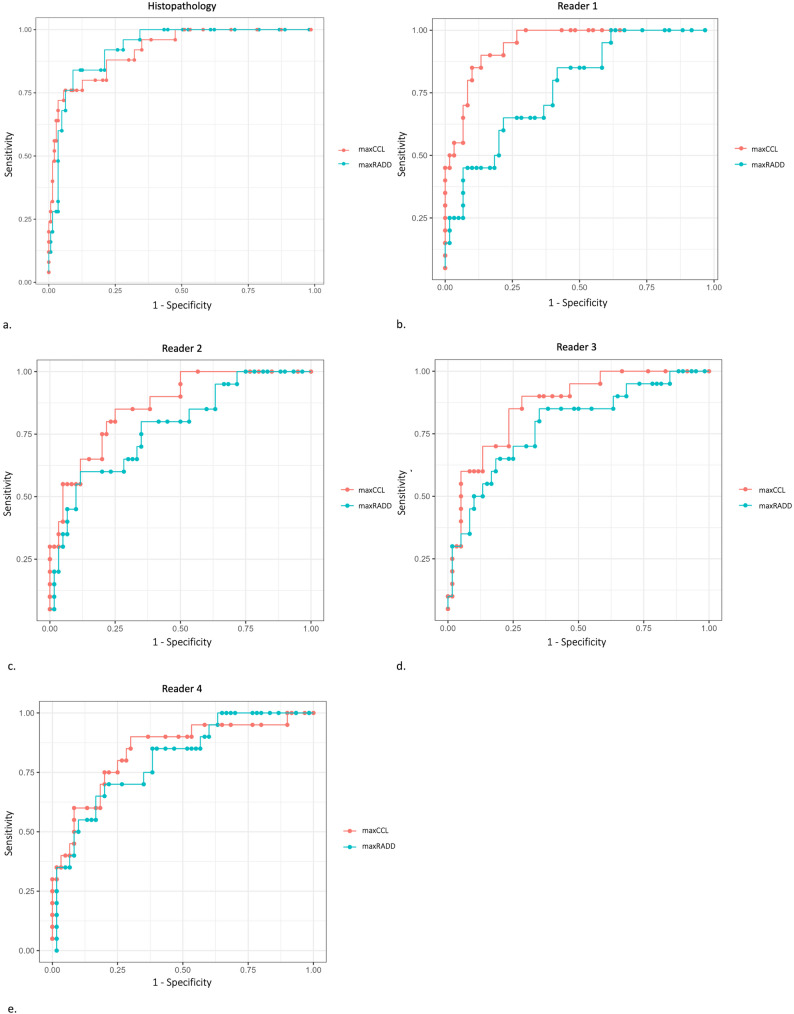 Figure 4
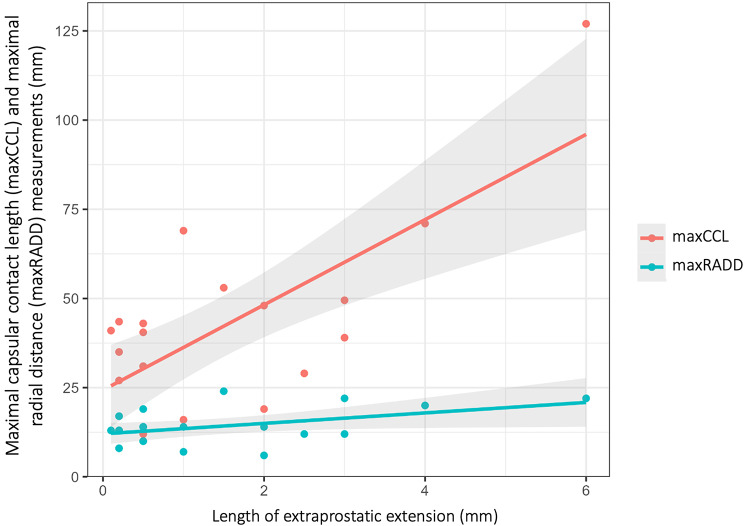 Figure 5
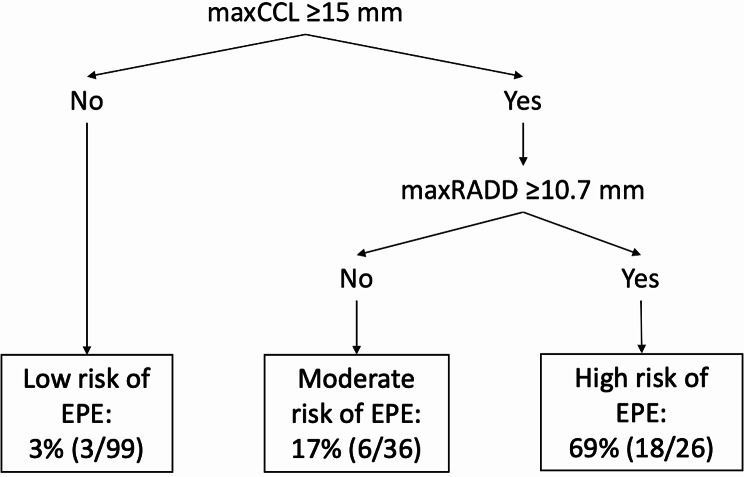 Figure 6
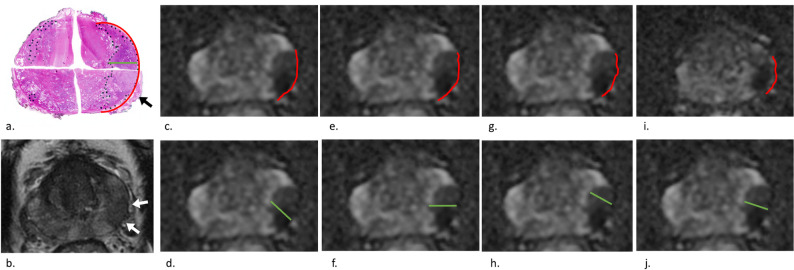 Figure 7
Peer Reviews
No public reviews on file for this paper yet. If you reviewed it on a platform where reviews are public (OpenReview, ICLR, NeurIPS, ICML), you can paste yours below so the community can read it here.
Videos
No videos yet. Explain this paper in a talk, walkthrough, or lecture? Add one.
Taxonomy
TopicsProstate Cancer Diagnosis and Treatment · Advanced Radiotherapy Techniques · Prostate Cancer Treatment and Research